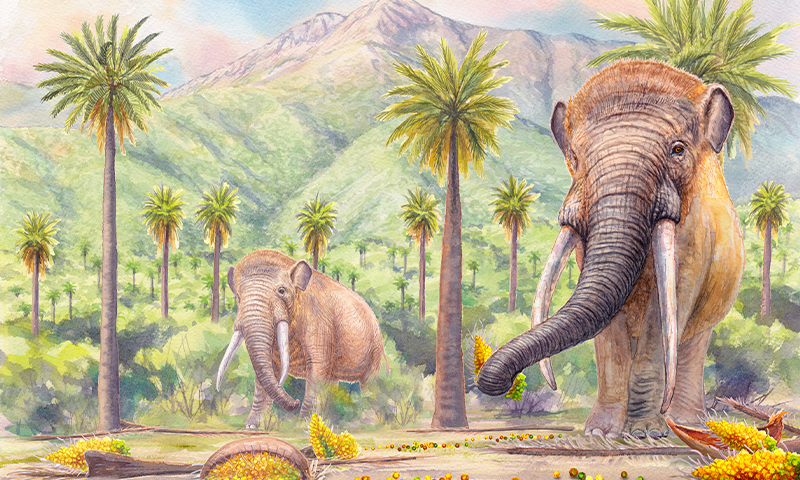
In lush South American forests millions of years ago, trees and massive animals might have helped each other thrive. Trees evolved oversized fruits, which attracted hulking creatures such as mastodons during the Pleistocene epoch. Their menu might have included the bright yellow Chilean palm, the smoky chañar, and the creamy keule. In turn, these beasts may have shepherded seeds long distances via their dung, expanding the trees’ distribution and encouraging genetic diversity.
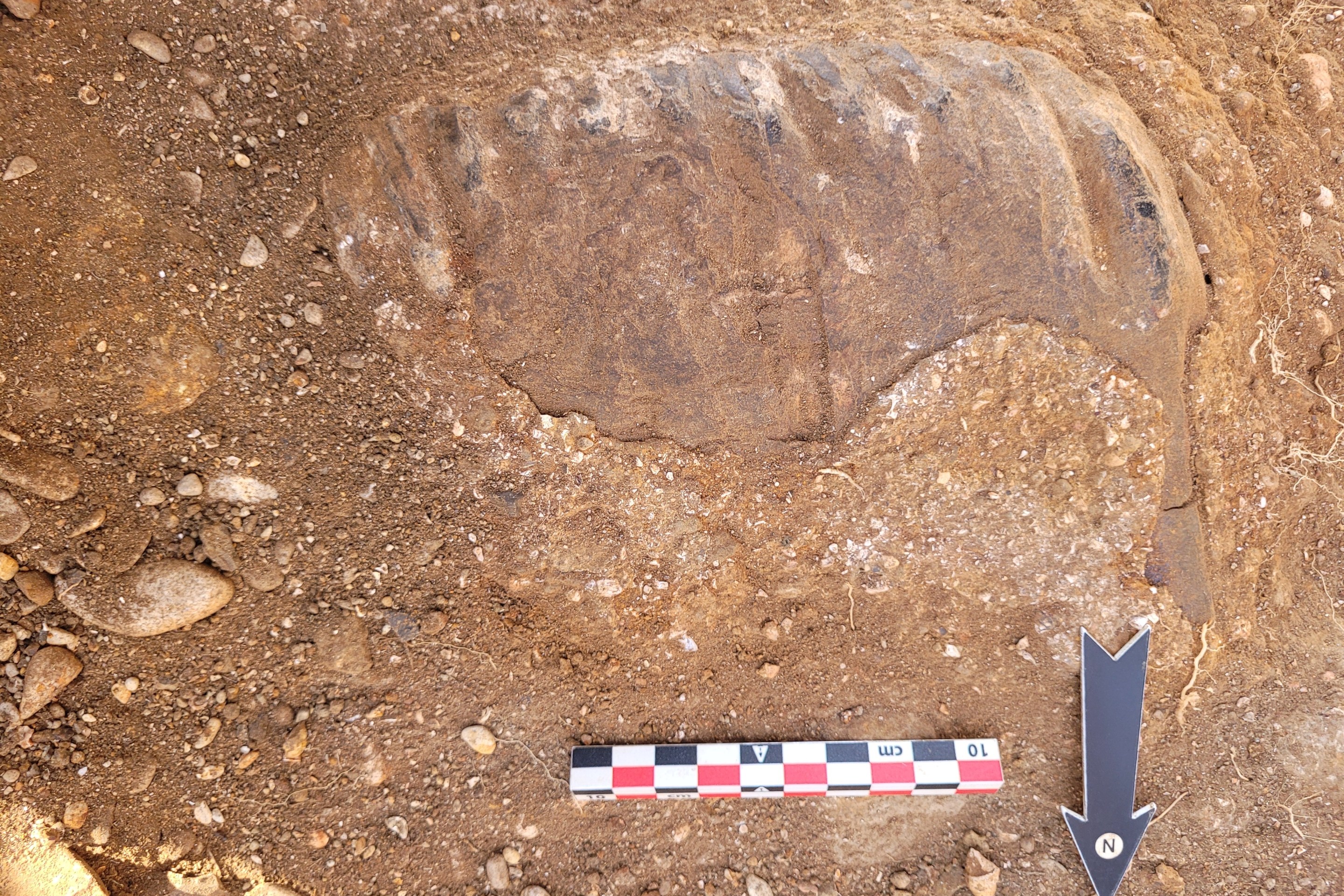
This idea was first proposed more than 40 years ago. Now, scientists have unearthed fossil evidence to support it: Fossil teeth from the South American mastodon species, Notiomastodon platensis, suggest that the elephant relative did indeed feast on large fruits such as the Chilean palm, according to recent findings published in Nature Ecology & Evolution.
The fossils, which were dug up from sites spanning more than 900 miles across Chile, contained starch residues and tissues associated with fleshy fruits. Groups of N. platensis may have migrated to the northern region of the country to bountiful foraging grounds—today, their living elephant relatives still hunt for fruit along well-traveled trails.
Mastodons vanished from South America some 10,000 years ago, and livestock, humans, and smaller, fruit-eating animals may have stepped into this fruit-feasting role. But the extinct giants distributed seeds across distances up to 10 times longer than modern animals and gobbled up about 10 times more seeds. And although many of these tree species persist today, without these ancient helpers, their survival is threatened.
The team modeled the threat of extinction among these heavily fruited South American trees. Today, some of these trees have found new seed messengers—but not all. In central Chile, 40 percent of these plant species are currently threatened. This figure is four times higher than in tropical areas where animals including tapirs or monkeys can fill some of the Pleistocene mammals’ roles. Such plants “now survive in small, fragmented populations with low genetic diversity,” according to a statement. “They are living remnants of an extinct interaction.” Human activity may also contribute to the continuing decline of these ancient trees, of course. For example, harvesting fruit from the Chilean palm tree reduces its chances of seed dispersal.
And the hunt for clues to ancient ecological dynamics will continue. “Paleontology isn’t just about telling old stories,” said study author Florent Rivals, a paleoecologist at the Catalan Institute of Human Paleoecology and Social Evolution in Spain, in the statement. “It helps us recognize what we’ve lost—and what we still have a chance to save.” 
Lead illustration by Mauricio Álvarez