During times of war, our primary concern is humans. A prolonged conflict, such as the war in Ukraine, takes a tremendous toll on lives, well-being, and finances. But other species suffer the blows of battle too, with potentially lasting consequences. A study published in The European Zoological Journal reports on the Ukraine war’s impacts on birds. With 21 percent of bird species already vulnerable to extinction, the study authors argue that exposure to military conflict is “a significant, yet under-recognized, contributor to avifaunal decline.”
Like humans, birds are loyal to their homelands, establishing territories that offer the resources they need and define their spheres of movement. Even migratory birds typically return to the same places year after year to breed and raise families. Although birds can theoretically fly away from the dangerous conditions of war, their “site fidelity” may limit escape responses, akin to how people stay in their homes even as their neighborhoods become conflict zones.
Researchers from Ukraine’s National Academy of Science, the University of Rzeszów in Poland, and the National Nature Park in Tatarbunary, Ukraine, assessed the responses of bird populations by combining through Open Source Intelligence (OSINT)—news reports, satellite images, social media posts, and so on—with information provided by scientists and soldiers operating in the field. They hypothesized that birds “often remain in areas affected by intense military activity and consequently become victims of war.”
Read more: “Ukranian War Widows on the Edge”
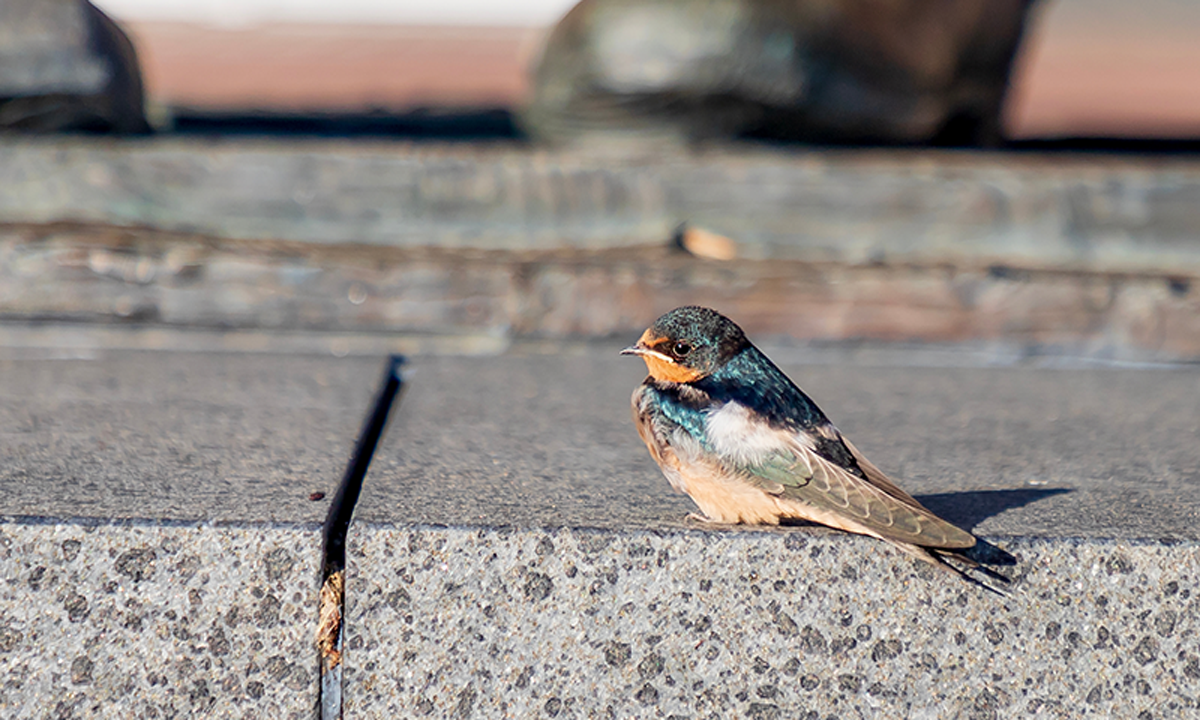
Data collected from March 2022 and July 2023 revealed evidence that birds suffered both direct and indirect impacts of war. Direct impacts included destruction of colonies from attacks such as 200 Russian missiles that struck the avocet nesting colonies in the Tuzlivski Lymany National Nature Park. The resulting fires burned the nests of other species, including pheasants, partridges, and finches. Birds like the house martins, barn swallows, and little owls that typically nest in human structures also lost reproductive output as farms were destroyed in regions of active fighting.
Damaged habitats included an estimated 712,321 acres of natural area as of the study date. In wetlands, hydrological regimes were disrupted, such as by the detonation of the New Kakhovka Dam. Reedbeds in river floodplains, which are home to myriad species such as egrets, bitterns, shovelers, and gadwalls, were destroyed in blazes. The study authors report that colonially nesting species, such as gulls, terns, and pelicans on the Black and Azov Seas, were killed en masse during the shelling of the islands.
Indirect impacts also ensued, such as the contamination left behind by remnants of bombs, shells, and mines, not to mention agrochemicals that spilled from destroyed warehouses. Meanwhile, as human communities became desperate for food and shelter, they illegally harvested forest resources and hunted birds such as geese, grouse, and teal.
The researchers point out that bird conservation measures are nearly impossible during active war conflicts. Still, Ukrainian soldiers and other citizens have been raising orphaned nestlings, extracting birds from tangled wires, and caring for injured eagles and owls while trying to deliver them to still-operating veterinary clinics. Ultimately, they write, “it is vital to track the effects of war on natural habitats in the hope that the information can help guide postwar restoration.” 
Enjoying Nautilus? Subscribe to our free newsletter.
Lead image: Dr-Harsha Vardhan Redyy / Shutterstock