Strange things are afoot in Yellowstone National Park.
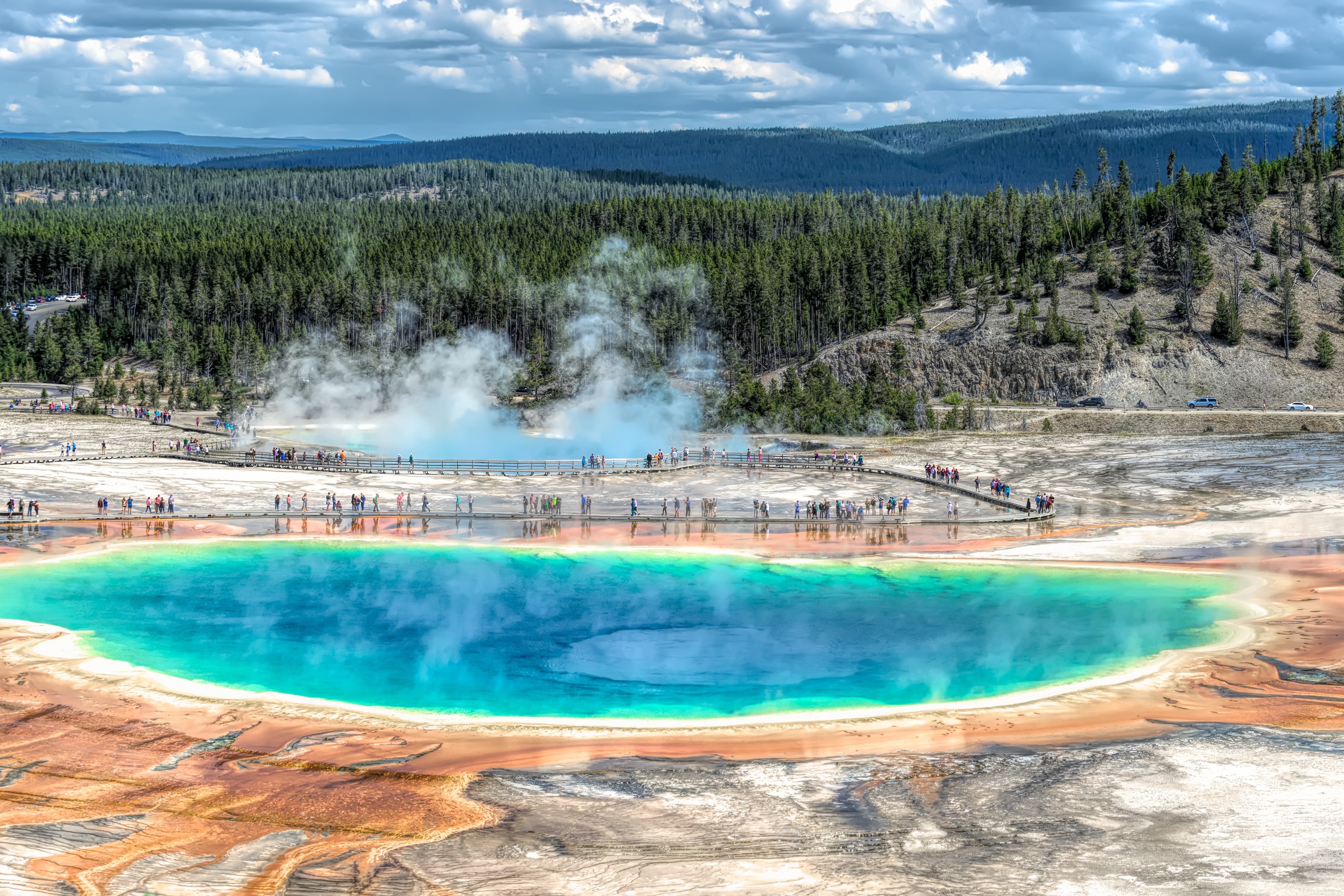
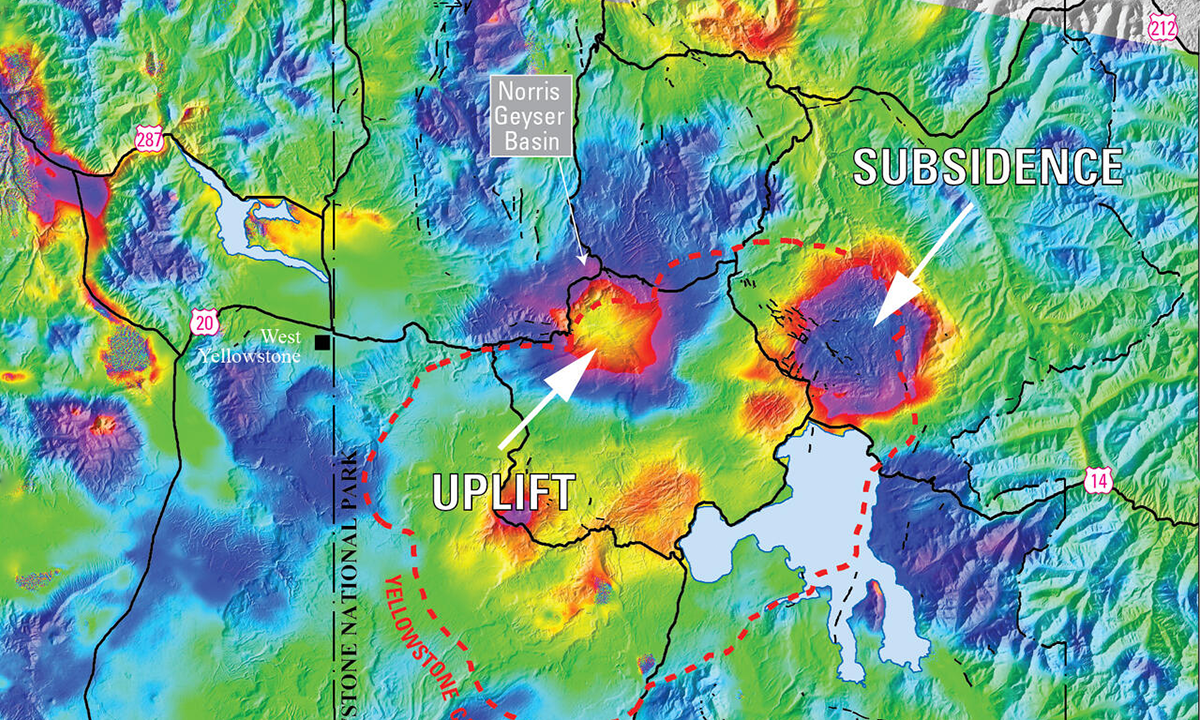
Since July, U.S. Geological Survey (USGS) scientists have been monitoring an uplift in the surface of the Earth spanning 19 miles near the Norris Geyser Basin. Since then, the mysterious bulge has elevated the area by roughly an inch along the northern rim of the Yellowstone Caldera, the massive volcanic plateau buried deep beneath the park.
So what’s going on? Is Yellowstone’s dormant supervolcano finally ready to erupt and devastate the planet?
Not necessarily, says geophysicist Michael Poland, who heads the USGS Yellowstone Volcano Observatory. “That doesn’t mean that the volcano is about to erupt,” he told Cowboy State Daily. “It’s Yellowstone being Yellowstone.”
Read more: “New Earthquake Math Predicts How Destructive They’ll Be”
In fact, the area where the bulge is occurring is known as the “Norris Uplift Anomaly,” named for a similar phenomenon that occurred from 1996 to 2004. In mid-2005, the region went relatively quiet, and while we were spared an eruption, we did get the alarmist TV movie Supervolcano, courtesy of The Discovery Channel.
What then is responsible for the bulge? Poland says it’s probably just magmatic activity deep beneath the surface of the Earth.
While it’s nothing to worry about in this typically seismically active area, it is fascinating. “It is a sign of some pretty dramatic changes happening deep underground,” he told KTVQ, the CBS affiliate in Billings, Montana. “The source of this is 10 miles deep, so there’s a lot of rock between there and the surface, but it still has the energy to push the surface up—even if it’s only about an inch, that is still impressive.”
In other Yellowstone news, a study recently published in PNAS Nexus investigated the effect of earthquakes on the activity of microbes in a 330-foot deep borehole. In 2021, researchers from Montana State University made the trek to Yellowstone to monitor subsurface bacteria during and after a series of small earthquakes. They found that the microbial life, which feeds on chemicals from deep within the Earth, increased around 6.5 fold during the tremors before gradually subsiding to normal levels. It’s a finding that has important implications for the search for life on other planets.
Meanwhile, here on Earth, someone probably just greenlit Supervolcano II: Bacterial Explosion. 
Enjoying Nautilus? Subscribe to our free newsletter.
Lead image: Public Domain