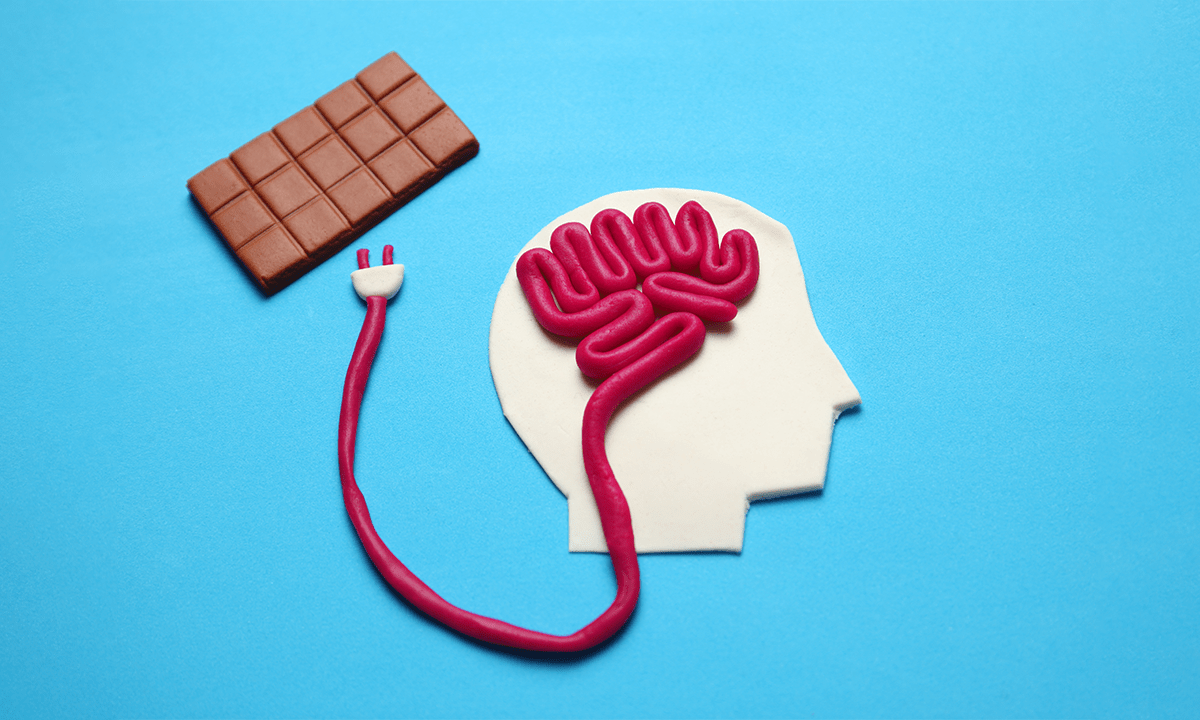
What’s the brain made of? Our gray matter isn’t just a network of neurons that do the thinking—there are an equal number of star-shaped cells called astrocytes. These cells have long been known to perform a support role, providing structural integrity and acting as a kind of energy reserve for surrounding neurons. Now, according to new research published in the Proceedings of the National Academy of Sciences, they could also be key players in regulating our appetites.
“People tend to immediately think of neurons when they think about how the brain works,” study author Ricardo Araneda of the University of Maryland said in a statement. “But we’re finding that astrocytes, what we used to think of as just secondary support cells, are also participating in how our brains regulate how much we eat. This research changes how we think about these communication circuits.”
Astrocytes, the researchers found, could be the middlemen in a neuronal appetite regulation process that starts with another specialized brain cell: the tancyte. These cells line cavities in the brain filled with cerebrospinal fluid and have connections that extend deep into the hypothalamus, a region of the brain that regulates appetite. After a meal, glucose concentrations rise in the cerebrospinal fluid and the tancytes split the molecule into lactate.
Read more: “These Cells Spark Electricity in the Brain. They’re Not Neurons”
Lactate is usually used as another energy source, but in astrocytes, the researchers found, it acts as a signal. When astrocytes detect lactate, they release another chemical signal to neurons that in turn triggers a sense of fullness.
“Researchers used to think that lactate produced from tanycytes ‘spoke’ directly to neurons involved in appetite control,” Araneda said. “But we found that there was an unexpected middleman in that conversation, astrocytes.”
To monitor the process, they delivered glucose to a single mouse tancyte while keeping tabs on the activity of surrounding astrocytes and discovered that several of the star-shaped cells responded.
“We also noticed a dual effect of sorts,” Araneda said. “The hypothalamus contains two opposing populations of neurons: those that promote hunger and those that suppress it. We found that it might be possible that lactate can work on both simultaneously—activating the fullness neurons through astrocytes, while potentially quieting the hunger neurons through a more direct route.”
Though this study was conducted using mice as model organisms, the researchers stress that tancytes and astrocytes are present in all mammals, even humans. That means this newly discovered mechanism could offer a path to appetite suppression therapies. “It would be a novel target that may complement existing therapies like Ozempic, for example, and improve the lives of many who suffer from obesity and other appetite-related conditions,” Araneda said.
If there’s one thing we have an insatiable appetite for, it’s more appetite suppression. 
Enjoying Nautilus? Subscribe to our free newsletter.
Lead image: Andrii Zastrozhnov / Adobe Stock