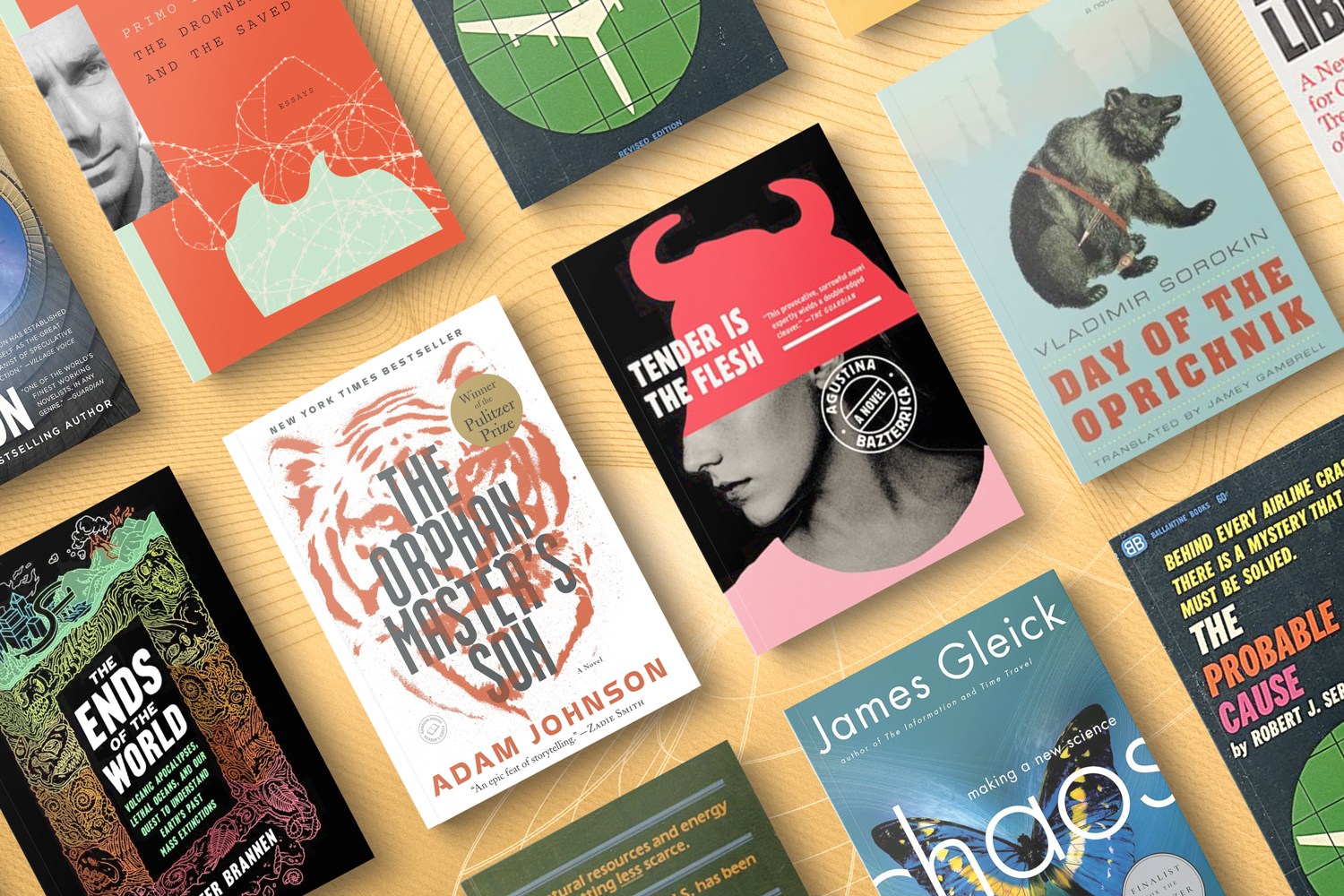
Stories, fiction included, act as a kind of surrogate life. You can learn from them so seamlessly that you might believe you knew something—about ancient Greece, say—before having gleaned it from Mary Renault’s novel The Last of the Wine. You’ll also retain false information even if you didn’t mean to. That seems like a liability: Philosophers have long concerned themselves with what they call “the paradox of fiction”—why would we find imagined stories emotionally arousing at all? The answer is that most of our mind does not even realize that fiction is fiction, so we react to it almost as though it were real.
At the same time, very young children “can rationally deal with the make-believe aspects of stories,” distinguishing the actual, the possible, and the fantastical with sophistication, as Denis Dutton has written in The Art Instinct. “Not only does the artistic structure of stories speak to Darwinian sources: so does the intense pleasure taken in their universal themes of love, death, adventure, family conflict, justice, and overcoming adversity.” That may help explain why, when stories are done well, we love them so much. Just as artificial sweeteners fool our minds into thinking we’re eating sugar, stories—even weird ones like Alice’s Adventures in Wonderland—take advantage of our natural tendency to want to learn about real people, and how to treat them.
Our brains can’t help but believe.
There’s experimental evidence for this. Children, for example, sometimes actually believe that puppets are alive. Even animals sometimes react to pictures the same way they react to real things. The industrialized world is so full of human faces, like in ads, that we forget that it’s just ink, or pixels on a computer screen. Every time our ancestors saw something that looked like a human face, it probably was one. As a result, we didn’t evolve to distinguish reality from representation. The same perceptual machinery interprets both.
The rational parts of our minds, particularly in the prefrontal cortex, do indeed know that what we’re looking at, or reading, isn’t real. One way to understand this is by thinking about optical illusions. In the Muller-Lyer illusion, we can trace and know the two horizontal lines are the same length, but at the same time appear to be different lengths. Even after you understand how an illusion operates, it continues to fool part of your mind. This is the kind of double knowledge we have when we consume fiction.
These perceptual areas of our brains are very closely connected to our emotions. That’s why emotions don’t just motivate us to act in certain ways but force us to interpret the world differently. A 2011 paper, for example, explained how fear can affect vision, moods can make us more or less susceptible to visual illusions, and desire can change the apparent size of goal-relevant objects. The authors proposed that emotions offer information “about the costs and benefits of anticipated action,” knowledge that can be used swiftly, without thought, “circumventing the need for cogitating on the possible consequences of potential actions.”
That’s the solution to the paradox of fiction, and why telling ourselves, “It’s only a movie,” can only partially attenuate the feelings we have about it. Our brains can’t help but believe.
Jim Davies is a professor of cognitive science at Carleton University and author of Riveted: The Science of Why Jokes Make Us Laugh, Movies Make Us Cry, and Religion Makes Us Feel One With the Universe. His new book, Imagination: The Science of Your Mind’s Greatest Power, comes out in November of 2019.