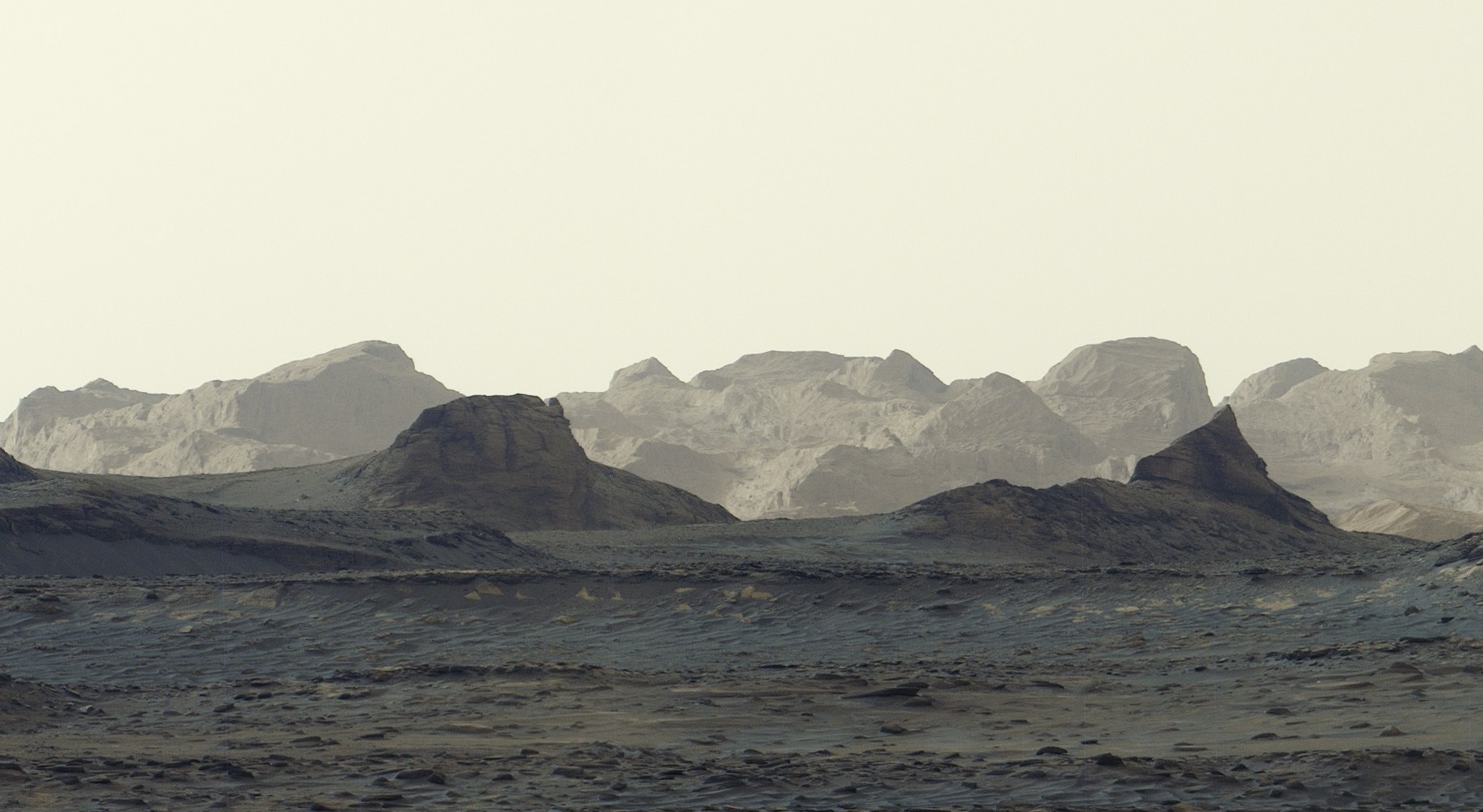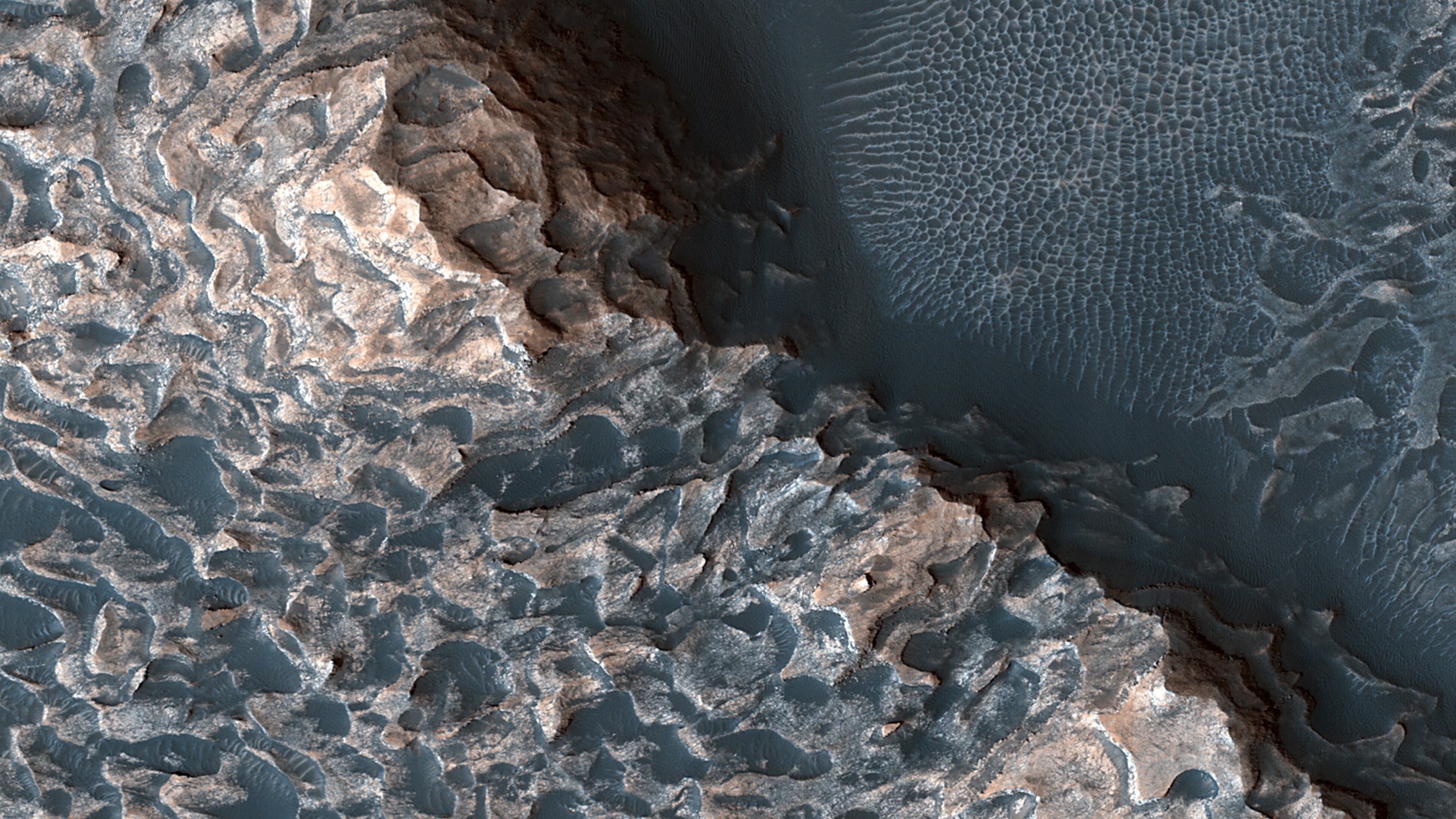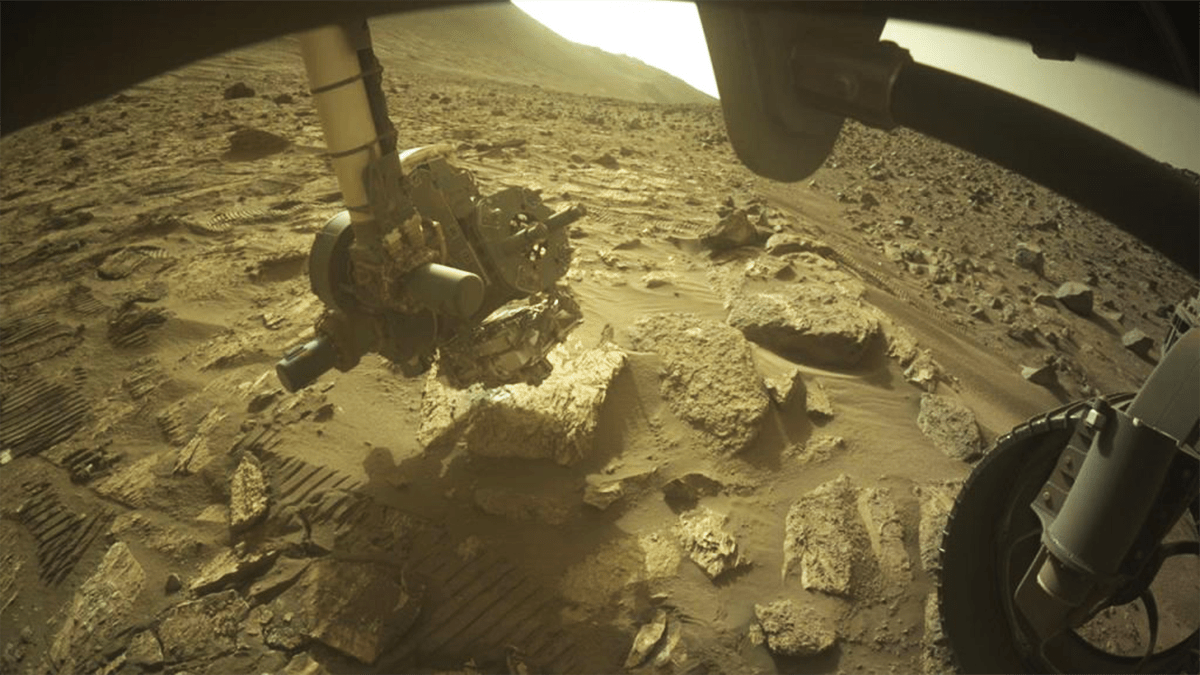
Billions of years ago, water flowed on Mars, and NASA’s Perseverance rover has been trundling along an ancient riverbed flowing into Jezero Crater searching for any signs of life that could have thrived there. In September of 2025, it uncovered a possible biosignature in the Bright Angel rock formation. Now, according to a new paper published in Science Advances, Bright Angel also has traces of organic carbon.
Using an onboard instrument called SHERLOC equipped with an ultraviolet laser to carry out spectroscopy on tiny samples, planetary scientists led by Ashley Murphy of the Planetary Science Institute detected macromolecular carbon (MMC). This large, resilient form of carbon can be generated by living organisms, but it can come from non-living sources (like meteorites) as well. “While the specific formation mechanism of the MMC detected in the Bright Angel mudstones remains unknown, this is still one of the most exciting findings to date,” Murphy said in a statement.
Read more: “Looking for Life on Mars”
Perseverance didn’t even have to do any drilling to find the organic carbon. It was lurking just microns beneath the Martian surface—unusual given the intense radiation, which would have degraded most complex organic carbon molecules. The researchers say the carbon-bearing substance is either resistant to the harsh environs or shielded by a thin layer of inorganic material, such as clay.
NASA’s Curiosity rover, located more than 2,000 miles away in Gale Crater, also found signs of large carbon molecules. Taken together, the two finds suggest vast expanses of Mars would have at least been hospitable to life. “It’s encouraging for Martian habitability,” Murphy explained. “This indicates that billions of years ago, organics may have been more than just locally present and may have been more widely available in ancient lakes and rivers on Mars.”
Unfortunately, any definitive determinations about past Martian life may have to wait until the samples the two rovers collected can be returned to Earth, which is no easy feat. 
Enjoying Nautilus? Subscribe to our free newsletter.
Lead image: NASA/JPL-Caltech