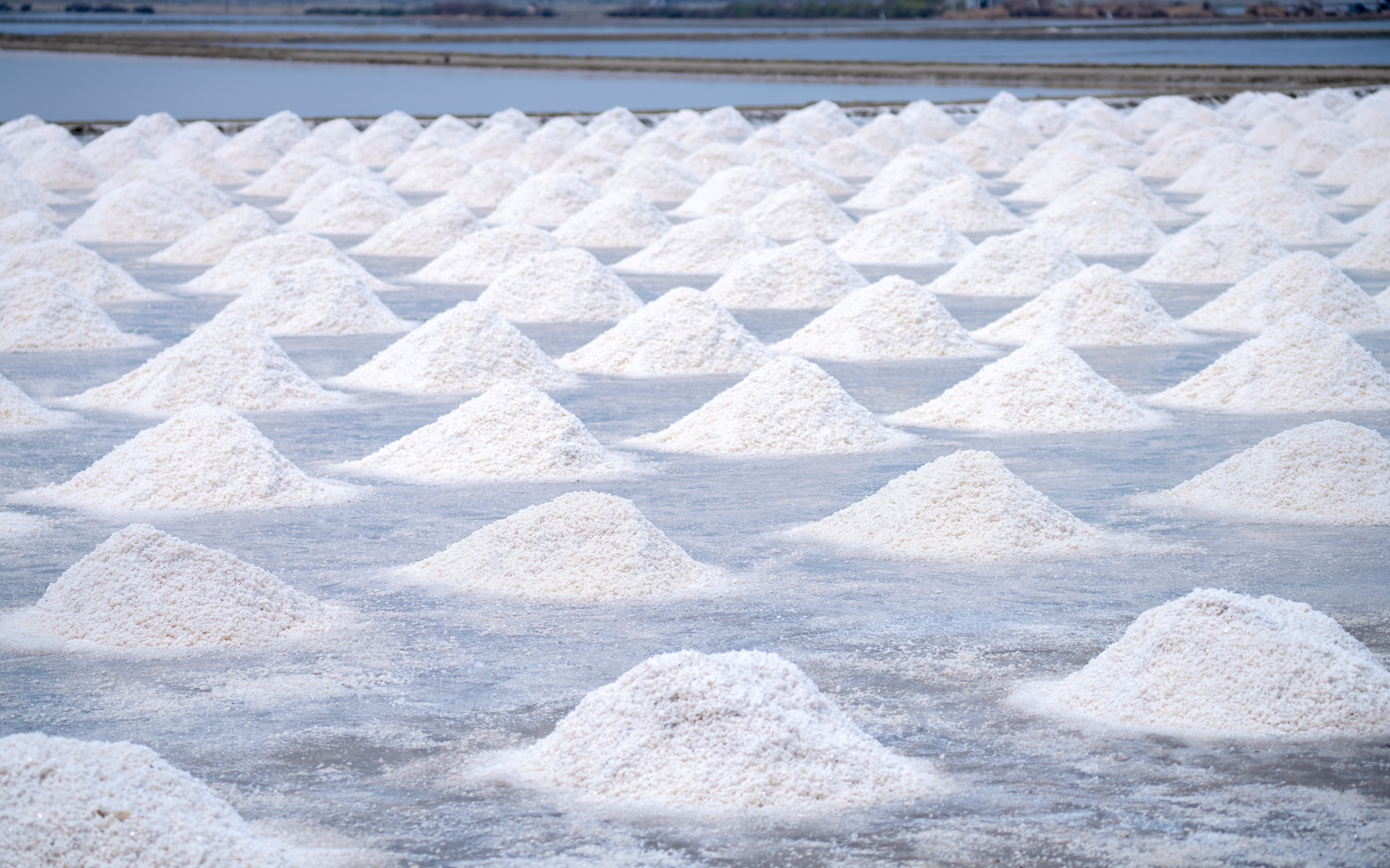
Without salt, you will literally die—but that doesn’t mean it’s good for you. Too many sodium ions in your bloodstream causes water to osmotically pour in, ratcheting up your blood pressure and stressing out your system. Of course, there are salt substitutes, like potassium chloride. Unlike sodium, potassium can help lower your blood pressure by facilitating water removal via the kidneys. The problem is that potassium chloride is sort of like the turkey bacon of salt—tasting it just makes you crave the real deal.
If only there were a better way.
Read more: “A Billion-Year-Old Piece of Sky Locked Within Ancient Salt Crystals”
Well, according to a study recently published in Nature Health there is. Potassium-enriched salt, a combination of the two, is a healthier alternative. So much so it could save roughly three million lives each year.
A team of medical researchers from The George Institute for Global Health checked the population-level health effects of swapping regular salt for potassium-enriched salt worldwide. The team modeled several different scenarios, from only those with high blood pressure changing their personal behaviors to a total global replacement. They found that worldwide replacement of all salt could save 2.96 million lives, stop 10.17 million new hypertension cases, and prevent the loss of 69.43 million disability-adjusted life years annually from cardiovascular disease and chronic kidney disease.
“Consuming too much sodium and not enough potassium are well established causes of high blood pressure—a major risk factor for life-threatening conditions like strokes, heart attacks, and kidney disease,” study author Bruce Neal explained in a statement. “Switching to potassium-enriched salt addresses both these dietary issues at the same time, with substantial health benefits.”
Even the small changes had outsized effects. The team found that replacing discretionary salt (that is, the salt you use at home) could save more lives than replacement of non-discretionary salt (that is, the salt you restaurants and food corporations use). Even if only those with diagnosed high blood pressure make the switch, it would save over half a million lives.
It’s not a panacea, however. Too much potassium (hyperkalaemia) comes with its own side effects, like kidney disease. But according to the team, the benefits outweighed the risks, even among those already diagnosed with advanced kidney disease.
Could we really dupe all our salt?
It’s possible. After all, we already add iodine to prevent nutritional deficiencies (and unsightly goiters). Most importantly, we would need the cooperation of the food industry.
“To realize the maximum benefits from switching to potassium-enriched salt, we need to see the food industry in Europe and North America—where over 70 percent of salt intake comes from processed and restaurant foods—get on board,” Neal said. “This would also require investigating ways to scale up the production of potassium chloride to meet demand.”
Obviously, you don’t have to wait for any systemic changes to rebalance your electrolytes. If you want to switch to potassium-enriched salt, Morton sells a “lite salt” that’s a 50/50 blend of sodium and potassium chloride. If that’s not to your liking, you can mix three parts table salt with one part Nu-Salt (potassium chloride) for a 75/25 blend.
Happy (and healthy) seasoning! 
Enjoying Nautilus? Subscribe to our free newsletter.
Lead Image: Fahroni / Shutterstock