Now this is what I call a brain drain. A newly described component of the human brain’s waste removal system has come to light. A network of lymphatic vessels, called the middle meningeal artery, appears to be central to clearing waste from the human brain, according to a team of researchers that recently published its findings in iScience.
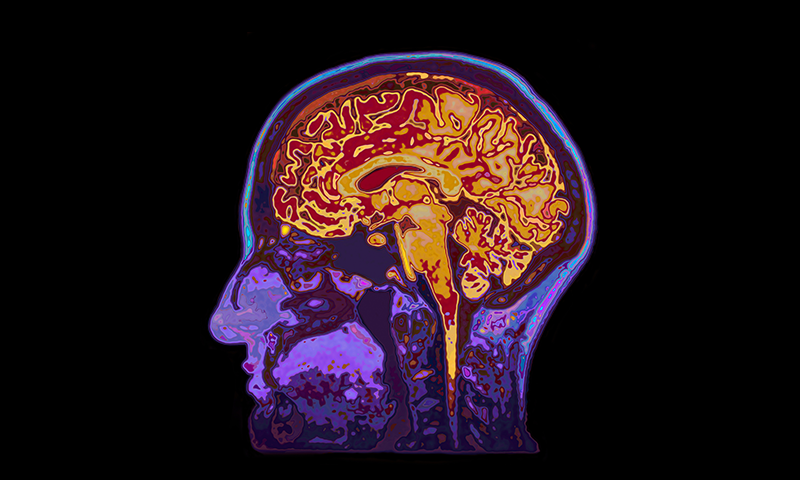
The scientists, led by Onder Albayram, a neuroscientist at the Medical University of South Carolina, conducted MRI scans to track the flow of the fluid that surrounds the brain in five healthy adults over five hours. They noted the real-time, slow drainage of fluid from the underside of the brain, suggesting that this represented lymphatic vessels passively channeling waste to remove it from the brain.
Read more: “The Strange Similarity of Neuron and Galaxy Networks”
To confirm these MRI data, they used high-resolution imaging to map the area of the brain around the middle meningeal artery, noting the presence of several different cell types. That map showed the area crowded with cells often found in the body’s other lymphatic vessels.
Surprisingly, the anatomical details of the lymphatic system in the brain are not well characterized. These findings, even though they are in an exceedingly small cohort of people, could begin to elucidate the darker corners of the brain and provide baseline knowledge that can be used to diagnose and treat dysfunction in these emerging systems. “A major challenge in brain research is that we still don’t fully understand how a healthy brain functions and ages,” Albayram said in a statement. “Once we understand what ‘normal’ looks like, we can recognize early signs of disease and design better treatments.” 
Enjoying Nautilus? Subscribe to our free newsletter.
Lead image: SpeedKingz / Shutterstock