Even if we can change a memory, should we?
It’s a profound question. It’s about the core of humanity. At times, science can reduce us to machines. Under the hood, we have the same parts, more or less. The neurochemicals that fuel the brain, including the creation and recall of memories, work pretty much the same way in everybody.
The lords of existentialism worried about this kind of rational objectification. If we’re like everybody, we’re nobody. Individual life has no meaning. Or that’s what I think the irascible Kierkegaard meant, waving his cane at passersby in the Copenhagen streets, when he said that “objective uncertainty,” that is, subjectivity, is “the highest truth attainable for an existing individual.”
As I read the great Dane, personal memories constitute the core of our subjectivity and help color the world in a sacred way. That’s a beautiful thought.
The question of whether we should change a memory comes in this issue’s article, “This Drug Can Mend a Broken Heart.” Writer Shayla Love explores a recent therapy called “memory reconsolidation.” It doesn’t erase memories to create an eternal sunshine of a spotless mind, it exploits the innate plasticity of our gray matter to blunt the sting of traumatic memories. The existential importance of individual memories remains.
Getting to the core of who and what we are is a central mission of science, and a theme that runs through this issue.
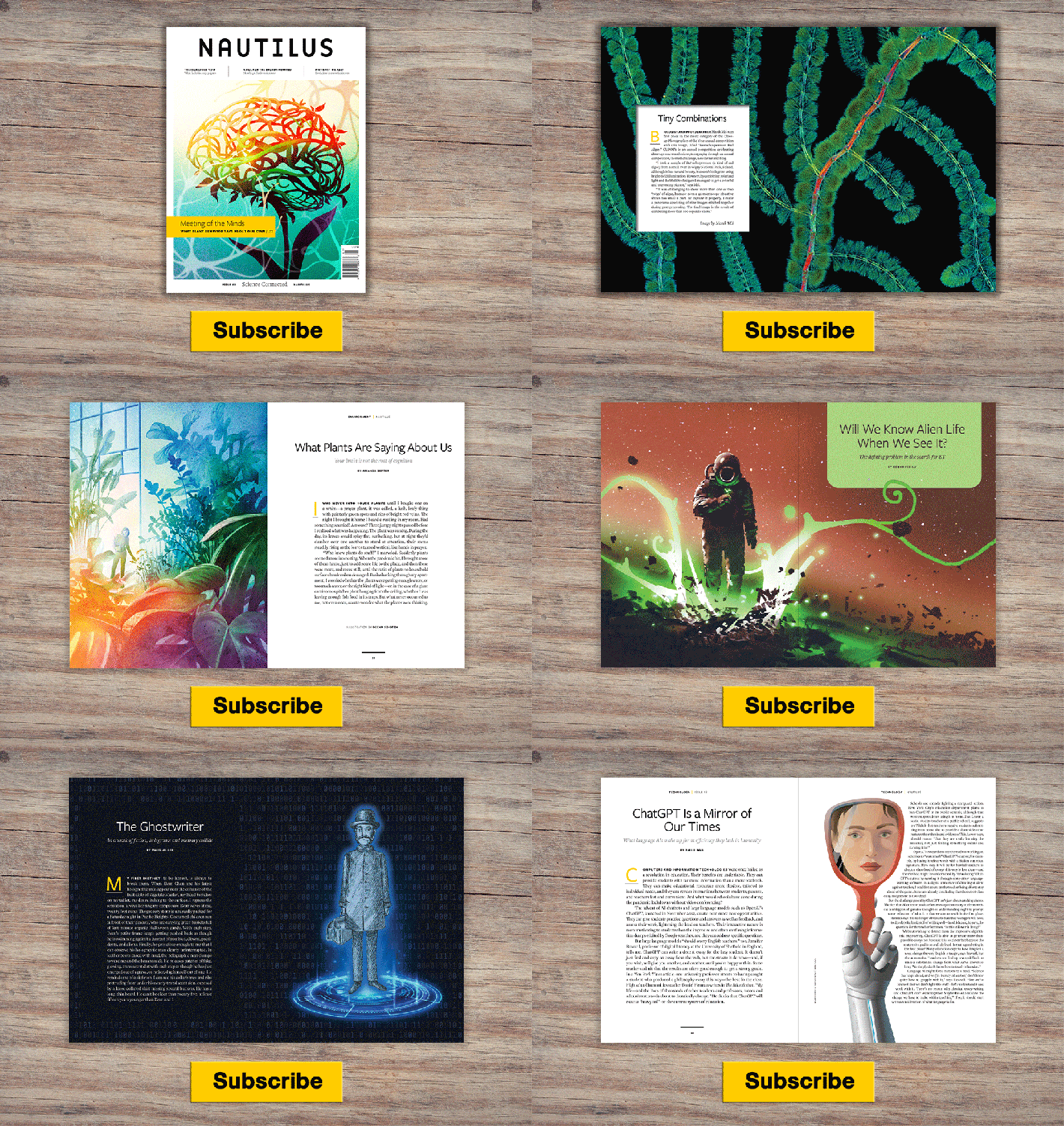
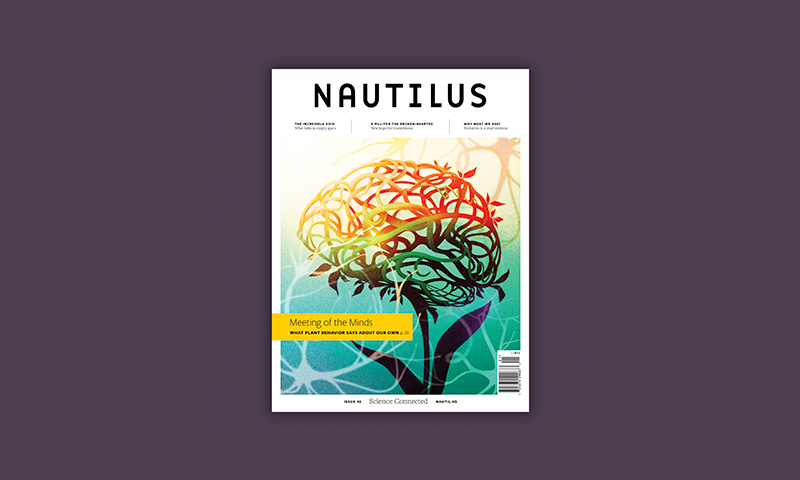
In our cover story, “What Plants Are Saying About Us,” philosopher Paco Calvo tells writer Amanda Gefter that plants sense and respond to their environments like we do. They embody a proto sentience. Calvo, through the lens of evolution, is getting back to basics. Way back. Steve Horvath is, too. In “The Universal Clock of Aging,” the geneticist explains how Father Time ticks away in our DNA, inevitably wearing our bodies down. Astrophysicist Paul M. Sutter takes us deeper still, to empty space—between stars, between atoms—to explain the energy that animates everything.
These articles may sound like objectification. We could look at Carl Sagan’s remark, “We are made of star stuff,” through a dark lens. We are nothing more. But that universal essence is something to celebrate, don’t you think? We are not alone, defined by fear and trembling. We are the stars, the plants, the animals. We are everything.
In “ChatGPT Is a Mirror of Our Times,” writer Philip Ball explains that AI language is a clever beast created by humans and has cast a spell over our culture. The existentialists are right on this one: The fear we’re machines runs deep. Ball, though, relieves the dread by explaining how AI language works. Its shortcomings, he writes, reveal “what cannot be automated and algorithmized: in other words, what constitutes the core of humanity.”
Which brings me to “The Ghostwriter” in this issue, a work of fiction, where the highest truth often lies. The futuristic story is set in San Francisco, where mechanized holograms populate the city to the narrator’s dismay. Disheartened, she realizes there is only one thing she can do to preserve the core of humanity.
Happy reading.