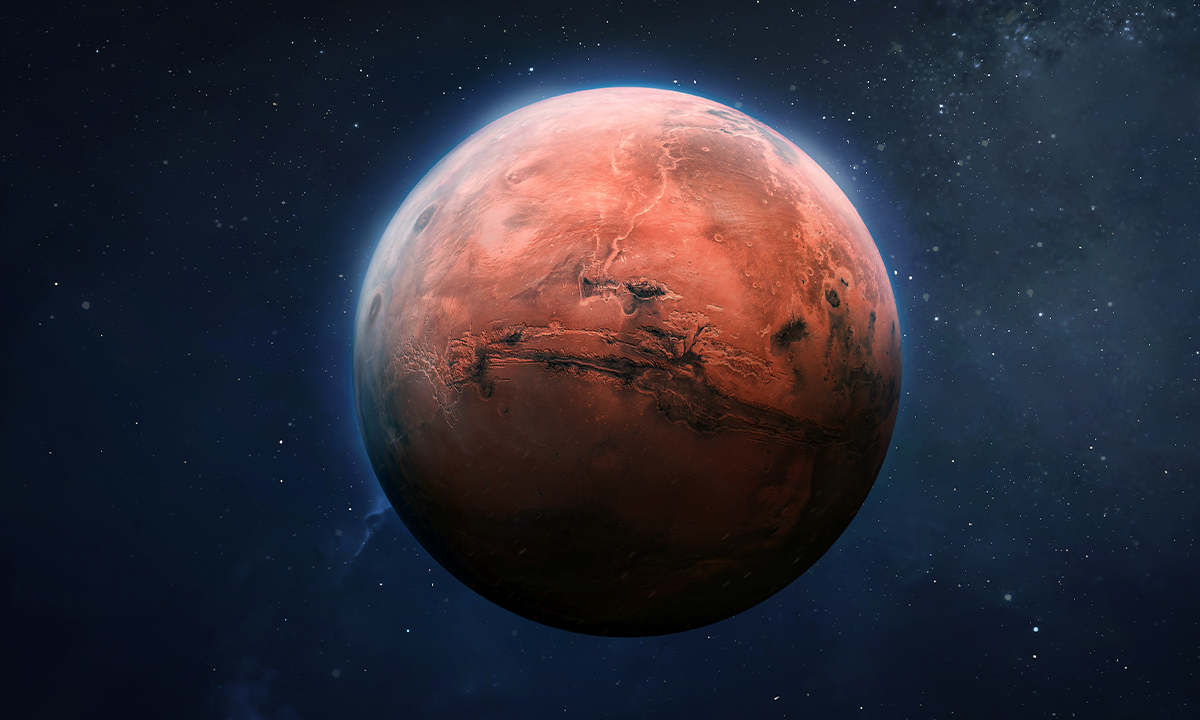
Do you know why there are no earthquakes on Mars? It’s because they’re called “marsquakes” (sorry).
But seriously, unlike the dynamic crust of Earth, the Martian surface isn’t broken up into tectonic plates floating on magma. Instead, Mars has “stagnant lid” tectonics characterized by a single rocky shell. Without the churning volcanism that comes with plate tectonics, it was thought that Mars was incapable of the kind of magma recycling necessary for creating a complex crust like Earth’s. But according to a new study published in Nature Astronomy that’s not true.
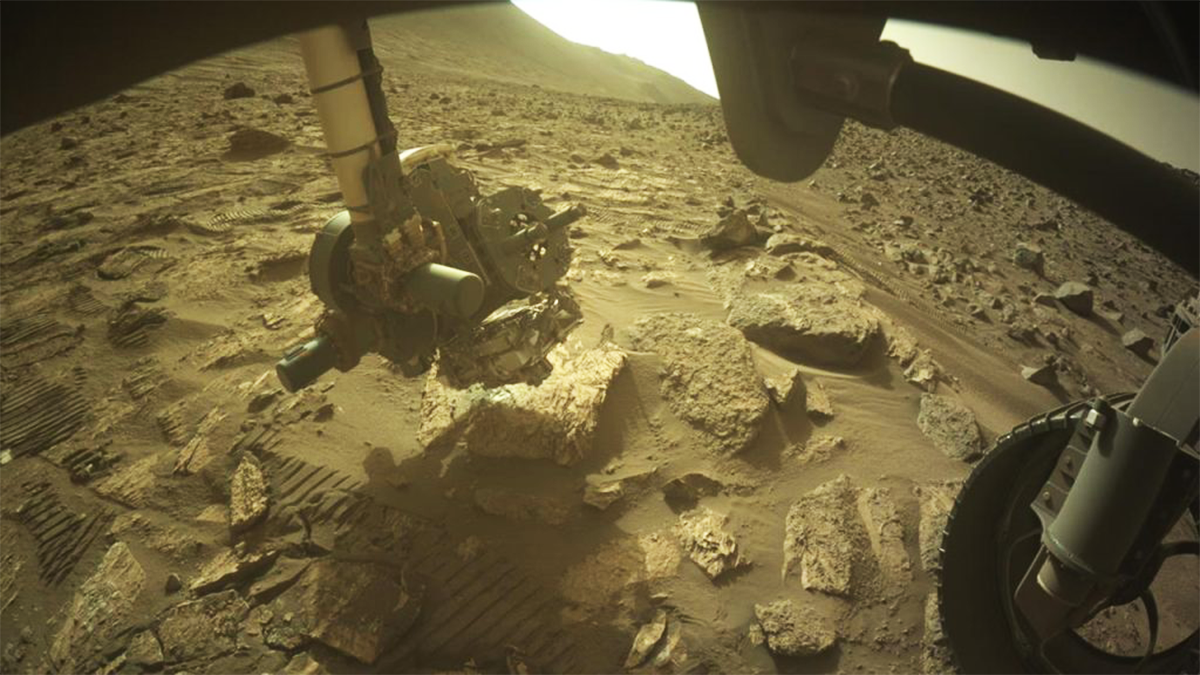
In 2018, NASA landed the InSight seismometer on Mars, which quickly confirmed marsquakes were a real phenomenon. Unfortunately, a layer of dust covering its solar panels put InSight out of commission in 2022, but during its four years of operation, it collected plenty of data about what’s going on beneath the red planet’s surface. Analyzing the data, University of Oxford scientists concluded the Martian crust is a lot more complicated than we thought.
Previous research indicated there was a mysterious transition in the Martian crust buried about 15 miles beneath the surface. Comparing InSight’s seismic data with hundreds of possible rock compositions in computer models allowed the Oxford team to determine the two types of rock composing the crust—rock with lower silica but more iron and magnesium in the lower layer and high silica rock in the upper layer.
Read more: “Why Aliens and Volcanoes Go Together”
Surprisingly, the researchers say the composition of these layers points to a kind of rock recycling process that takes place on Earth. On Mars, molten rock pooled underground, separating into two layers, with the less dense of the two rising upward. This mirrors what happens at locations where two tectonic plates meet and one is subsumed into the magma below, producing volcanic activity.
“We’ve traditionally assumed that volcanism on Mars was relatively simple compared to that on Earth,” study co-author Tobermory Mackay-Champion said in a statement. “But this discovery suggests Mars could sustain large, long-lived systems where molten rock evolved and reprocessed itself throughout the entire crust.”
Because the “stagnant lid” tectonics of Mars are common on other rocky bodies in the solar system, these findings could have big implications. “If Mars could develop this kind of complex crust without plate tectonics, then maybe the conditions needed for habitability can emerge on more planets than we realized, including those previously dismissed based on size or their apparent lack of tectonic activity,” study co-author Jon Wade explained.
In other words, those quiet balls of rock orbiting out there in space might be a lot more interesting than we thought just beneath the surface. 
Enjoying Nautilus? Subscribe to our free newsletter.
Lead image: dimazel / Adobe Stock