
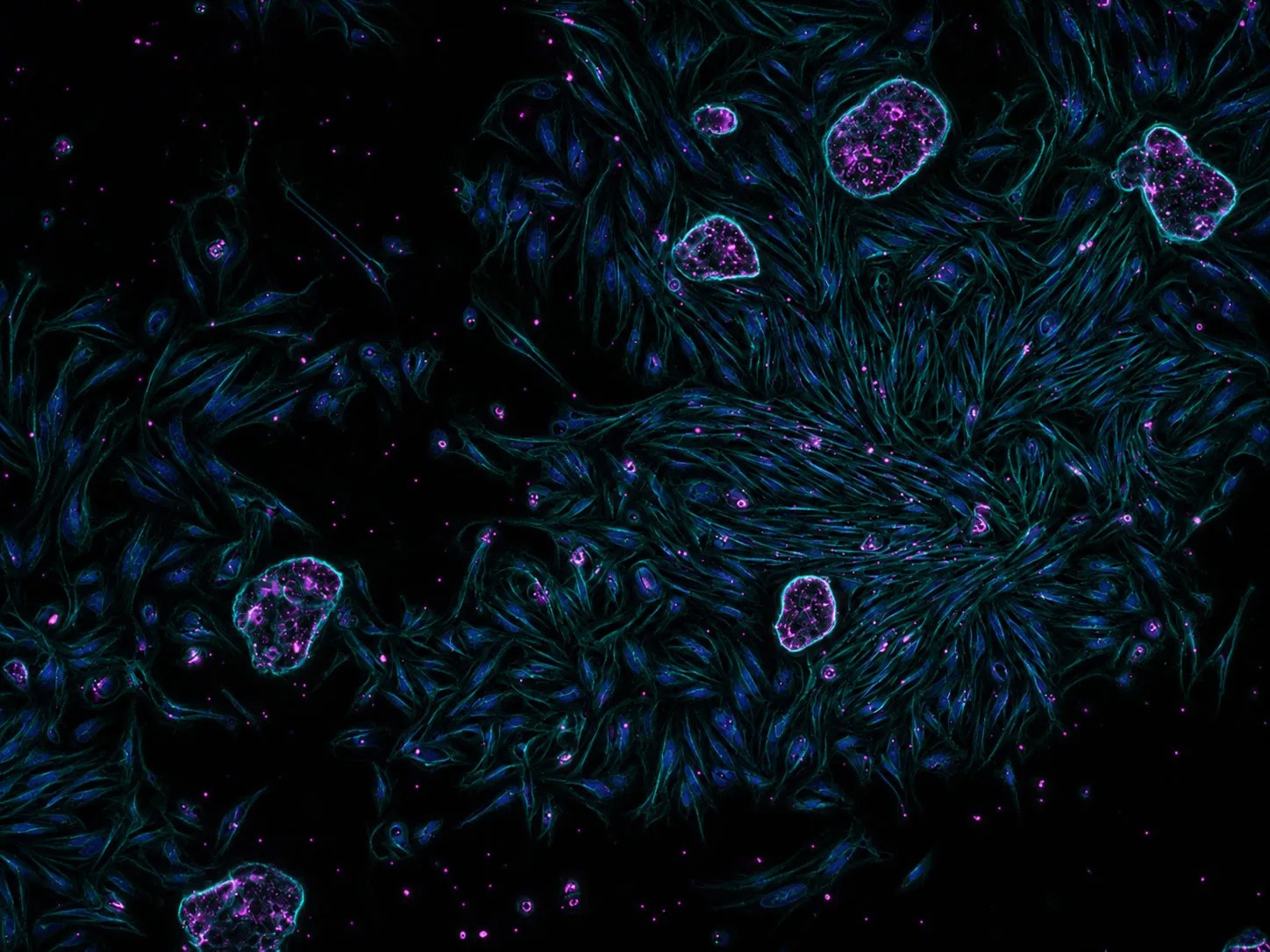
Every time astronauts return home, scientists learn more about how being in space affects human biology. There’s also now increasing evidence that space can act as a special kind of laboratory for studying diseases, which is why cancer microtumors are being grown on board the International Space Station (ISS).
It might sound counterintuitive, but cancer tumors grown in orbit more closely resemble those in the human body. The lack of gravity means they assemble into the right 3D shapes more readily, allowing researchers to get a better idea of how they spread—and how they react to treatment.
Read more: “How a Sick Chicken Revolutionized Cancer Research”
Those are two aspects of cancer—how well people respond to chemotherapy, and how tumors metastasize—where there’s a lot of variability between patients. Better modeling of those variables in full microgravity 3D promises to improve approaches to tackling the disease. For instance, one of the aims is to cut down on the rounds of chemotherapy that patients need, as well as minimize side effects, by tailoring treatments more specifically.
This particular experiment is called Encapsulate-1, named after the biotech company developing the technology. They biopsy samples from real patients to grow mini tumors on chips, which are then stored in a portable, self-contained, lunchbox-sized lab sent to the ISS. Encapsulate researchers on the ground monitor the development of the cells from Earth via camera feeds and other monitoring instruments.
“The astronauts didn’t need to touch anything,” Encapsulate founder Armin Rad told Upward, the ISS lab magazine. “Honestly, they just plugged it in like a coffee machine.”
Encapsulate’s experiments are scheduled to run for three years, backed up by further research and development in labs still weighed down by Earth’s gravitational pull.
It’s not just cancer tumors that are being grown in space either. There’s growing interest in manufacturing cancer drugs there as well. Microgravity is again the reason, because the same lack of pressure and pull that helps tumors expand properly can also allow drug crystals to fully form.
It’s space exploration of a whole different kind. 
Enjoying Nautilus? Subscribe to our free newsletter.
Lead Image: Encapsulate Inc.