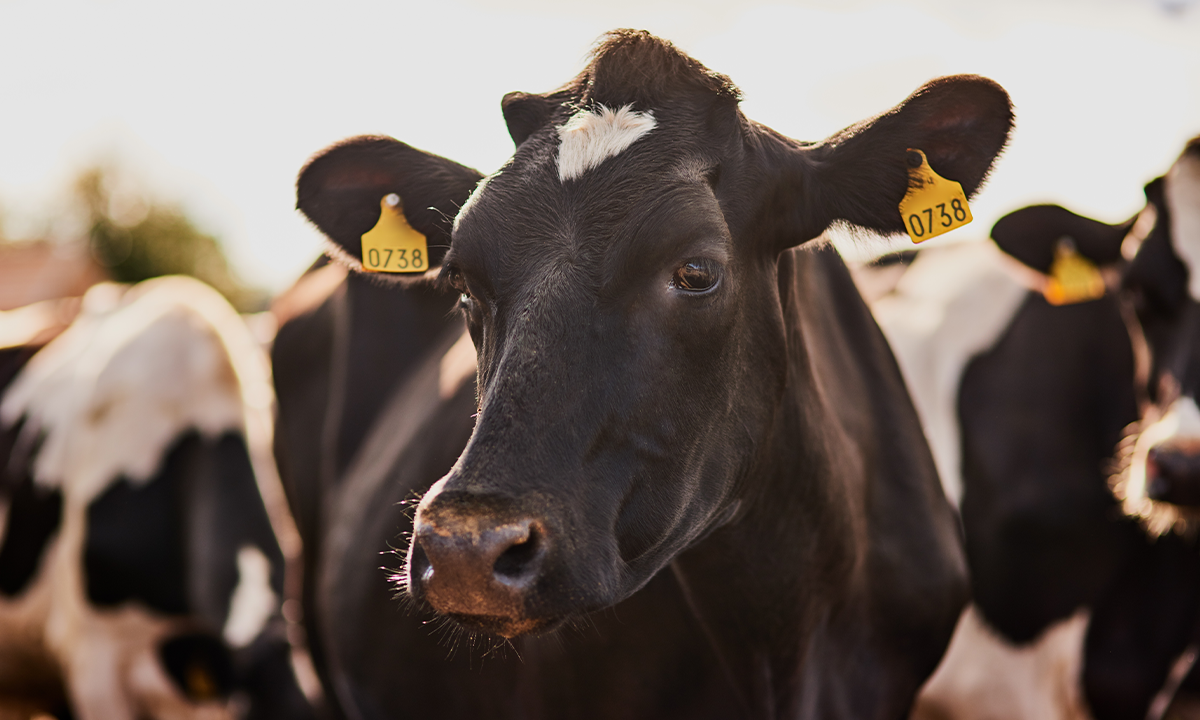
Farm animals are attacked by a whole slew of pathogens—from the bacteria causing anthrax to the virus causing avian flu. Louis Pasteur derived the first live vaccines for animals in the 1850s, yet we’re still fighting global infections that threaten to take down livestock and spill over to humans. Because farm animals share close quarters, their transmission rates are high, leading to deadly outbreaks. Case in point: the recent uptick of lumpy skin infections in cattle, prompting the French government to deploy its army to help stem the spread with vaccinations.
A new study published yesterday in PNAS collated global disease and vaccination data for the 104 diseases most common in cattle, poultry, and pigs. A collective of researchers from universities and One Health organizations in the United States, France, Switzerland, and Belgium aimed to gather systematic data on global vaccination coverage to expand prevention and control of livestock diseases. They pooled information from the last 20 years’ worth of country-wide reports on vaccination programs and stats from World Animal Health System, a global reference for animal diseases.
Read more: “The Animals that Exist Between Life and Death”
Spanning more than 200 countries and territories, the study homed in on the top 11 diseases most targeted by official vaccination programs. The results revealed vaccination shortfalls across the board. In cattle, vaccination rates are 16.64 percent for foot and mouth disease; 33.80 percent for lumpy skin disease; 11.57 percent for anthrax, and 7.93 percent for rabies. In poultry, vaccination coverage is 16.71 percent for infectious bronchitis and 17.62 percent for an extremely contagious disease called Newcastle. And in pigs, the rates are 6.56 percent for classical swine fever, 4.96 percent for anthrax, and 8.08 percent for rabies.
Looking at which countries were most affected by each disease relative to their vaccination rates, they identified places where preventative measures most need bolstering. The weakest links in the global vaccination chain were in India and Argentina for cattle diseases; China and Russia for pigs; and China, Brazil, and Iran for poultry. In China, for example, estimated anthrax cases in pigs for 2025 totaled 118, against a worrying backdrop of only one percent vaccine coverage.
The researchers concluded that current vaccination rates for livestock might not be sufficient to prevent diseases that threaten food security and humans, noting that “global vaccination trends in at-risk regions have remained relatively stagnant over time.” As for solutions, they argued that integrating all the available evidence on disease transmission and vaccination rates in livestock will provide a baseline from which to make improvements toward better global health. 
Enjoying Nautilus? Subscribe to our free newsletter.
Lead image: PeopleImages / Shutterstock