Italo Calvino felt it even before all the data were in. “The universe is a mirror,” the science-curious novelist wrote in 1985’s Mr. Palomar, “in which we can contemplate only what we have learned to know in ourselves.” Tell me about it, Italo.
This week the universe started looking a whole lot more mirrory—at least for this middle-aged human—with researchers reporting that galaxies are getting colder while rates of star formation are slowing. In short, the universe is over the hill. As an individual on the downslope of life, I can relate.
A gaggle of scientists came to this mildly dispiriting conclusion after analyzing data from two European Space Agency telescopes tasked with compiling the most complete map of the universe ever assembled. They considered the volumes and temperatures of stardust from more than 2 million galaxies, and suggested that the universe’s heyday—as measured by the rate of new stars born—may be about 10 billion years in the rearview. They published their findings in a preprint that was submitted to Astronomy and Astrophysics.
Read more: “Before There Were Stars”
University of British Columbia cosmologist and co-author of the study Douglas Scott broke the news thusly to the universe in a statement. “The Universe will just get colder and deader from now on,” he said. “The amount of dust in galaxies and their dust temperatures have been decreasing for billions of years, which means we’re past the epoch of maximum star formation.”
I feel you, universe.
But let me remind you that we have a lot of good spacetime ahead of us. I too know that my epoch of maximum star (read: memory) formation is behind me, but I still have some great years ahead of me. And so do you. I fully anticipate sticking around for at least another 40-something years, and you can expect to persist for somewhere between 33 billion and 1 quivigintillion years, according to some of the same scientists who just declared you to be elderly.
We’re still expanding even if we may be slowing our roll a bit. Here’s to living out our remaining epochs with style, grace, and the occasional supernova. See you in the mirror! 
Enjoying Nautilus? Subscribe to our free newsletter.
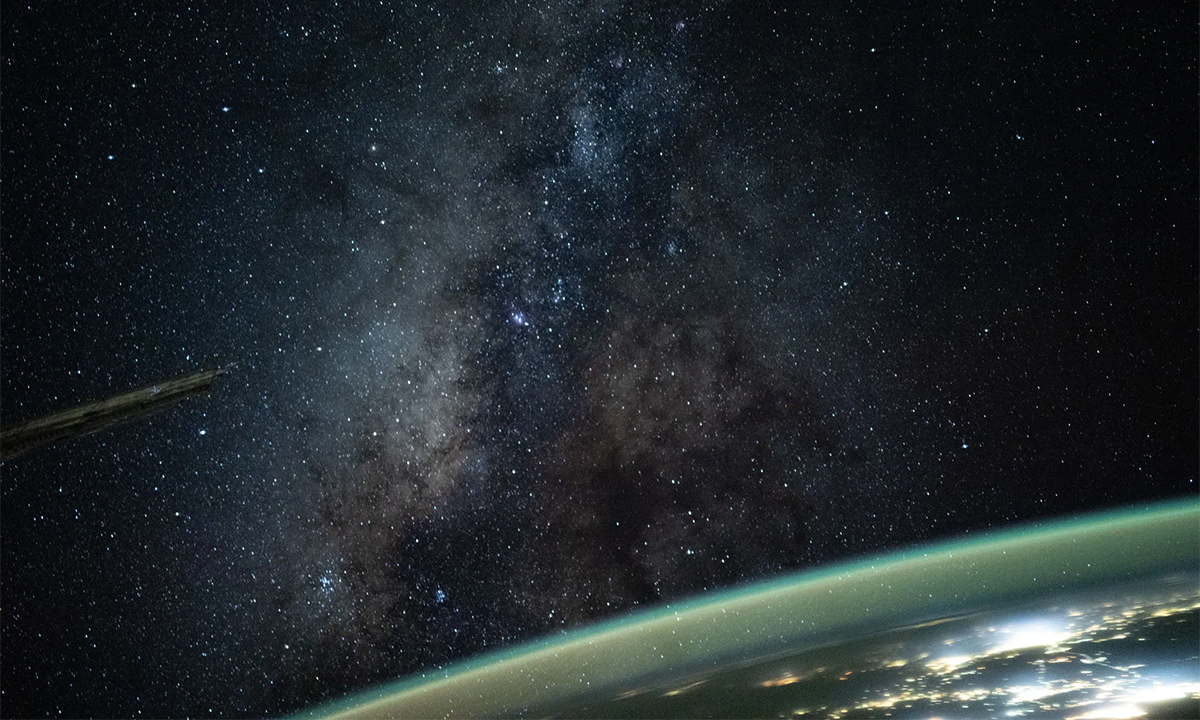
Lead image: NASA; JAXA