
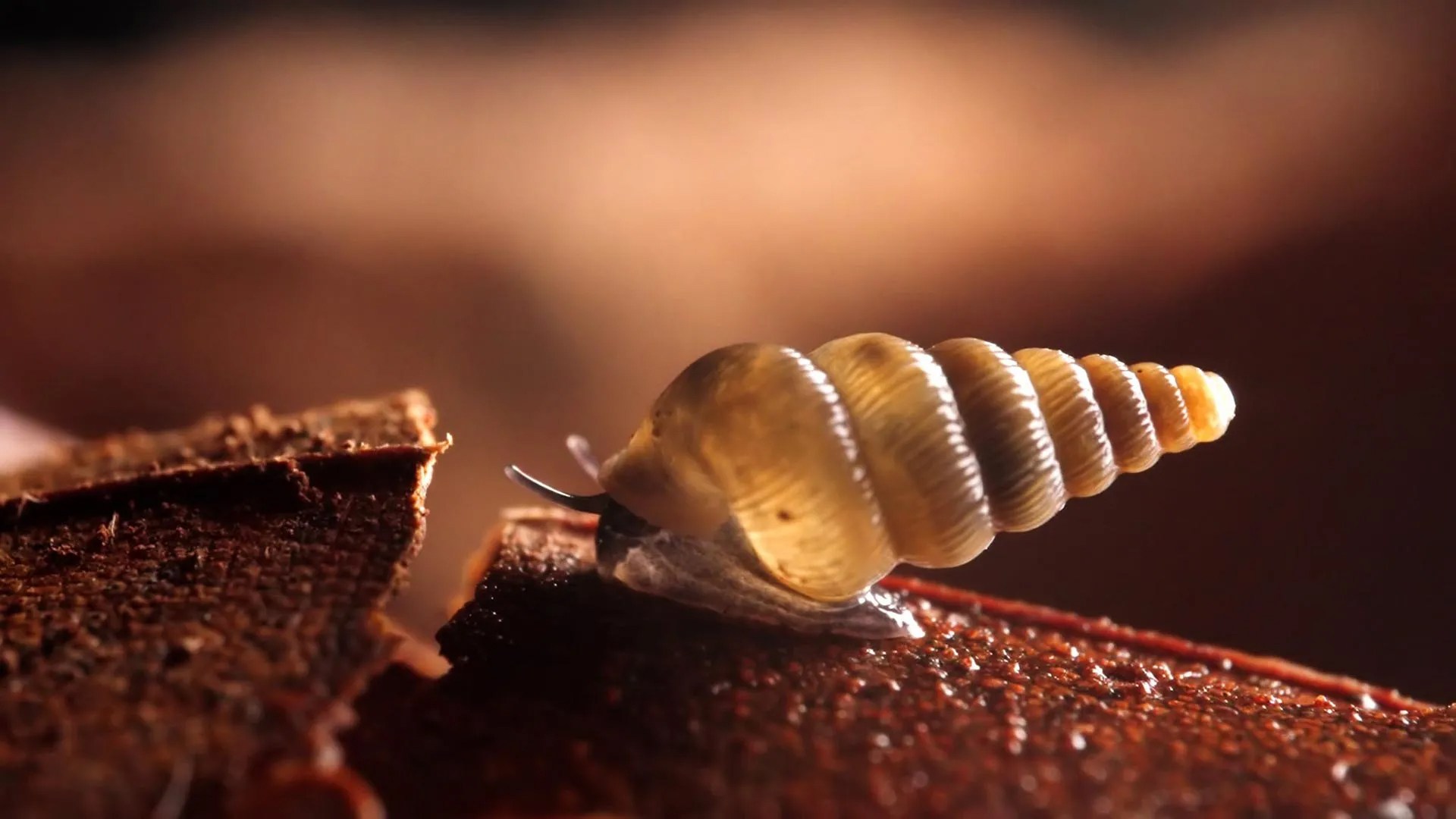
Most of us who have been teenagers know the unique satisfaction of seeking refuge behind a shut door. So do these two new snail species in Montenegro that boast tiny openings on their shells that can be closed like doors.
After a hard day of slowly sliming around the neighborhood, it must be a relief to shut out the rest of the world and get some peace and quiet. These openings (or “operculum”) are common in freshwater and sea snails, but not in European land snails like the two found here—a clue to the ancestry of the species.
By sealing up their shells, the snails are able to trap moisture in and keep predators out. Other snails use a temporary layer of mucus for the same thing.
Another feature that distinguishes these creatures from most land snails is the position of the eyes on the sides of their heads, rather than on stalks. Both species measure under 0.28 inches long and live in limestone rocks, with algae and lichens making up their daily diet.
Read more: “How Snails Cross Vast Oceans”
The new species, detailed in a recent study, are Cochlostoma komarnica and Cochlostoma dobrido, names that reflect where they were found: the Komarnica Canyon and the Dobri Do Plateau, respectively.
C. komarnica tends to live a little lower down in terms of altitude than C. dobrido. In wet weather, they were observed foraging and exploring, while dry weather saw them take refuge in cracks and rocks and under moss—the snail equivalent of the patio umbrella.
Any new species discovery helps in the cataloging and protection of wildlife, but there’s a particularly urgent conservation angle to the C. komarnica snail. The canyon it was found in is scheduled to be flooded as part of a hydropower dam and reservoir project. “This will destroy this wild river canyon and all the biodiversity in it, including many species still unknown to science,” study author Jovana Đokić explained in a statement.
To help ensure the future of C. komarnica, the study team is calling for the canyon to be added to the existing UNESCO World Heritage site of Durmitor. After all, it’s going to take more than a shell door to protect these animals if the dam project goes ahead. 
Enjoying Nautilus? Subscribe to our free newsletter.
Lead Image: Roman Willi/Wildreach Productions