
As you prepare to celebrate Thanksgiving, a new paper published in Ecology is revealing the many uninvited guests that may be lurking. It’s the largest study to date of the insects, spiders, and other bugs that populate our homes, offices, and other spaces.
“Our goal with this work was to treat the indoors, at the continental scale, as an ecosystem that we wanted to explore as ecologists,” study author Bradley Allf, now at Colorado State University, explained in a statement.
Read more: “5 Devious Ways People Made Bugs Into Bombs”
To catalog the various microfauna of the household biome, an international team of biologists relied on its megafauna—us. They created a citizen science project called Never Home Alone through the iNaturalist app, and asked users to submit photos and videos of the critters they found scurrying around their houses. Altogether, they received nearly 24,000 reports from the United States and Canada, which they then had to comb through to properly identify the species
So what did they find?
The most common household bug was also the charismatic mascot of friendly insects: the ladybug (Harmonia axyridis). One notch down the ladder was the slightly less friendly brown marmorated stink bug (Halyomorpha halys). Originally native to Asia, this invasive species first popped up in Pennsylvania in 1998 and has spread throughout North America since, plaguing crops as it went. The odor it emits when threatened is reminiscent of cilantro and is especially noisome to people with the gene variant that makes the herb taste like soap.
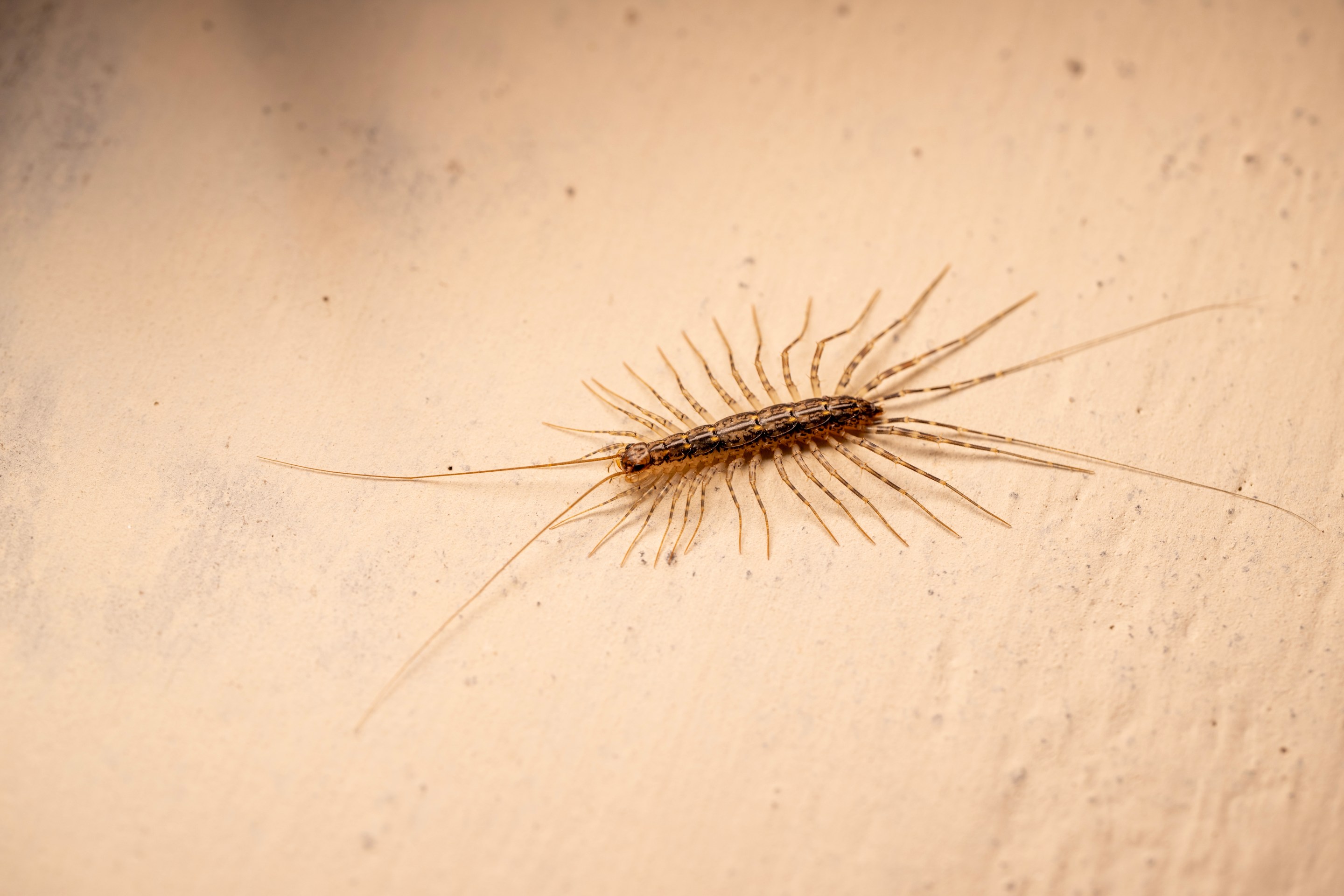
Next on the list was the house centipede (Scutigera coleoptrata). This many-legged nightmare may look heinous, but it actually hunts and kills other household pests like cockroaches, bed bugs, and termites. You can also tell how old they are by the number of legs. The nymphs are born with just eight, but gain two more each time they molt, maxing out at 30 (though it may seem like more when you spot one climbing up a wall).
From there, the carpet beetle, a mostly benign household critter, was followed by several spiders, all of which help keep other arthropod populations in check (including by eating each other). The long-bodied cellar spider (Pholcus phalangioides) and combfoot spider (Steatoda triangulosa) are responsible for pesky cobwebs in the corners, while the Eastern parson spider (Herpyllus ecclesiasticus) and bold jumping spider (Phidippus audax) are more free-ranging predators.
Rounding out the top ten was another semi-invasive species, the Western conifer seed bug (also known as the pine beetle). Originally native to the Western United States, these true bugs are now all over the East Coast. While they’re also harmless, their mouthparts are sharp enough to pierce trees, and they’ve been known to cause leaks with errant jabs into flexible plumbing tubing.
But why catalog the creatures living in our homes anyway?
Well, now that they’ve assembled this vast dataset, other researchers can utilize it to answer a variety of questions. “It could inform future research in many ways,” study author Rob Dunn explained. “For example, we now know that camel crickets carry a microbe that can break down paper products. That could be useful. What else might be out there, in our own homes?”
And if you’d like to help, you still can. “People can still submit observations to Never Home Alone,” Allf says. “The more data the project collects, the more insight we’ll have on the unique and growing ecosystem of the great indoors.” 
Enjoying Nautilus? Subscribe to our free newsletter.
Lead Image: tahirsphotography / Shutterstock