















 Facebook
 Twitter
 Pocket
 Reddit
 Email
Email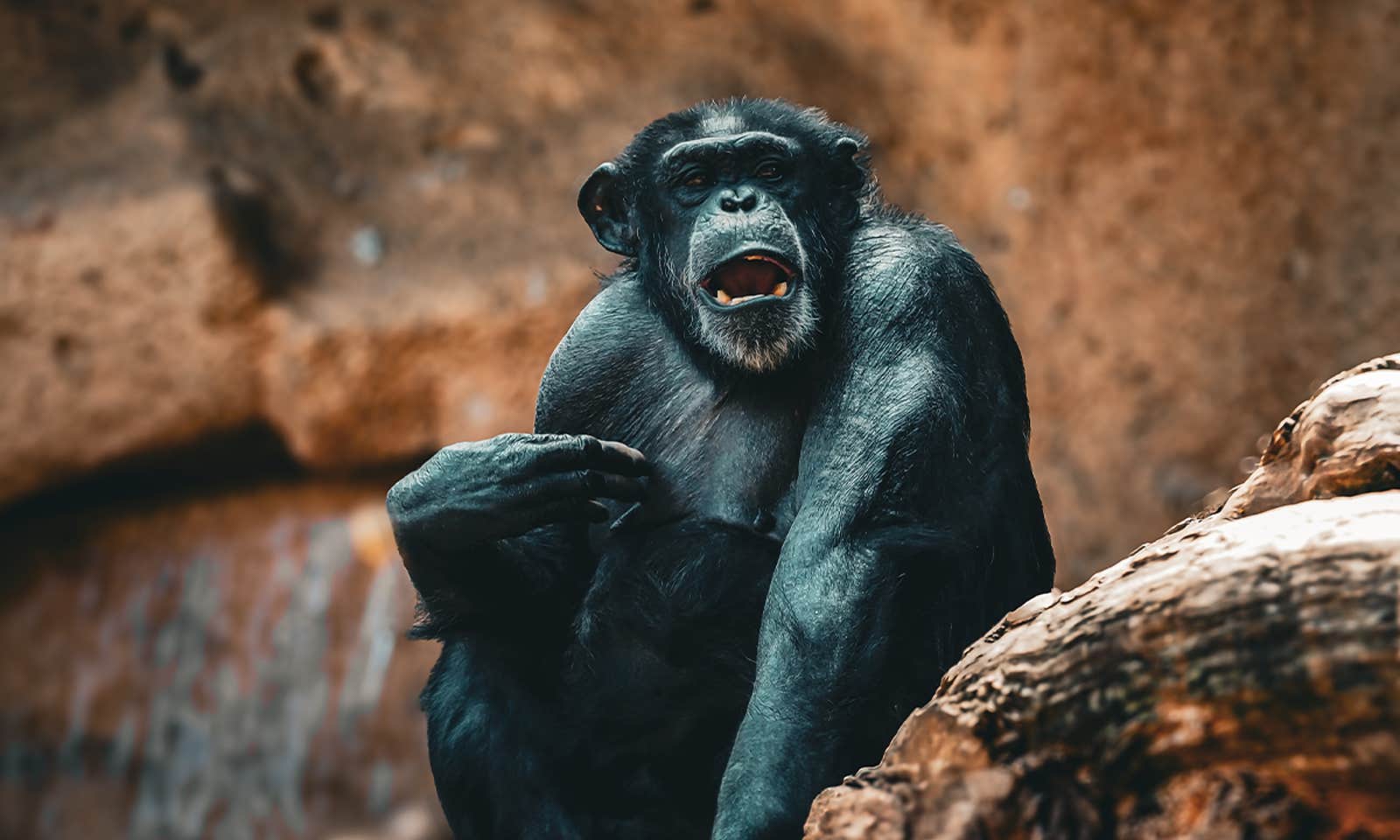


When you listen to a jungle ape whooping through the canopy what do you hear? If it’s a chimp who’s responsible for the cacophony, it may trigger an ancient form of recognition, flickering below your conscious awareness.
Such are the findings of a new study from researchers at the University of Geneva: They observed that chimp calls light up pockets of a special voice-sensitive region of the human brain, known as the temporal voice area (TVA), which had been thought to respond only to the voices of our own kind. The results suggest that certain voice recognition abilities may be shared across species and predate human language.
“When participants heard chimpanzee vocalizations, this response was clearly distinct from that triggered by bonobos or macaques,” said study co-author and University of Geneva neuroscientist Leonardo Ceravolo in a statement.
Four primate species were enlisted for the study: humans, chimpanzees, bonobos, and rhesus macaques. Ceravolo and his colleagues gathered 18 vocalizations from each of the four apes and randomly presented them to 23 human participants, asking listeners to play a sort of auditory guess-who, identifying which species was behind each cry. They also monitored the participants’ brains with MRI while they were listening and analyzed the calls using statistical modeling to understand how they differed acoustically.
Read more: “The Cosmopolitan Ape”
The participants’ brains lit up when processing the calls of the chimps, their TVA regions responding more readily to the chimp sounds than to those of any of the other non-human primates. The researchers also found that positive social calls from chimps, but not bonobos, were acoustically most similar to positive human voices. The findings echo previous research that suggests the communication patterns of bonobos, our more peace-loving evolutionary cousins, evolved separately over time, even though we are genetically as close to bonobos as to chimps.
The primate vocalizations consisted of single calls or call sequences and included both threat and distress calls and positive social calls. The 15 chimpanzee individuals were recorded in the wild in the Budongo forest, Uganda, while the 10 bonobo individuals were recorded in the wild in the Salonga National Park in the Democratic Republic of Congo. The 16 rhesus macaques were recorded in the wild from semi-free monkeys on Cayo Santiago, Puerto Rico.
Previous studies have looked at how human brains respond to both primate and cat calls, but before now, no research has observed specific cross-species responses in the human TVA, the researchers point out. Future work may tease apart the acoustic fingerprints that set chimp calls apart from those of bonobos.
“We already knew that certain areas of the animal brain reacted specifically to the voices of their fellow creatures,” added Ceravolo. “But here, we show that a region of the adult human brain, the anterior superior temporal gyrus, is also sensitive to non-human vocalizations.”
It seems the call of the wild is still lodged deep inside the human brain. 
Enjoying Nautilus? Subscribe to our free newsletter.
Lead image: Fabrom / Shutterstock