















 Facebook
 Twitter
 Pocket
 Reddit
 Email
Email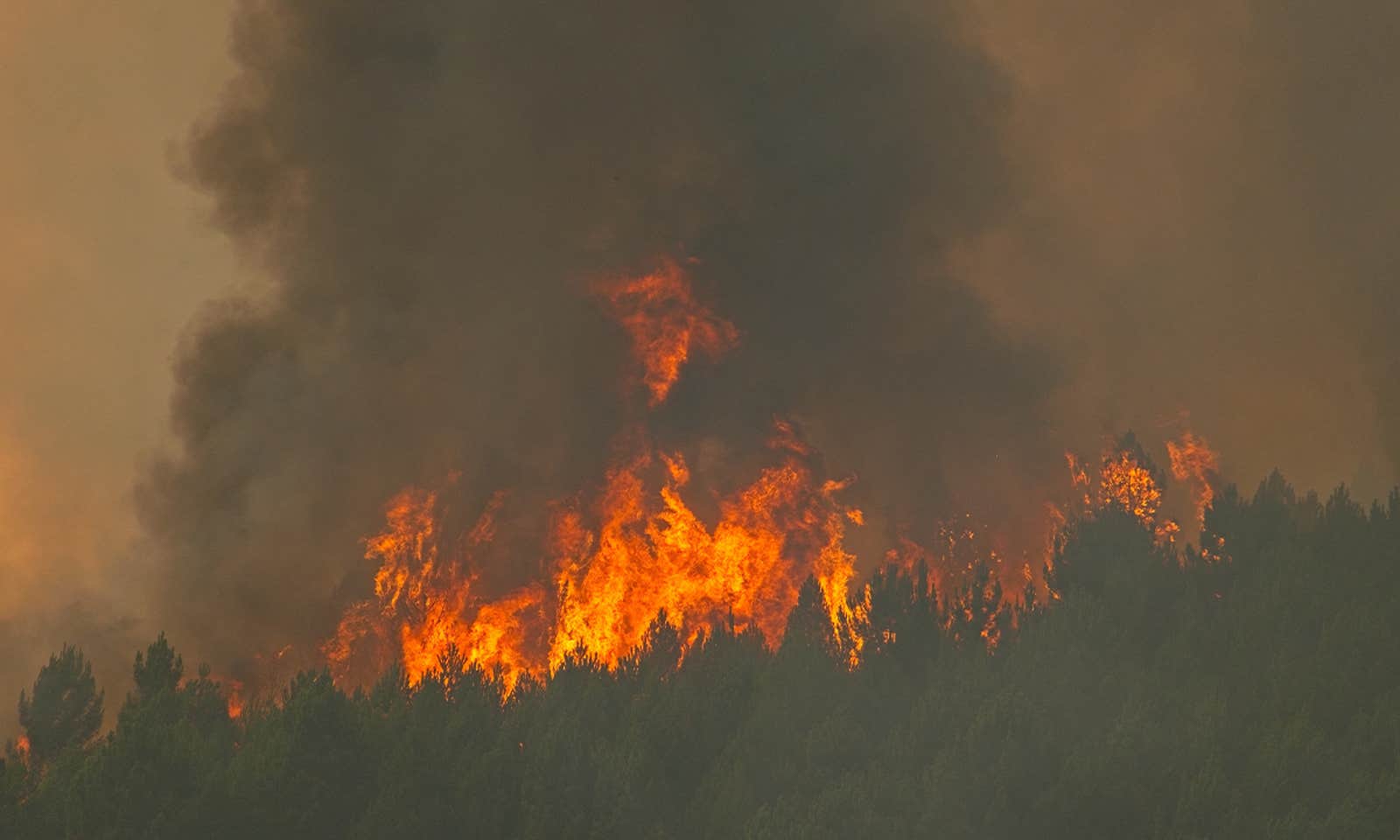


With climate change bringing higher temperatures and irregular rainfall, wildfires have been ravaging the West Coast of the United States in recent years. A history of limiting natural fires has caused buildups of dry brush that ignite into particularly potent blazes—“megafires.” Human survival takes priority in wildfire responses, with impacts on wildlife, such as stream animals that may experience aftereffects of fire in scorched watersheds, taking a backseat.
A new study by scientists in Corvallis, Oregon, found, surprisingly, that many fishes and amphibians fared remarkably well after megafires. “Our work looked at the three years following megafires in western Oregon and suggests that fishes are thriving and amphibians are persisting,” said Oregon State University postdoc and study co-author Allison Swartz in a statement.
Swartz and collaborators from OSU, the National Council for Stream Improvement, Inc., the U.S. Forest Service’s Pacific Northwest Research Station, and the U.S. Environmental Protection Agency surveyed 30 watersheds on the western slope of the Cascades. These conifer ecosystems in the shadow of the mountains receive abundant rainfall, making them home to diverse assemblages of fishes, frogs, salamanders, and crayfish. The watersheds selected for the study encompassed a range of fire history, including the nearly half-million acres burned by megafires in 2020.
Read more: “Wildfires are Changing Animal Evolution”
The team expected to find lower densities of aquatic animals in more severely burned stream systems, particularly where timber had been salvaged, which is known to alter the dynamics of streamside runoff.
Instead, the results showed that total densities of vertebrates were higher in streams that drained the most scorched watersheds. There were some species-level reductions, such as lower frog densities in areas with lots of timber salvage. But, overall, stream vertebrate populations had weathered the changes well.
“Despite experiencing high-severity megafires, vertebrate assemblages and populations seem to be buffered from fire-induced changes if adequate physical habitat and food availability are maintained post-fire,” concluded Swartz.
The researchers point out that co-existing with new, climate change-induced fire regimes requires not only taking care of humans but also considering the effects on native fauna. In their study of Cascade streams, some of the extreme events that can follow high-intensity fires, such as landslides, had not occurred. But more research on how wildfires change watershed ecosystems is warranted. 
Enjoying Nautilus? Subscribe to our free newsletter.
Lead image: Nuria PhotoStock / Shutterstock