

ADVERTISEMENT
Nautilus Members enjoy an ad-free experience. or Join now .

Unravel the biggest ideas in science today. Become a more curious you.

Unravel the biggest ideas in science today. Become a more curious you.

The full Nautilus archive eBooks & Special Editions Ad-free reading

  • The full Nautilus archive
  • eBooks & Special Editions
  • Ad-free reading
Join
Explore

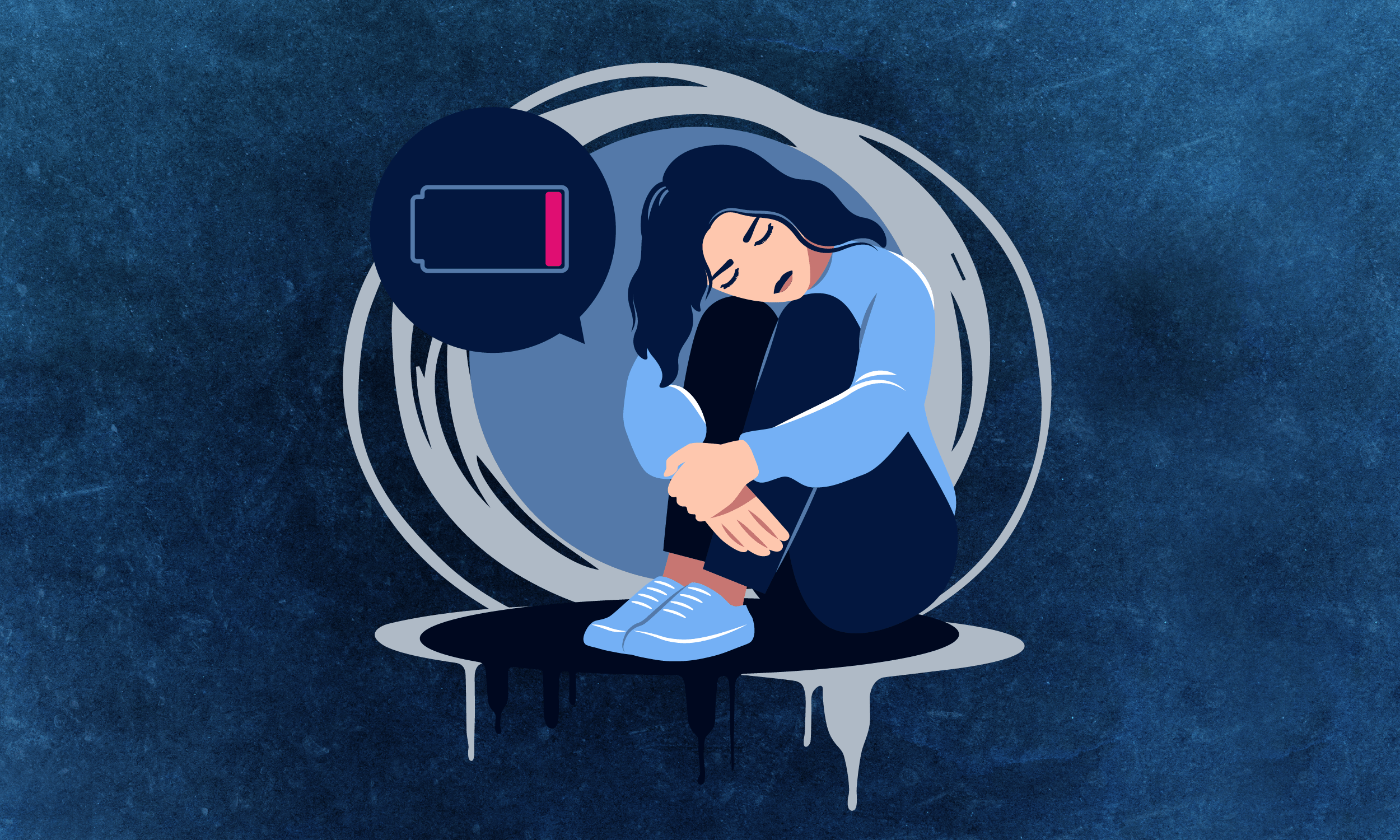
Middle-aged adults are the glue and the gears of modern society. They keep families, communities, and workplaces running smoothly, and form a critical bridge between the oldest and the youngest generations. But evidence increasingly shows they’re not doing well. They’re more lonely and depressed than previous generations, and their cognitive and physical health are suffering—at least this is the picture you get from studies done in the United States.

Nautilus Members enjoy an ad-free experience. Log in or Join now .

What is driving this midlife slump, and is it just an American thing? A team of researchers from Germany and the U.S. wanted to know, and so, they pulled together massive datasets from across generations and countries. Their focus was adults born between the 1930s and the 1970s: the Silent Generation through early Gen X. They looked specifically at loneliness, depressive symptoms, memory, and physical health and used nationally representative surveys that followed the same individuals over time. These datasets had been harmonized so that the different measures in different countries would line up. Next, they used statistical modeling to separate country patterns from individual change and to link country-level indicators like family-benefits spending and income inequality to individual outcomes, especially loneliness. They published their results in a new study in Current Directions in Psychological Science.

They found that U.S. residents are in a category of their own, as the midlife slide is mostly confined to the U.S. Middle-aged adults in many parts of Europe, Mexico, South Korea, and China aren’t suffering the same kinds of decline, showing either mixed patterns or the reverse. These patterns seem to be linked to a disintegrating safety net, rising stress levels, higher healthcare costs, and inequality in the U.S.

ADVERTISEMENT
Nautilus Members enjoy an ad-free experience. Log in or Join now .

I spoke with study author Frank Infurna, a psychologist at Arizona State University, about why middle-aged Americans are suffering so much, what we can do about it, and what gives him hope.

Your study showed that Americans born in the 1960s and ’70s report higher loneliness and depressive symptoms and weaker memory and physical strength than earlier generations. And your analysis suggests a lack of structural social support is largely to blame. How are these things connected?

The U.S. is unique. We’re exceptional for all the wrong reasons in this context. If you look at the U.S. compared to Germany or Sweden, when it comes to family benefits, there’s parental leave in Germany up to 14 months, shared between both partners and at 70 percent pay. Childcare is subsidized. The education system is very well funded. And then it also expands to the workplace. In the U.S., our healthcare is tied to our employment, but if we lose our job, then chances are we lose our healthcare as well. So there’s nothing to really fall back on for those situations when you find yourself out of a job or trying to navigate being a parent.

ADVERTISEMENT
Nautilus Members enjoy an ad-free experience. Log in or Join now .

And in the U.S., there are a lot of financial stressors and burdens with childcare. You look at the childcare bill, and you’re like, “I could just stay home and not send all my money to the daycare.” But these types of things accumulate. You’re not able to save as much money and put money away for retirement. And then, couple that with the fact that worker productivity has steadily increased since the 1980s, but our wages haven’t kept up that pace. So our paychecks don’t go as far as previous generations. I think this certainly adds to the decline that we’re observing for middle-aged adults.

You note in the paper that education’s protective factor may be eroding. Why might that be?

In previous generations, people could have been buffered against some of these things that are happening. But while education levels have increased, these stressors permeate beyond socioeconomic status: the daily stressors and the financial stressors and the changing relationships with aging parents and children.

ADVERTISEMENT
Nautilus Members enjoy an ad-free experience. Log in or Join now .

It looks like middle-aged adults in the Nordic countries are doing the best. Is there a single structural factor that stands out as supporting this outcome?

I’m thinking all of them together at once. We cite a paper that we have under review where we look at family benefits as a percent of GDP. And Nordic nations do invest more in family benefits, such as subsidized childcare, investment in education, but also parental leave and unemployment leave. And those nations that invest the most in these areas show more positive outcomes for middle-aged adults. So it really does tie into all of those structural aspects.

As a measure of physical health, you used grip strength. Can you describe what that measures and whether there’s anything that it would miss?

ADVERTISEMENT
Nautilus Members enjoy an ad-free experience. Log in or Join now .

It’s a really simple measure. You squeeze a tool called the dynamometer three times, and we take the best of the scores. For such a simple measure, it’s remarkable how much predictive validity it has. A lot of studies have shown stronger grip strength in midlife is associated with decreased risk of disability and longevity and better overall physical health and cognitive health in old age. Some neuroscientists have talked about it being a marker of structural integrity within the brain. It works with all ages. I have colleagues who use it in their studies on children and adolescents.

There has certainly been a lot of attention given to the health effects of caregiving lately. How much of a role do you think that’s playing in the trends we’re seeing in the U.S.?

The idea of the sandwich generation has been around for a while, but I feel like now we have the sandwich generation on steroids. Because you have your aging parents who often need help, and then you often have kids who are struggling to leave the nest, largely because wages aren’t as high. So maybe they’re finding full-time work, but they’re not able to afford rent or buy a home.

ADVERTISEMENT
Nautilus Members enjoy an ad-free experience. Log in or Join now .

Read more: “Does Life’s Happiness Have a Shape?

This weekend, I went to the hardware store and I ran into someone I used to go to the gym with, and he has four kids. The older two are married, and one of his sons who’s married currently lives with him and his wife. And then he’s building a casita for his other child who’s married because they can’t afford a house. People want to leave the nest, but they have no choice but to come back because housing prices have far outpaced wages. Also, many middle-aged adults, at least this generation, had kids later on. So you’re balancing the aging parents with kids who aren’t out of the house. And the parenting stressors are just incredible.

I have two kids, and I often catch myself thinking, “Was it this stressful for my parents?” You have the cultural pressure of succeeding and making sure that your children can get into the best college, and it’s constant comparison. You have all these sports leagues that have travel teams for everything. It’s like, “Do they really need to be doing that?” It’s such a financial cost, too. Someone was telling me that her daughter’s gymnastics costs $500 a month, and because of that, she started to put less away for retirement to keep up with that cost. There are just a lot of forces at play.

ADVERTISEMENT
Nautilus Members enjoy an ad-free experience. Log in or Join now .

Are there any other groups that you’re especially curious about looking at next, in terms of how they’re faring?

I’d like to look at other low- and middle-income nations. One of my graduate students is from Ghana, and for his dissertation, he will be looking at longitudinal data from three nations in Sub-Saharan Africa. Different age groups as well. I want to see how these patterns map onto other nations and in different income spectrums. Is it just a Western high-income kind of phenomenon?

On a more positive note, in the study, you talk about resilience and things that can help people weather these pressures. What gives you the most hope that we can turn things around?

ADVERTISEMENT
Nautilus Members enjoy an ad-free experience. Log in or Join now .

One thing that really interests me is I’ve been looking to dig deeper into how much the states in the U.S. vary in their policies. When it comes to these ideas that we talk about at the national level in the U.S., Sweden, and Germany. Just within the U.S., there’s so much heterogeneity in how the states implement their policies when it comes to things like health-behavior taxes, like on cigarettes, expansion of Medicaid and Medicare, investment in schools. And you know, some states do have family leave. So even if your employer doesn’t provide it, you could live in a liberal state that does. And investment in childhood education varies a lot. I think Arizona, where I live, is 51st in public schools.

Biden’s Build Back Better plan failed, but it was attempting to implement this at the national level. I have hope that, at least policy-wise, certain states are recognizing this and doing what they can. Because there’s only so much you can tell an individual, “You have to watch your finances, and you have to do this and that.” If the dollar doesn’t go as far, then what are you gonna do?

A lot of other things I talk about when I give talks on this topic is just finding your community and your support system. It’s not so much about developing new friendships, but a term that I read about last year is “fringe-ships.” These are people that you see in certain contexts. If you go to the gym at the same time on the same days, or in the neighborhood, if you run into the same people repeatedly, eventually you just strike up conversations and it evolves over time. And it’s a low-pressure situation. Same thing at pick-ups and drop-offs for my kids at school. I typically see the same parents—we chat for a couple of minutes and then we just pick up where we left off the next time we see each other. I’ve found a lot of value in those types of interactions of just comparing notes on parenthood, knowing that okay, we’re in this together. So I think there certainly is hope.

ADVERTISEMENT
Nautilus Members enjoy an ad-free experience. Log in or Join now .

Enjoying  Nautilus? Subscribe to our free newsletter.

Lead image: lohloh / Shutterstock

Fuel your wonder. Feed your curiosity. Expand your mind.

Access the entire Nautilus archive,
ad-free on any device.
1/2
FREE ARTICLES THIS MONTH
Become a Nautilus member for unlimited, ad-free access.
Subscribe now
2/2
FREE ARTICLES THIS MONTH
This is your last free article. Get full access, without ads.
Subscribe now