















 Facebook
 Twitter
 Pocket
 Reddit
 Email
Email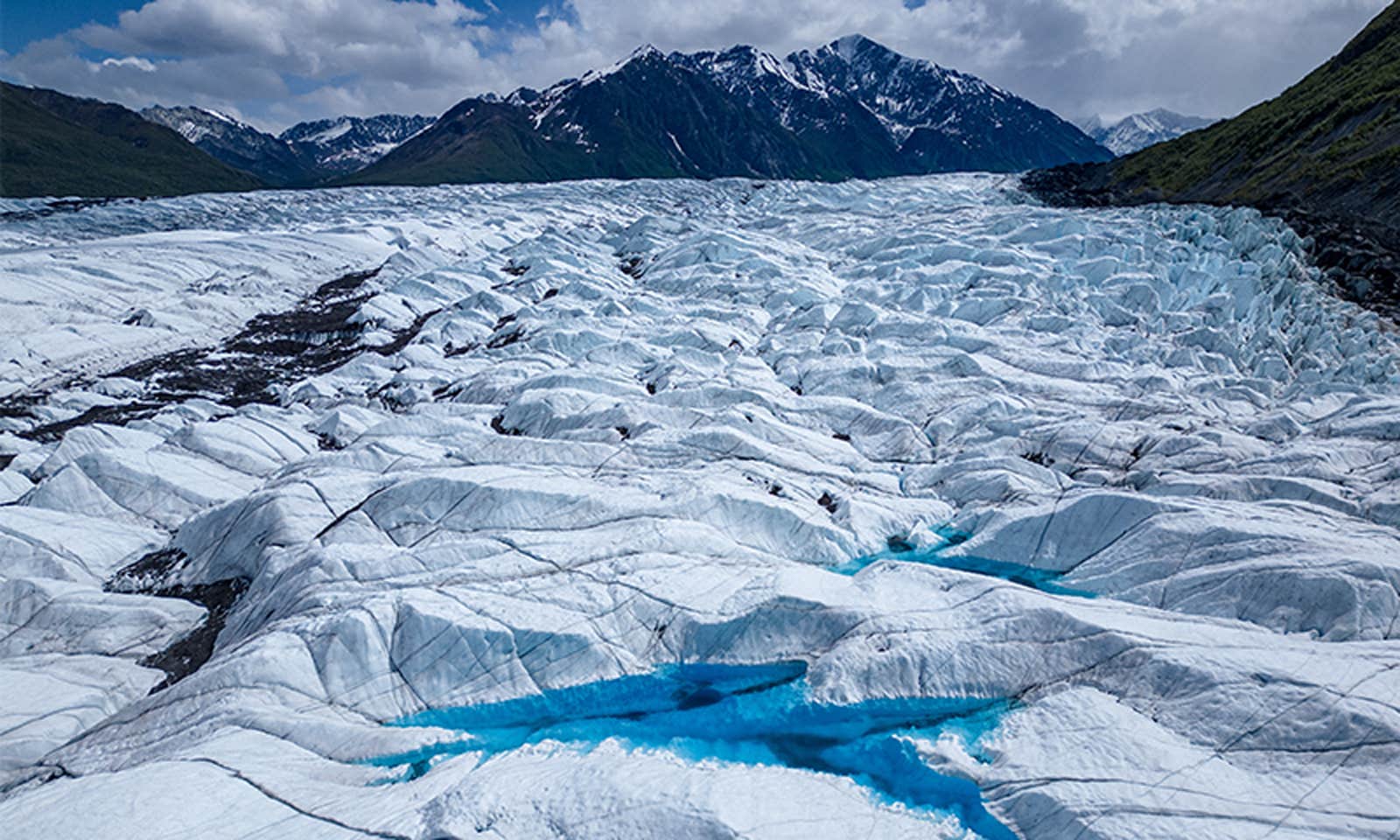


With so much focus on human-made global warming, it can be easy to forget about the natural ebb and flow of Earth’s climate that’s governed by small fluctuations in how Earth moves along its orbit. While these cycles—called the Milankovitch cycles—generally occur in 100,000-year increments, new research published in Science shows periods of glaciation started varying more dramatically over shorter periods 2.7 million years ago. This shift, researchers say, marks a climatic tipping point—and it may have shaped the evolution of our species.
“Things were relatively quiet until 2.7 million years ago, when we began to see the first evidence of severe ‘cold snaps,’” study author David Hodell of the University of Cambridge explained in a statement. “These events may have been harbingers of things to come because at 2.5 million years ago, we start to see a distinct pattern of multiple rapid swings in the Earth’s climate, on thousand-year timescales. From then on, variability was a persistent feature of the glacial climate, which is consistent with what we see in Greenland ice cores during the most recent Ice Age.”
Read more: “Wild Orbits Prime Planets for Life”
Hodell and his team identified this tipping point after analyzing the chemical composition of sediment cores taken from deep beneath the seafloor off the coast of Portugal. These sediment cores capture a pristine record of climatic history, like polar ice cores, but reach back even further in time, allowing researchers to delve deeper into Earth’s past.
“I was surprised at the superb quality and resolution of the sediment cores, and the detail of the climate signals recorded within them,” said Hodell.
Recorded within these cores was evidence of the first widespread arrival of “ice-rafted debris”—rocks carried out to sea by giant seafaring icebergs. According to the research, these layers in the core mark the period when polar ice sheets had grown big enough to reach the ocean and start calving icebergs. The icebergs cooled the oceans more, destabilizing circulation, and caused Earth’s climate to yo-yo.
Meanwhile in Africa, a young upstart genus was just beginning to get on its feet—literally. The first hominins emerged around this time, and our upright walking, generalist ancestors were uniquely equipped to adapt to the climatic chaos of this brave new world.
Now if we could just stop contributing to it. 
Enjoying Nautilus? Subscribe to our free newsletter.
Lead image: Vladimir Potapeknko / Shutterstock