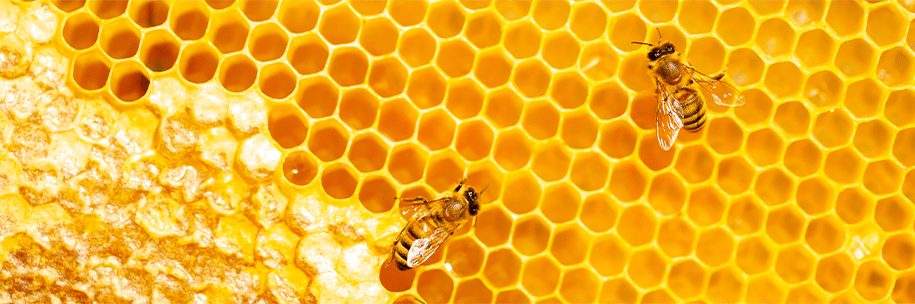
If you walk through my community garden, past the prolific greenery, tucked into a shaded corner, just next to the stacks of hives, you’ll find an altar adorned with a jar of honey and a piece of comb. It serves as a sobering reminder that, like many hives around the United States, our honeybees suddenly perished over the winter.
Though honeybee colonies have been on the decline for some two decades, by this March, honeybee deaths had abruptly hit record highs throughout the United States. Commercial beekeepers reported losing more than 60 percent of their colonies on average during the winter, adding up to an estimated cost of $600 million. The massive wave of death among the commercially critical pollinators this winter prompted urgent investigations.
Plenty of culprits could be behind this phenomenon, including excessive pesticide use. Now, researchers have found solid evidence for one possible explanation—viruses circulated by parasitic mites that invade hives, according to new research from the U.S. Department of Agriculture that has not yet received peer review. All the mites studied showed resistance to amitraz, a chemical that’s often used to control their populations and has been heavily applied to hives for several decades.
The honeybees that buzz around gardens and farms these days aren’t native to the U.S.—they were brought here starting in the 17th century by European settlers. But today, they’re treated like livestock, shipped around the country as our principal commercial pollinator. More than 100 crops grown in the U.S. depend on them, and they pollinate $15 billion worth of crops annually.
My garden doesn’t profit off bees: We offered our small population of bees lovingly arranged patches of native flowers like milkweed, bee balm, and goldenrod, to forage meals of pollen and nectar. In turn, they provided us a modest amount of honey each year, and a bit of mead, too. When we learned they’d died, it was like losing members of our garden community—ones who occasionally sting you. When I found out we weren’t alone in this loss, it was strangely comforting. But it also illuminated a bigger issue.
Just as U.S. reliance on honeybees is human-driven, their decline is also largely linked to our activity: Rising temperatures due to anthropogenic climate change spur the growth of parasitic mites, and chemicals used in agriculture also contribute to honeybee deaths. Scientists have noted that introduced honeybees compete with native bees, who duke it out over treats of pollen and nectar.
This is yet another reason to preserve native flowers, whether in your community garden, your yard, or in a pot on the stoop—ensuring that there’s a bountiful enough floral buffet for the bees who evolved here to enjoy, too. 
Lead image: Vera Larina / Shutterstock