The death of a star is among the most dramatic spectacles offered up by the cosmos, and much of the leftover matter rejoins the interstellar medium between other stars and planets.
This recycling process, however, has traditionally been difficult to observe—until, that is, the MOTHRA (Modular Optical Telephoto Hyperspectral Robotic Array) Telescope in Chile’s Rio Hurtado Valley recently got a closer look.
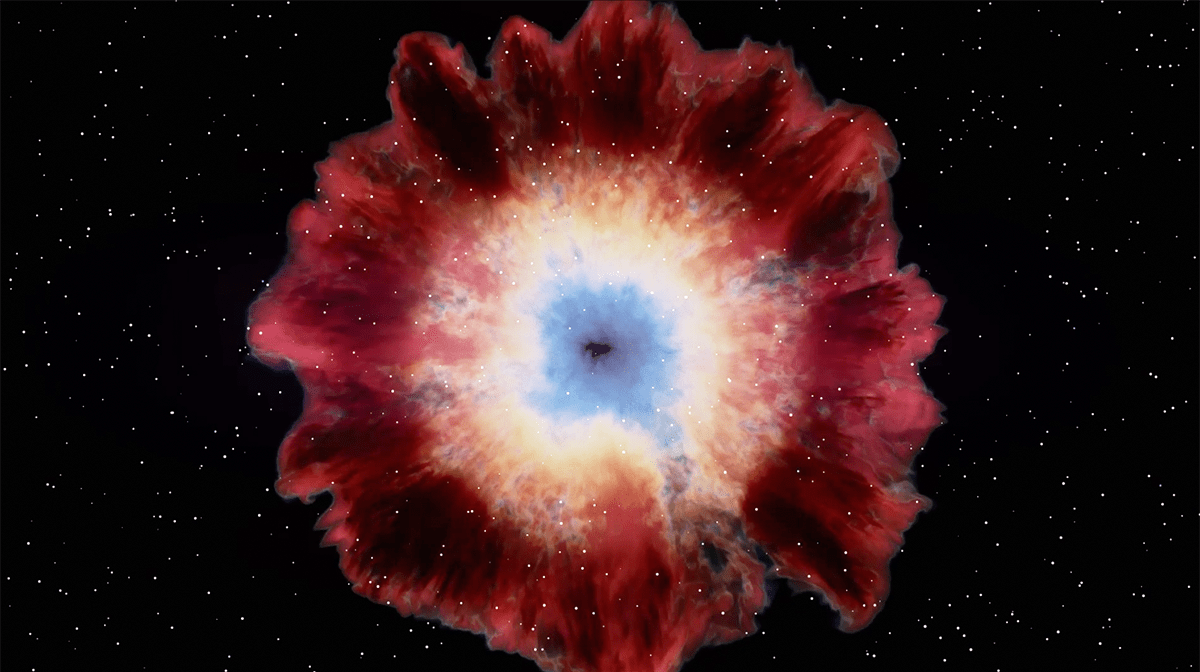
The captured image is of the Helix Nebula, a dying and dispersing star well known to astronomers. Around 650 light-years from Earth, in the Aquarius constellation, it’s one of the closest planetary nebulae—planet-shaped, glowing globes of gas and dust that intermediate and low-mass stars give off in their final stages—to our planet.
“We’re seeing material shed near the end of a star’s life being broken apart and returned to the galaxy,” physics professor Pieter van Dokkum, from Yale University, said in a statement. “Far in the future, the sun will go through a similar process, and its material will enter the same cycle."
Read more: “Inside an Exploded Star”
What stands out from the image, and what astronomers weren’t expecting to see, are a series of bow shocks produced by the stellar debris shooting off into space. These curved shock waves are forming like the waves in front of a boat’s bow, as matter pushed out from the star hits the gas around it.
The farther away from the white dwarf star the clumps of matter are, the smaller and more fragmented they become. The researchers think the ejected pieces of star debris are gradually eroding as they travel, lasting for a relatively brief 10,000 years before fully merging with the rest of the universe. (The team’s findings have been published in Nature.)
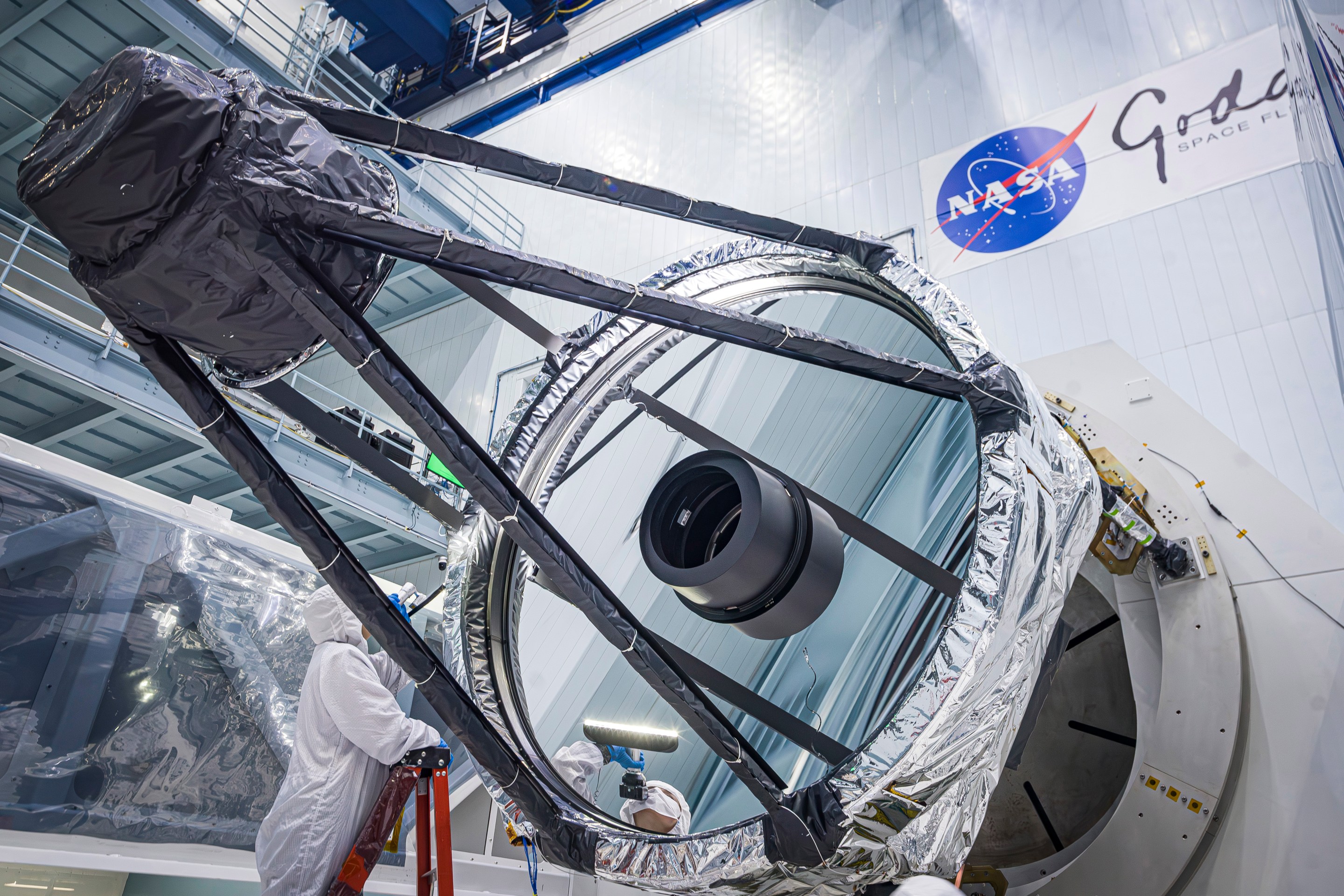
Interestingly, these bow shocks were discovered largely by accident. MOTHRA is still under construction, and it was taking aim at the Helix Nebula as a training exercise. “We thought we were taking a calibration image of one of the best-known nebulae in the sky,” astronomer Roberto Abraham, from the University of Toronto, explained in a statement. “Instead, we found this extraordinary network of bow-shaped structures. It was immediately clear that the faint outer Helix was telling us a story that had largely been missed.”
When complete, MOTHRA will boast a total of 1,140 telephoto lenses trained at the skies to give experts a better chance of capturing signals from the faintest stars and galaxies—as well as hopefully capture a lot more serendipitous discoveries like this one. 
Enjoying Nautilus? Subscribe to our free newsletter.
Lead image: Alexandre Dizeux / Dragonfly FRO.