
Skip to Content
Astronomy

A Look Back at the Most Breathtaking Photos of Saturn From Voyager 1

It visited the ringed planet 46 years ago this month

6:00 PM CST on November 9, 2026

Voyage 1 is holding on for dear life. The spacecraft recently went inexplicably incommunicado after a carefully planned software update rerouted power to prolong its 49-year-old mission. Thankfully, Voyager 1 seems to have restored communication just as mysteriously as it cut it off. Now it’s on the cusp of marking a milestone. On November 18th, Voyager 1 will reach one light day from Earth (the distance light travels in 24 hours).

Read more: “Astronomers Spot a Strange Atmospheric Wave Above Saturn’s South Pole”

Forty-six years ago this month (when Voyager was just a precocious toddler), it was performing a flyby of Saturn and beaming breathtaking images of the ringed planet and its many moons. We’ve collected some of the best below, but first, let’s take a look at one of the greatest close-up images of Saturn humanity had before Voyager’s trip. 

A photo of Saturn and its largest moon, Titan, taken by the Pioneer 11 spacecraft in 1979. Credit: NASA Ames

Launched in 1973, Pioneer 11 performed a flyby of the ringed planet in 1979. The spacecraft conducted plenty of science, mapping Saturn’s magnetosphere and discovering two new moons (one by almost colliding with it), and snapped the above photo. It, however, was an image that would be eclipsed by Voyager 1’s own photos just a year later:  

Saturn and some of its moons, as captured by the Voyager 1 spacecraft on approach to the planet, October 30, 1980. From left to right: Thethys, Enceladaus, Saturn (obviously), and Mimas. Credit: NASA/JPL-Caltech
A closer view of Saturn and its moons (Dione on the left and Tethys, above and right). The separation between Saturn’s A and B rings (the Cassini Division) can be clearly seen, as can the shadow Tehtys is casting on its host planet. Credit: NASA/JPL-Caltech
Voyager detected a thick atmosphere around Titan and snapped this (artificially colored) photo, which should have been an album cover. The darker area is cloud cover over Titan’s north pole. Credit: NASA/JPL-Caltech
A closer look at the haze surrounding Titan, in another artificially colored psychedelic pic of the moon’s atmosphere. Credit: NASA/JPL-Caltech
Saturn’s moon Dione, up close and personal. Its surface is pockmarked by craters and the so-called “wispy terrain” seen on one hemisphere was thought to be ice deposits from cryovolcanoes. NASA’s Cassini spacecraft revealed they were actually icy cliffs formed by tectonic activity. Credit: NASA/JPL-Caltech
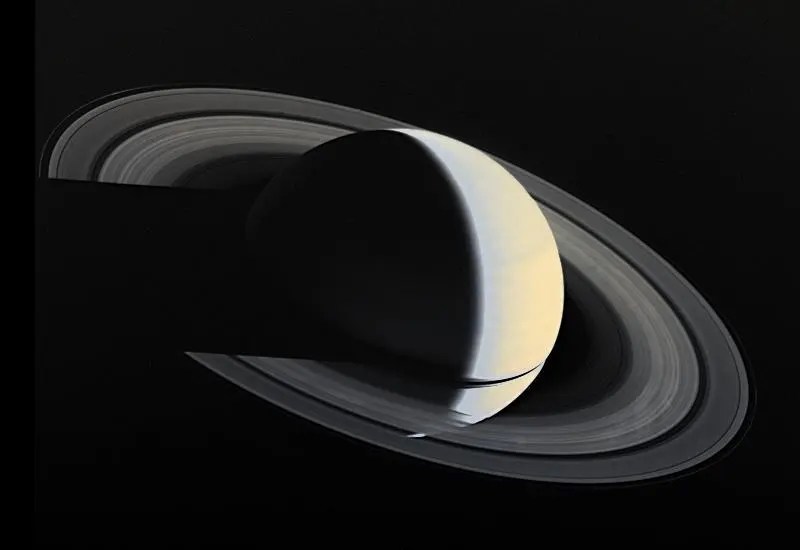
Saturn in crescent view, doing its best impression of a noir detective and tipping its hat as Voyager 1 bids the planet farewell, en route to Uranus. Credit: NASA/JPL-Caltech

In September of next year, Voyager 1 will (hopefully) celebrate another milestone: half a century of traveling through space. That’s more than the length of time between the Wright brothers’ first flight and the launch of Sputnik 1. It’s long since breached the heliosphere and now ventures through interstellar space, for parts unknown, as long as it can hold on.

Enjoying Nautilus? Subscribe to our free newsletter.

Lead Image: NASA/JPL-Caltech
Related Stories

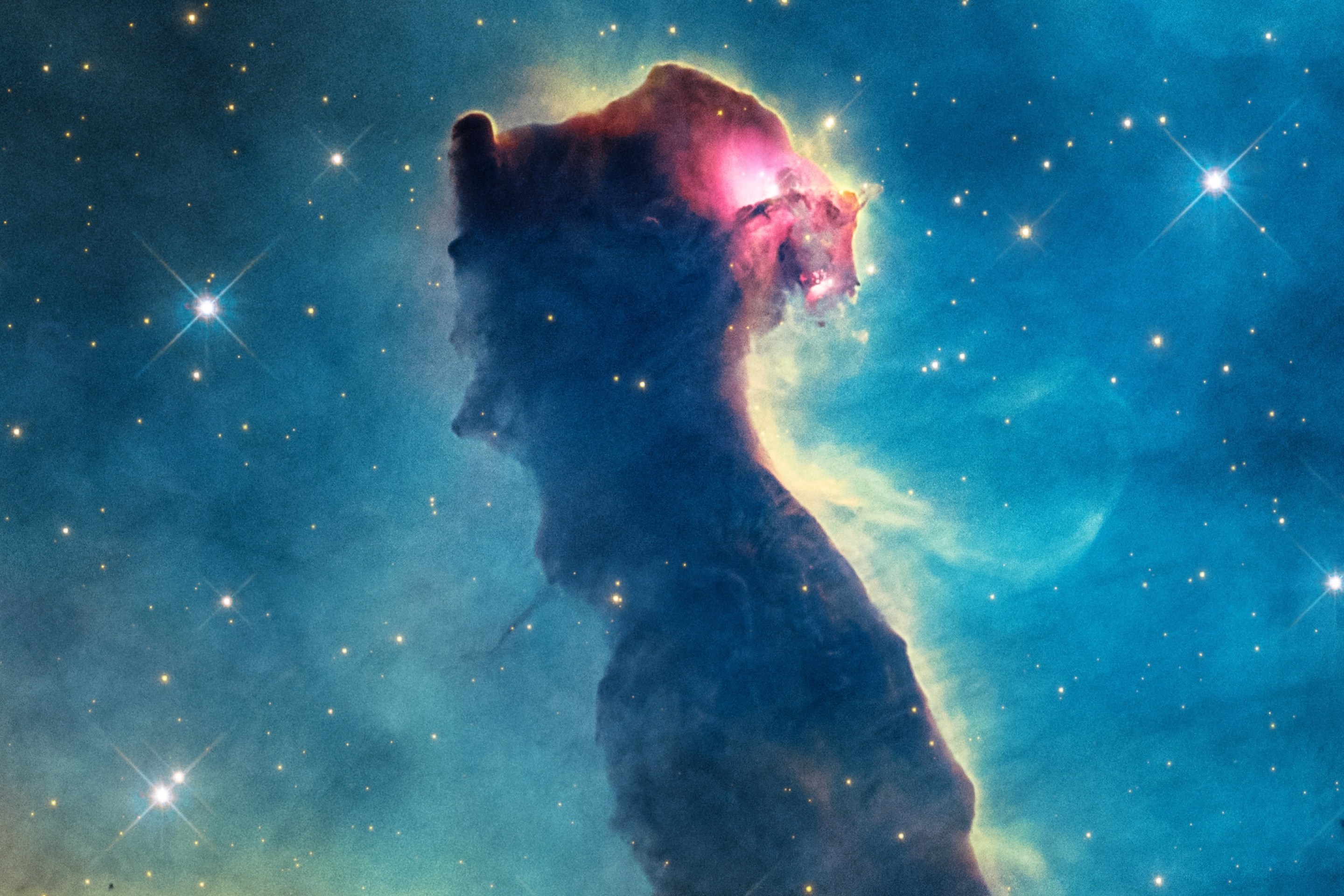
7,500 Light-Years From Earth, A Cat’s Head Appears

A beautiful new NASA image of the Carina Nebula

November 5, 2026

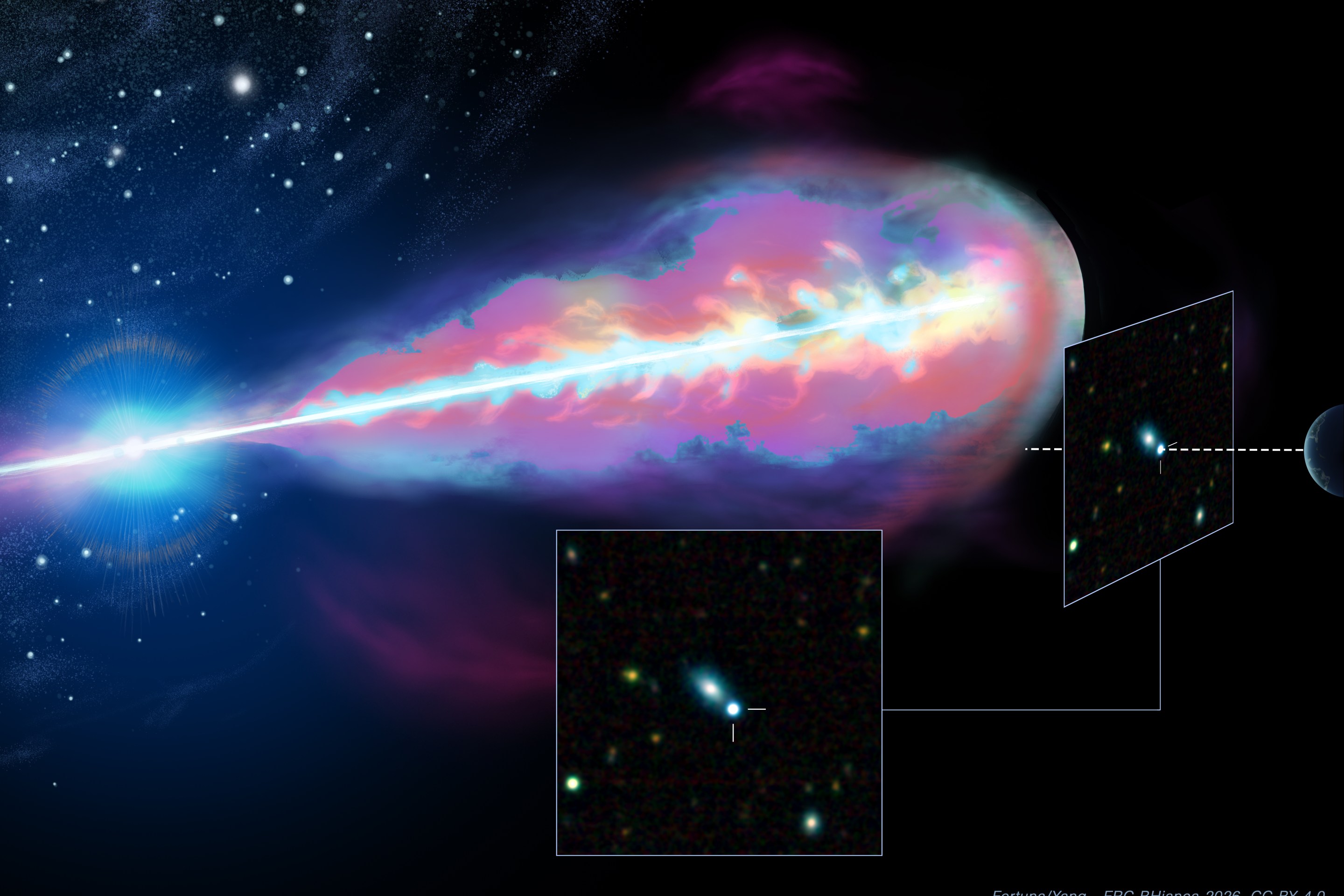
A Collapsing Star Produced an Afterglow Brighter Than Its Galaxy

“The explosion packed roughly a billion years of the sun’s energy output into a pencil-thin beam”

November 2, 2026

“We Will Find a Graviton Before We Find Dark Matter”

A quantum information scientist on the hunt for the elemental mediator of gravity and why AI can’t solve physics problems creatively

October 30, 2026

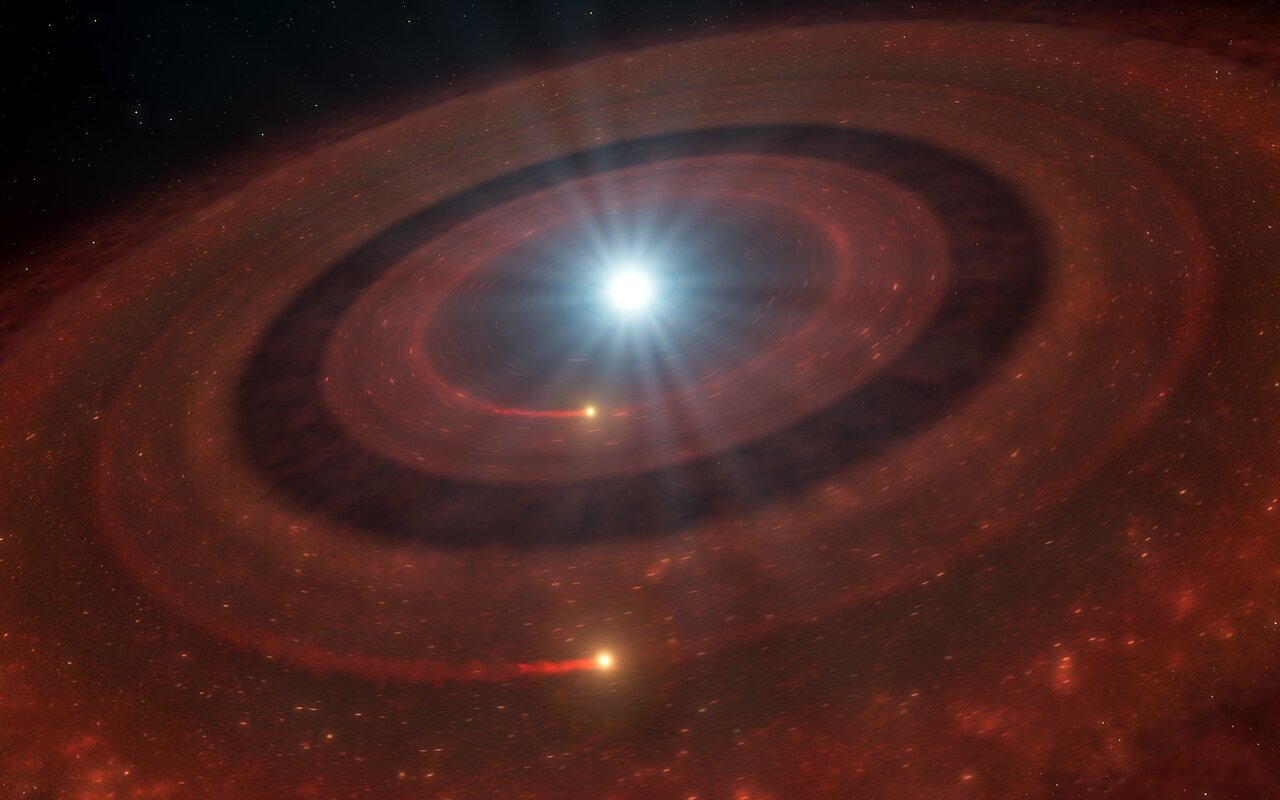
Dead Star Offers a Glimpse Into Our Solar System’s Future

A ring of debris hints at planetary survivors

October 28, 2026

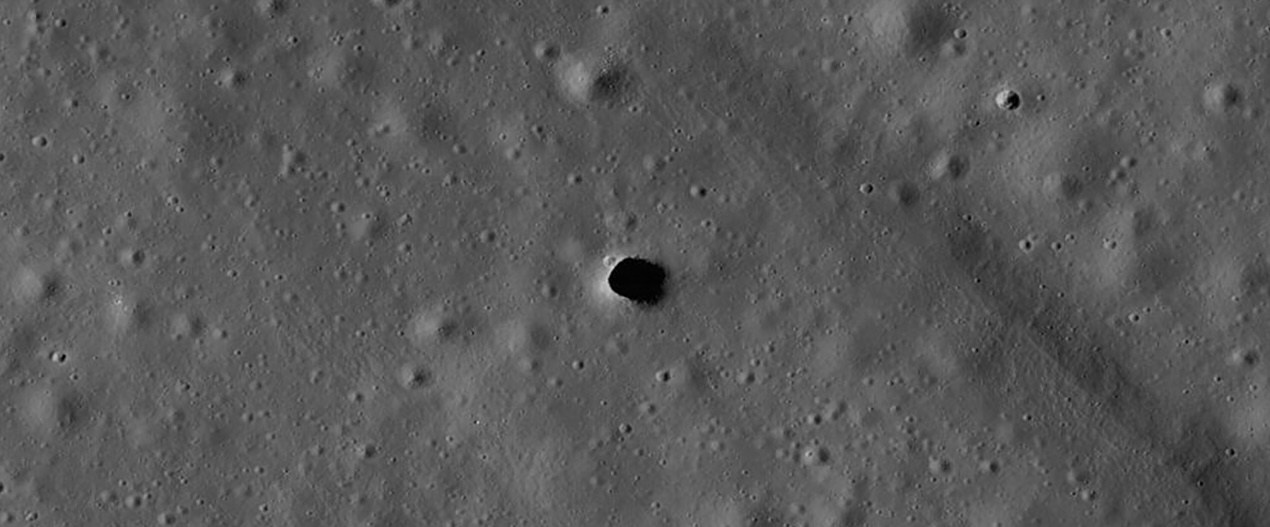
This Dark Spot on the Moon Might Be a Giant Lunar Cave

NASA wants to explore it—perhaps as a potential moon base?

October 26, 2026