You started off as just two cells. Then those cells became four cells, which became eight cells, and so on. As you sit here reading this, your body has roughly 30-40 trillion cells, each performing one of hundreds of specialized jobs. Of course, on this differentiation journey there are points of no return. Once a cell is committed to a job, there’s no turning back—at least not without a little help.
Using a cocktail of transcription factors, scientists can reverse the differentiation process, transforming specialized cells back into pluripotent stem cells. These cells have the ability to become virtually any cell in the body. This method also immediately resets the cells’ epigenetic clocks, molecularly rejuvenating them in a way. Now, according to a new study in Aging Cell, scientists have developed a way to skip this intermediate pluripotent stem cell step while keeping the youthful molecular profile.
Read more: “Do These Centenarians Hold the Key to Long Life in Their Blood?”
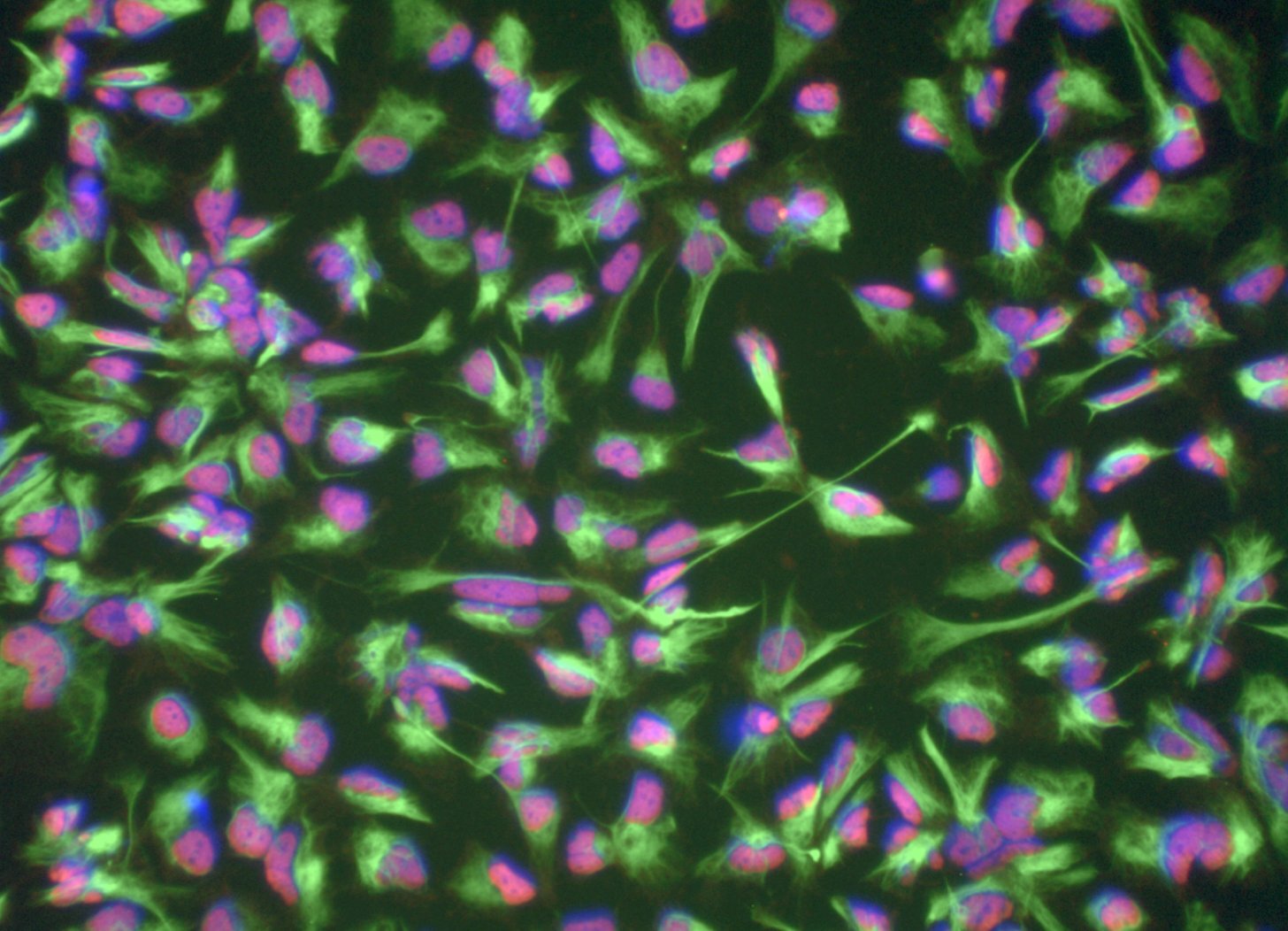
A team of researchers led by neurobiologists from the University of Bonn in Germany successfully coaxed blood cell progenitors taken from an 80-year-old donor to become neural stem cells. According to the team, the resulting brain cells had an epigenetic age of under 20 years old. “We also know that this epigenetic rejuvenation ensures that the cells actually behave like young cells,” study author Oliver Brüstle said in a statement.
Because this new technique skips the pluripotent step, the rejuvenation of the cells occurs more gradually, allowing the researchers to track the process over a period of 100 days. “Rejuvenation that extends over such a long period of time is ideal as an experimental model,” Brüstle explained. “Since the epigenetic clocks are slowly reset over several weeks, we can use this model to investigate which factors and active substances accelerate or slow down the rejuvenation process.”
The team says getting a peek under the hood of how our brain cells age at the molecular level could shed light on age-related neural diseases. Or as Brüstle put it, “After all, age is the most important risk factor for neurodegenerative diseases such as Alzheimer’s.” 
Enjoying Nautilus? Subscribe to our free newsletter.
Lead Image: Brüstle Research Group / University of Bonn