I love insects with a passion, but even I admit that cockroaches are a hard sell. They don’t pollinate our gardens, provide us with honey or act as colorful harbingers of spring. They enter our kitchens and eat our food. They routinely end up on lists of most-disgusting creatures.
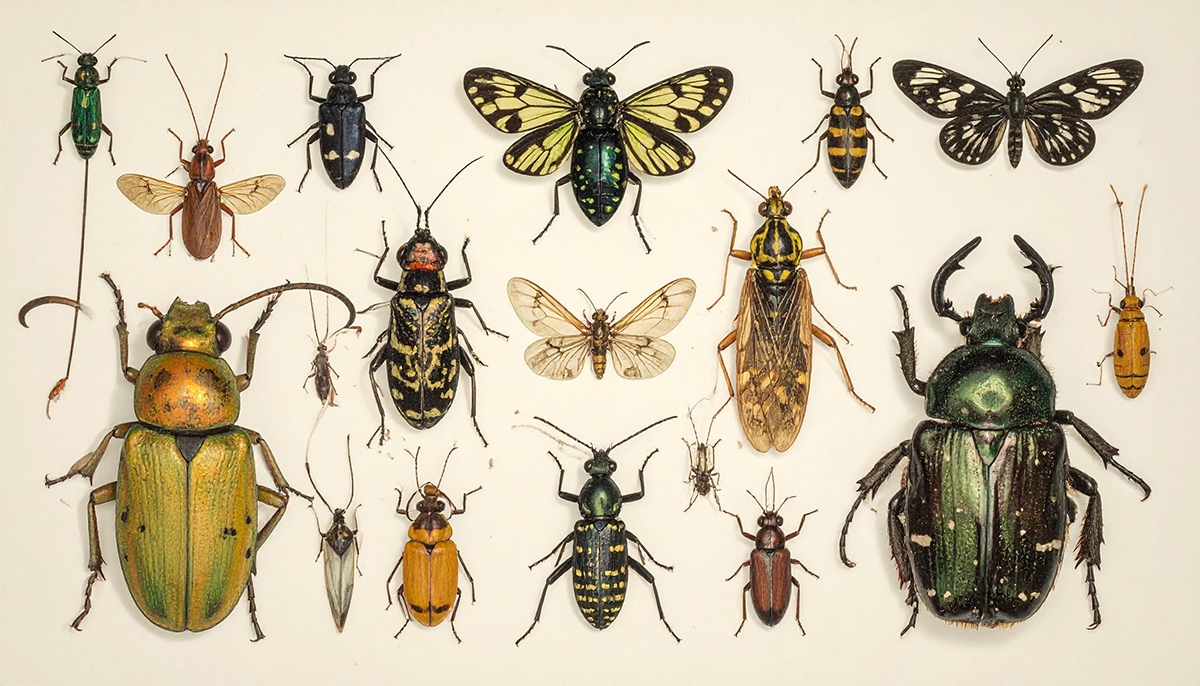
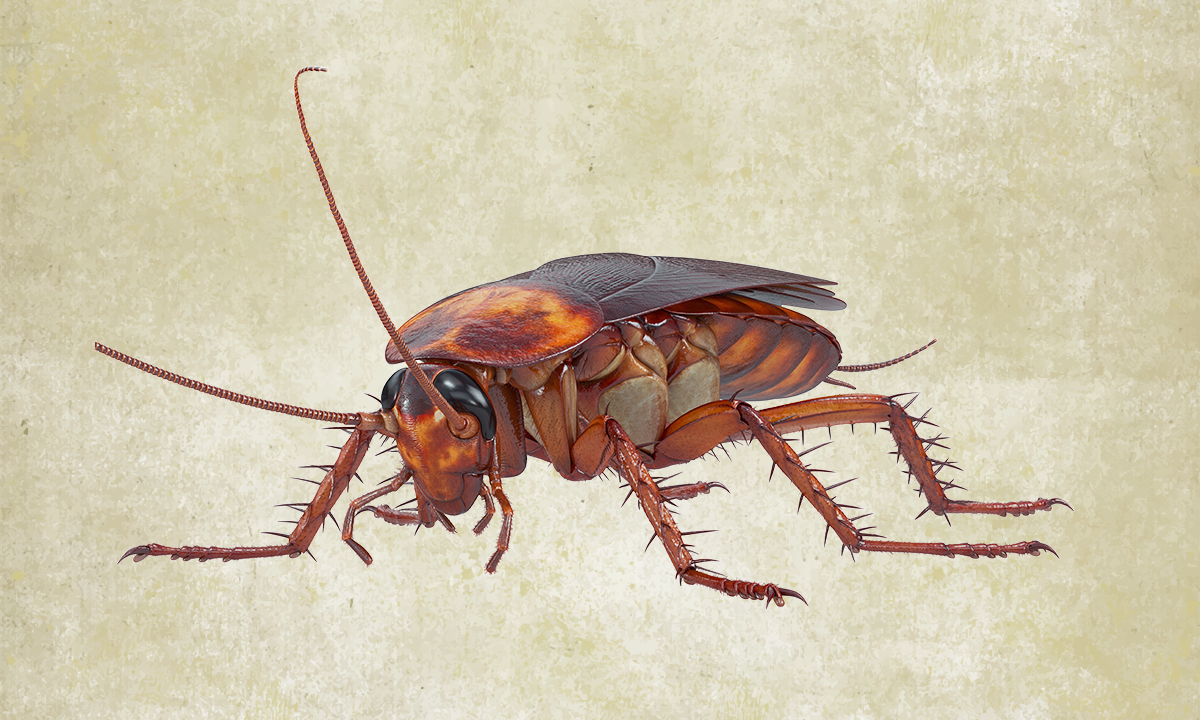
And yet—cockroaches are more interesting, and more misunderstood, than people realize. Cockroaches meet us where we live, in a kind of enforced intimacy. Anywhere from 3,500 to 9,000 species of cockroach exist, with only a handful being pests. To put this species diversity in perspective, thinking that all cockroaches are like the ones on your countertop would be like seeing a chicken and assuming that’s what all birds are like.
Cockroaches live everywhere except for Antarctica, from deserts to the steppes of Siberia. They come in black, brown, and jewel-like tones of blue and green, though most have that same elliptical cabochon shape we recognize scuttling toward the refrigerator. The smallest weighs about as much as a grain of table salt and the heaviest—the rhinoceros cockroach—as much as an egg.
Their lifestyles are equally eclectic. Many cockroaches lay eggs, while others give birth to live young. Some species are monogamous, sometimes remaining with a partner for years, with both male and female tending the offspring and feeding them a substance containing protein, fats, and sugars called cockroach milk.
The media picked up on this—maybe it was a slow news day—with headlines like “What Is Cockroach Milk—And Should You Even Try The 'Superfood'?” Never mind that no expert interviewed thought it would be practical or even desirable to harvest the product. Never mind that parents in a few other non-mammals, including pigeons and penguins, produce a liquid to feed their babies and no one seems to be perturbed. Maybe the idea of juxtaposing the innocence of milk with the loathsomeness of cockroaches hit a nerve. It did enter the zeitgeist in the form of a novel, which I put into the “you can’t make this stuff up” files. Titled Cockroach Milk, its description reads: “Cockroach Milk is the new superfood, rich in proteins and nutrients, but it is impossible to produce on an industrial scale, for all but one secretive corporation. When a factory worker goes missing, the FDA send in their new inspector Polly Benton to investigate. Polly has secrets of her own, but nothing compared to what’s waiting for her at the cockroach milk factory.”
Read more: “The Acquired Tastes of Foodies and Cockroaches”
Almost everyone who writes about cockroaches solemnly invokes their ancient origins. They arose hundreds of millions of years ago, and have remained seemingly unchanged ever since. Because of that reluctance to improvise on their original evolutionary theme, cockroaches are often referred to as living fossils, survivors, those who will outlast us all. A popular image has cockroaches surviving a nuclear apocalypse, peering above the rubble of a world ruined by human hubris.
That living fossil designation reveals a mistaken understanding of how evolution operates. In addition to cockroaches, crocodiles and horseshoe crabs look much like their ancestors. From that, it’s often assumed that such creatures are stuck in the past, wearing the evolutionary equivalent of polyester pantsuits. That in turn leads to the idea that some organisms are more “highly evolved” than others, a phrase I put in quotation marks because it’s meaningless. Everything alive today is just as evolved as everything else, by which I mean that nothing gets to perfection and stops—the environment and its pressures of predators and cold or heat or lack of food never let up, and neither does evolution. If we really wanted to focus on which living things have changed most recently, the winners would be organisms that cause disease—because of their short generation times, bacteria can evolve so fast that it makes your head spin, but no one is nominating E. coli for the Most Advanced award in evolution.
What about that cockroaches-will-survive-nuclear-attack trope? It’s not clear where this apocalyptic fantasy comes from, since while insects generally can withstand more radiation than vertebrates, cockroaches are less resistant than other insects such as moths or flour beetles. Maybe some frustrated householder figured that an inability to eradicate roaches must extend to survival after more drastic events. Or maybe drawing a tiny moth or a fly amidst the ruins of a nuclear disaster seemed less dramatic than that image of a roach, antennae waving, showing that it has beaten us once again.
Despite, or perhaps because of, all the vilification, cockroaches appear in art and literature as symbols of transgression and satire. A Russian children’s story called The Giant Cockroach features a red-haired bully of a roach that may—or may not—have been intended to be Stalin. Though Kafka’s famous novella The Metamorphosis is deliberately ambiguous about the beast that Gregor Samsa is transformed into, many people assume it is a cockroach.
But the best cockroach in literature is archy, the creation of journalist Don Marquis in the early 20th century. The story goes that Marquis came into his office at New York’s The Evening Sun to find poems that had been typed on his typewriter, all in lower case. They lacked capital letters and punctuation because they were written by archy, a cockroach unable to hold down the shift key. As archy explained, he was a free verse poet with a lot to say. As an insect-loving child, I was captivated by archy’s trenchant views:
i do not see why men
should be so proud
insects have the more
ancient lineage
according to the scientists
insects were insects
when man was only
a burbling whatisit
I don’t think we need to see cockroaches as outliving us or replacing us. They are worthy creatures without that burden. Maybe the eminent entomologist Howard Ensign Evans said it best: “the human species is bereaved when it is unable to appreciate the world of small and creeping things. I heartily recommend cockroaches.” Me too. 
Lead image: ARTYuSTUDIO / Shutterstock