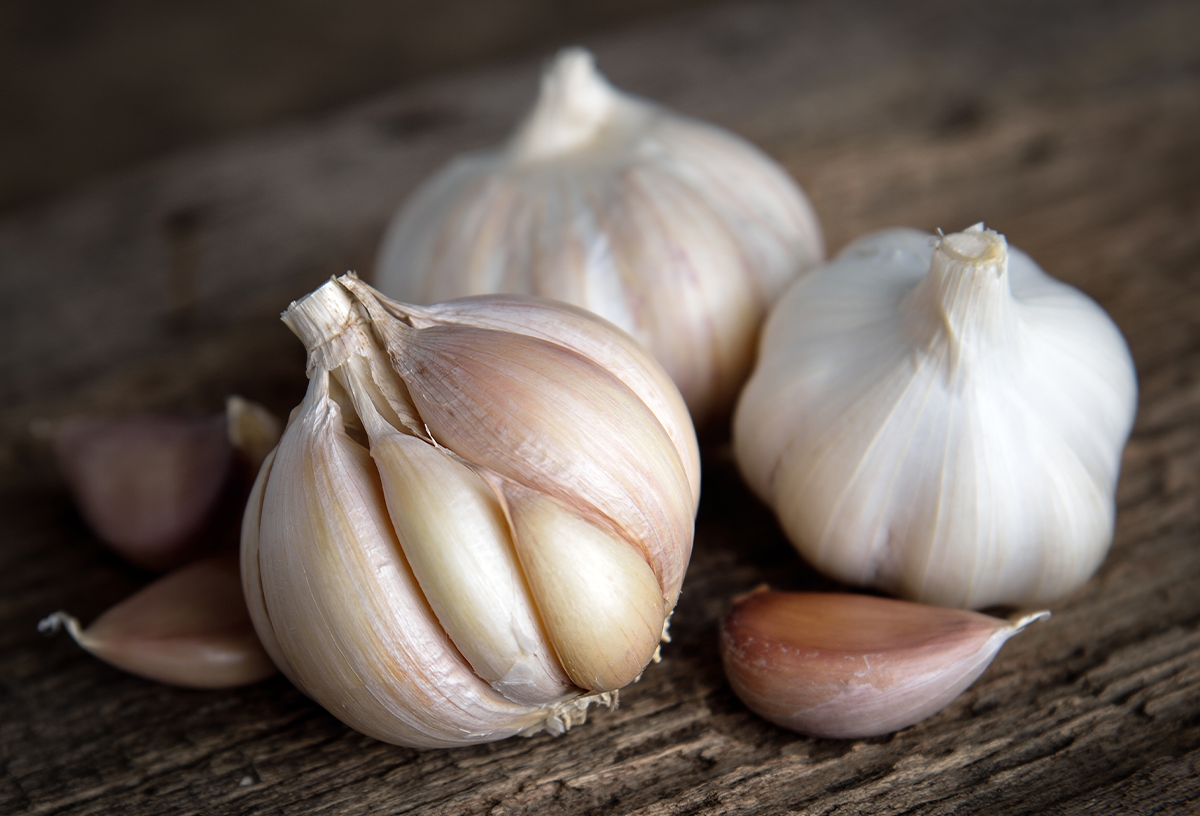
While garlic is a staple in many cuisines, it has a pungent aroma that can make it a spoiler on a date, such as when this woman’s boyfriend “smelled so garlicky [she] couldn’t stand to get within a three-foot radius.” A recent study in Cell found that flies feel the same way about garlic.
It all started with a team of molecular biologists and entomologists from Yale University who were screening plants for compounds that might affect the behavior of fruit flies (Drosophila melanogaster). “We study flies, including harmless ones like the fruit fly, to try to discover new ways of controlling species that pose danger to humans either by spreading disease or damaging crops,” explained senior study author John Carlson in a press release.
In studying fruit fly preferences for different plants, first author Shimaa Ebrahim observed their behavior on purées of 43 different types of fruits and vegetables. She expected that some plants might act like aphrodisiacs and boost mating behavior. Instead, she found that garlic did the exact opposite, stopping copulation and egg-laying altogether in fruit flies. When she tested the effects of garlic on other types of flies that carry diseases—for example, tsetse flies and mosquitoes—their reproduction was similarly stifled.
Read more: “This Meal Might Bring You to Tears”
Plants produce many molecules that have evolved to repel insects by smelling or tasting bad. The lasting aroma of garlic (Allium sp.) that’s spoiled many a romantic evening comes from the molecule alliin, which gets converted to smelly, sulfur-containing molecules when garlic is crushed or chopped. By refining the garlic purée, the study authors discovered that the culprit in the fly effect was the sulfurous molecule “diallyl disulfide,” which forms as garlic decomposes.
Through experiments with fruit flies that had various mutations relating to taste and smell, the study authors figured out that a taste receptor called TrpA1 was largely responsible for the reproduction-impeding effects of garlic. A fly’s TrpA1 taste organs are activated by the diallyl disulfide from garlic, conveying a sense of bitterness to the brain and, ultimately, provoking expression of genes that affect mating and laying eggs.
This should be to our taste, though: Reducing the amorous encounters of disease vectors like mosquitoes could be just the remedy for a romantic human night out. 
Enjoying Nautilus? Subscribe to our free newsletter.
Lead image: nipaporn / Adobe Stock