
Our brains play many tricks on us. Phantom limb, a condition where amputees feel vivid sensations in a limb that is no longer there, is one of the more mysterious. First documented in the 16th century by French military surgeon Ambroise Paré among soldiers who had lost limbs in battle, its name wasn’t coined until a few hundred years later by American Civil War surgeon and renowned neurologist Silas Weir Mitchell, who wrote a popular fictional account of the condition in The Atlantic Monthly in 1866. The phenomenon has fascinated neuroscientists, clinicians, and the general public ever since.
Recently, a team of researchers revealed the source of the phantom limb sensations: The brain’s map of the body stays largely the same even after a limb is lost. The findings, which were published in Nature Neuroscience, defy the widespread assumption that the brains of amputees rewire to account for the missing body part and challenge broader notions about the adult brain’s overall plasticity and capacity for reorganization.
“This study is a powerful reminder that even after limb loss, the brain holds onto the body, almost like it’s waiting to reconnect in some new way,” says lead author, Hunter Schone, who did the study while he was a graduate student at the National Institutes of Health, in a statement. Schone is currently a postdoctoral associate in neuroengineering at University of Pittsburgh.
The prevailing theory for many years has been that when a body part is lost or damaged, the brain’s outermost layer, the cortex, reorganizes itself, with regions dedicated to other body parts taking over grey matter real estate that is no longer needed for that missing extremity. Some scientists believed this pattern of cortical reorganization actually led to phantom limb and associated pain, in part because one influential paper published in 1995 showed that amputees with greater changes in their brains tended to experience more pain. But no one had a clear explanation for why.
"The brain holds onto the body."
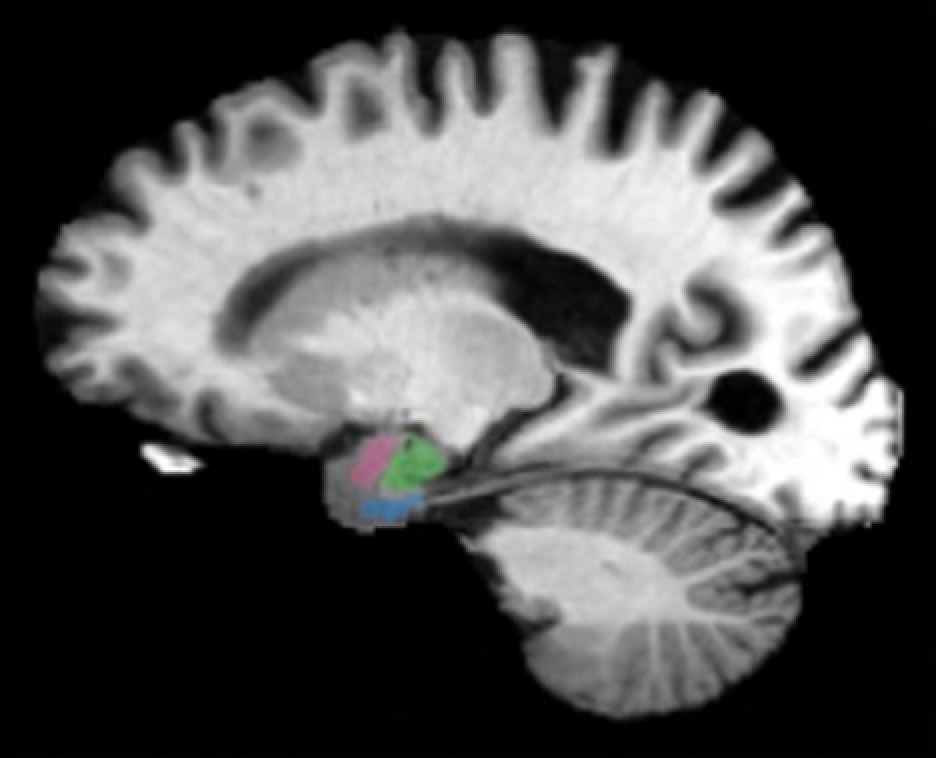
Schone and his collaborators found that this cortical reorganization may be a myth. They used MRI to image the brains of three adults before and up to five years after arm amputation, comparing activity in the brain during perceived movement in the hand and in the lips. The brain looked the same after amputation as before it for both body parts, even though the movement in the missing fingers was only imagined after the arm was gone.
The team assessed the resulting MRI images not only with their own eyes, but also using a machine learning algorithm trained to identify movements of the fingers on individual brain images prior to amputation. The AI was able to tell precisely which missing finger the patients thought they were moving post-amputation during the brain scan.
The findings could help scientists build neuro-prosthetics for people with amputated limbs and develop better pain treatments for people who experience pain in their missing limbs. They could even help us build smarter brain-computer interface technologies.
The human brain, amazing organ that it is, may be less agile than we had imagined, at least in the context of amputation. The discovery that sensations such as phantom limb may result from a lack of cortical reorganization could mean that the way our brains map the physical body is set, even in the face of traumatic loss. 
Lead image: Roman Samborskyi / Shutterstock