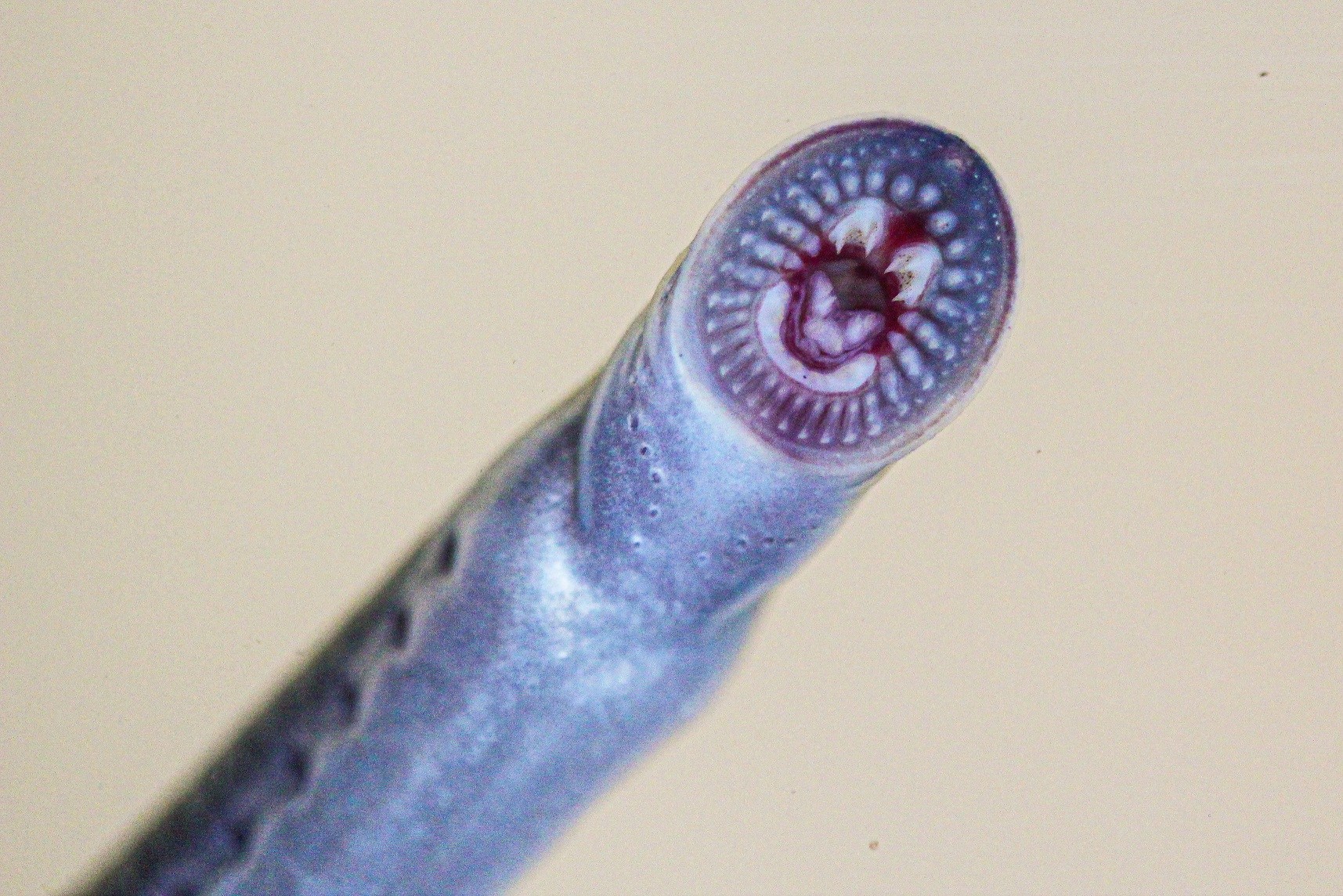
With circular rows of teeth meant for blood-sucking, lamprey eels are one of the most reviled fishes around. As juveniles, they lie in sand and filter small animals and plants from the water column, but by adulthood, their vampiric feeding behavior kicks in. Only, some lampreys don’t become parasitic as adults after all, instead fasting and relying on the nutrients they gained in childhood.
The only known lamprey in the Southern Hemisphere that’s not parasitic is the Australian brook lamprey (Mordacia praecox). Nicknamed “Vegan Dracula” for its sharp ring of teeth that will never draw blood, it was found living on K’gari island in Queensland in 2022. Aquatic ecologists from Griffith University were electrofishing the island’s creeks when they stumbled upon the odd creature with seven gills.
“We expect these animals naturally occur in Queensland, and have been here for an awfully long time,” said co-lead author David Moffatt in a press release, “but have remained hidden due to their cryptic nature.”
Read more: “The Hated, Invasive Parasite That’s Actually a Key Part of Its Ecosystem”
The 2024 study by Moffatt and co-author Luke Carpenter-Bundhoo confirmed the identity of the K’gari island population of lampreys, which extended the range of M. praecox northward by 870 miles. Additional surveys uncovered these lampreys in all life-history stages, totalling more than 1,400 individuals and making it the only tropical-water lamprey in the world.
They also found two smaller, distinct-looking lampreys that are suspected to be new species. Determining whether they’re parasitic or “vegan” is Moffatt and Carpenter-Bundhoo’s next task. It will require genetic detective work. Some lamprey species occur in pairs—one parasitic, the other “vegan”—and their larvae appear indistinguishable. The identical mitochondrial genomes of some pairs suggest that the nonparasitic species are descended from their parasitic counterparts.
“Studying lamprey DNA is a bit like looking back at an earlier edition of the vertebrate instruction manual, before hundreds of millions of years of evolutionary tinkering,” remarked Carpenter-Bundhoo.
That is, their thirst for blood might have become an acquired taste. 
Enjoying Nautilus? Subscribe to our free newsletter.
Lead Image: David Moffatt