We don’t often think of space exploration as something that affects our lives directly, but when you take a closer look, you find it touches almost every corner of our biosphere. Satellite imaging and sensing of the Earth not only produces hundreds of petabytes of data that we utilize to guide everything from farming to city planning, but it has also effectively pumped hundreds of billions of dollars into the worlds’ economies via these unprecedented changes to human decision making. Space-based communications and digital connectivity have transformed societies and industries through the near-instantaneous flow of information from anywhere to anywhere, and satellite global positioning systems have fundamentally altered the nature of movement on the planet via applications like Google maps and point-to-point navigation.
How we act on information collected in space even influences the organization of plant life and wild animal habitats as we monitor foliage health and water availability to decide on land boundaries and river courses. Our space-enabled networks of transport and commerce change where and how we make and move materials and chemicals, impacting organisms’ health and the evolutionary pressures they experience, from giant mammals to the tiniest microbes.
The received wisdom about the origins of space exploration is that it was largely driven by the events and aftermath of World War II and the military-industrial complex. But I struggle with this version of history because the ideas and early developments of space exploration existed long before World War II, and it seems as though our species would have eventually taken this step into the unknown anyway.
A “natural history” approach to space exploration would take into account instead developments in the fields of physics, biology, and evolution to capture the true story of humanity’s effort to break away from its planetary origins.
For one thing, part of the barrier to life escaping a planet is the extreme difference between the energetics of biology and what is needed to climb out of a planetary gravity well. Biology has a low power density—organic life on Earth can generate small amounts of power in relation to its size. It’s frugal. But the most plausible ways to get into space to escape the Earth or enter orbit require a huge amount of focused power. To get around this, life had to first evolve a new trait: the capacity to think and analyze, which enabled it to then build technology and learn the laws of physics.
Space exploration is less a geopolitical caper than a voyage akin to Darwin’s on the Beagle.
The natural history of space exploration starts with the story of these ideas—the mechanics of movement and gravity—and would examine the transformative power of humanity’s dawning understanding of the laws of motion and the concept of energy. But that natural history is also strongly determined by the actual landscape of the solar system. The specific configurations and characteristics of planets and other bodies has driven the evolution of space exploration. The kind of solar system we live in dictates the types of spacecraft that we’ve had to construct, and all the other infrastructure like communication systems and the mathematical modeling of orbits and trajectories.
In fact, I think that the story of space exploration is less a narrow geopolitical caper than a paradigm-shifting voyage, akin to Darwin’s on the Beagle. That voyage was a complex product of human behavior, technology, and our planet’s natural conditions, and it also helped change our species’ trajectory.
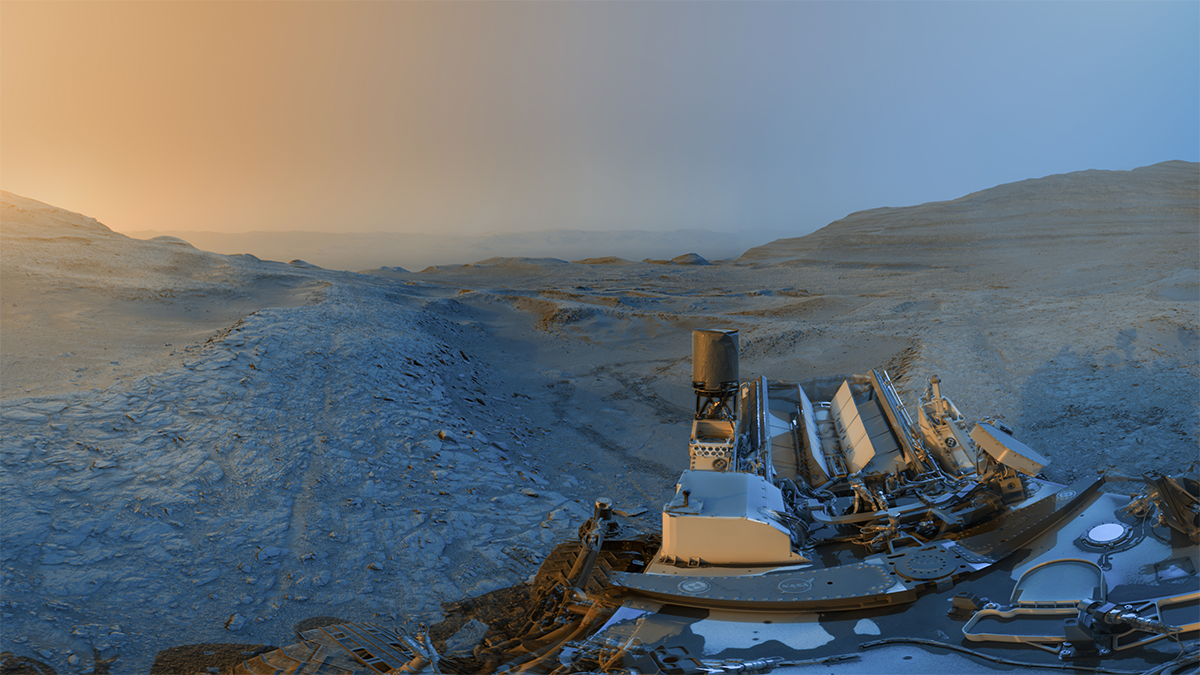
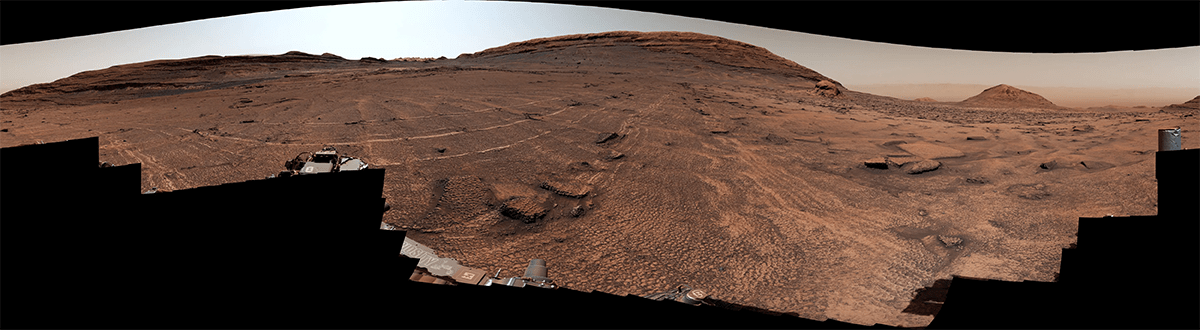
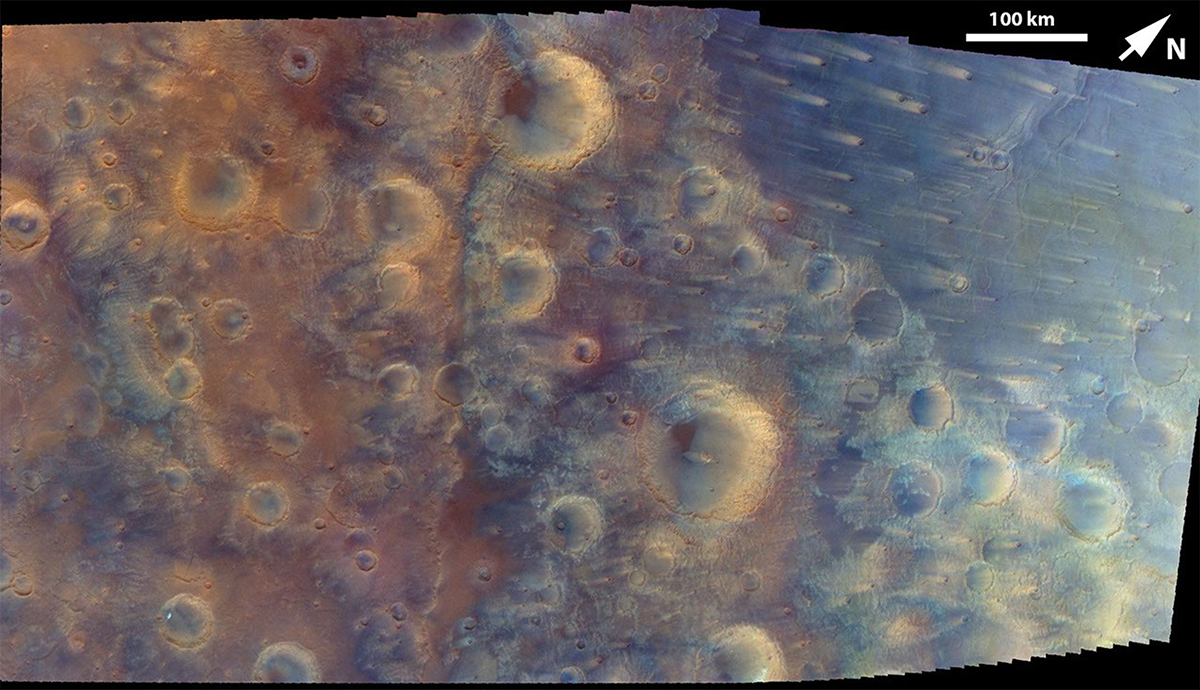
What if the most probable evolutionary trajectory for life in the universe takes it away from planets altogether? A place like Mars can seem very alluring: When you see scenes from its surface you can fool yourself into thinking it’s like some of the loveliest arid places on Earth, all sand and exquisitely sculpted rocks. But in truth it’s terrible for organisms like us, who evolved in very specific conditions here on our home planet. The same holds for pretty much every other planet in our solar system.
As I studied the challenge of interplanetary life for The Giant Leap, it became clear to me that a more tenable future might lie in building hospitable environments away from planets. These environments, or habitats, might be entirely artificial or crafted from objects like asteroids to have “just-so” conditions of artificial gravity, air, and water. Even their orbital trajectories could be tuned to be safe and perfect for solar energy harvesting and transport access.
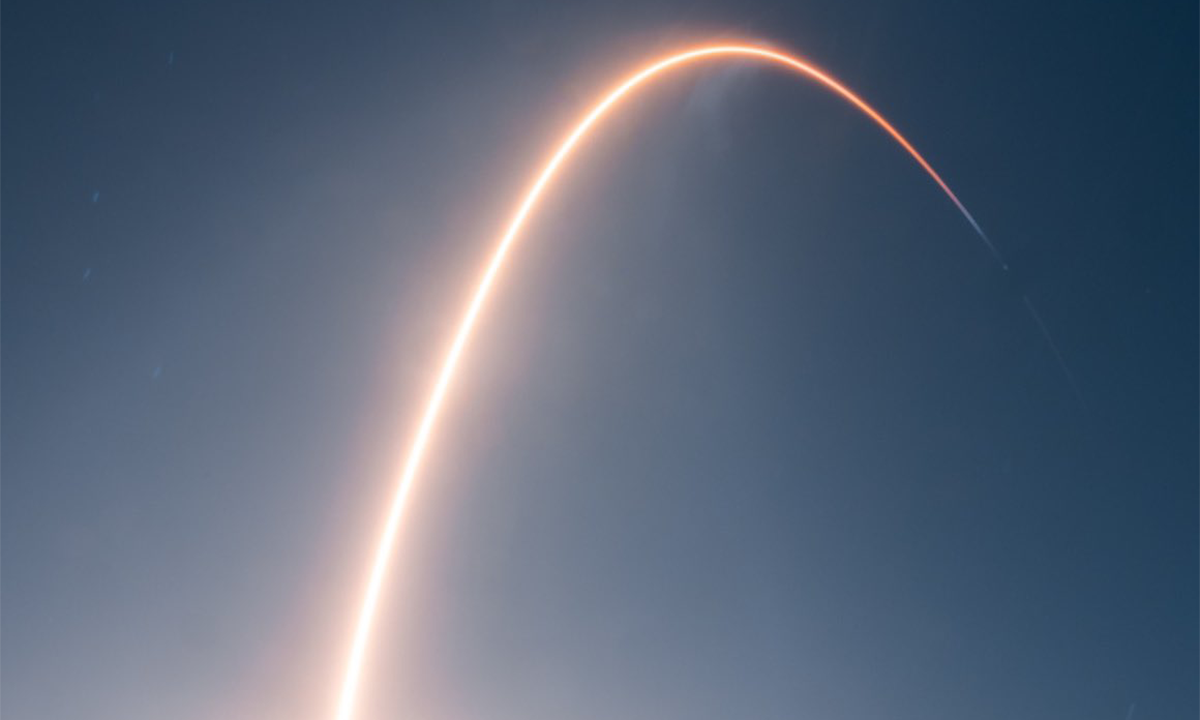
This kind of concept is far from new. In the early 20th century, the Russian scientist Konstantin Tsiolkovsky imagined “bublik” (bagel-like) space stations, and in the 1970s ideas like giant cylindrical O’Neill structures were fleshed out. Now we’re getting closer to having the means to try them out, as we fast approach a time where at least one rocket a day is launched into space from somewhere on the planet.
A critical point to consider, too, is that the resources of the solar system are staggeringly vast, whether in terms of solar power or the materials contained in millions of asteroids. To fully utilize these resources to sustain life it’s probably easier to avoid over-investing in planets. All of which creates possibilities for a dispersal and expansion of living things on a scale beyond anything that came before, turning a species like us from billions into trillions of individuals.
A trillion minds thinking, creating, and exploring across the cosmos—It might require the same kind of cognitive leap that first got us into orbit. 
Read an excerpt from The Giant Leap, “We’re Evolving Beyond This Rock Right Now,” here.
Lead image: Sergey Nivens / Shutterstock