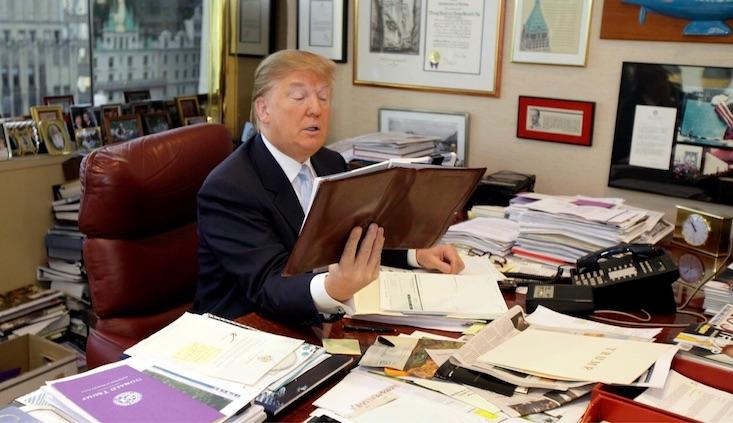
Sure, Donald Trump usually isn’t one for heady or complex matters. His business roles—promoting steaks, golf courses, and casinos—haven’t been particularly rigorous, in an intellectual sense. The closest he came was with Trump University (although, among other problems, its use of the word “university” to describe its operations violated New York State law.)
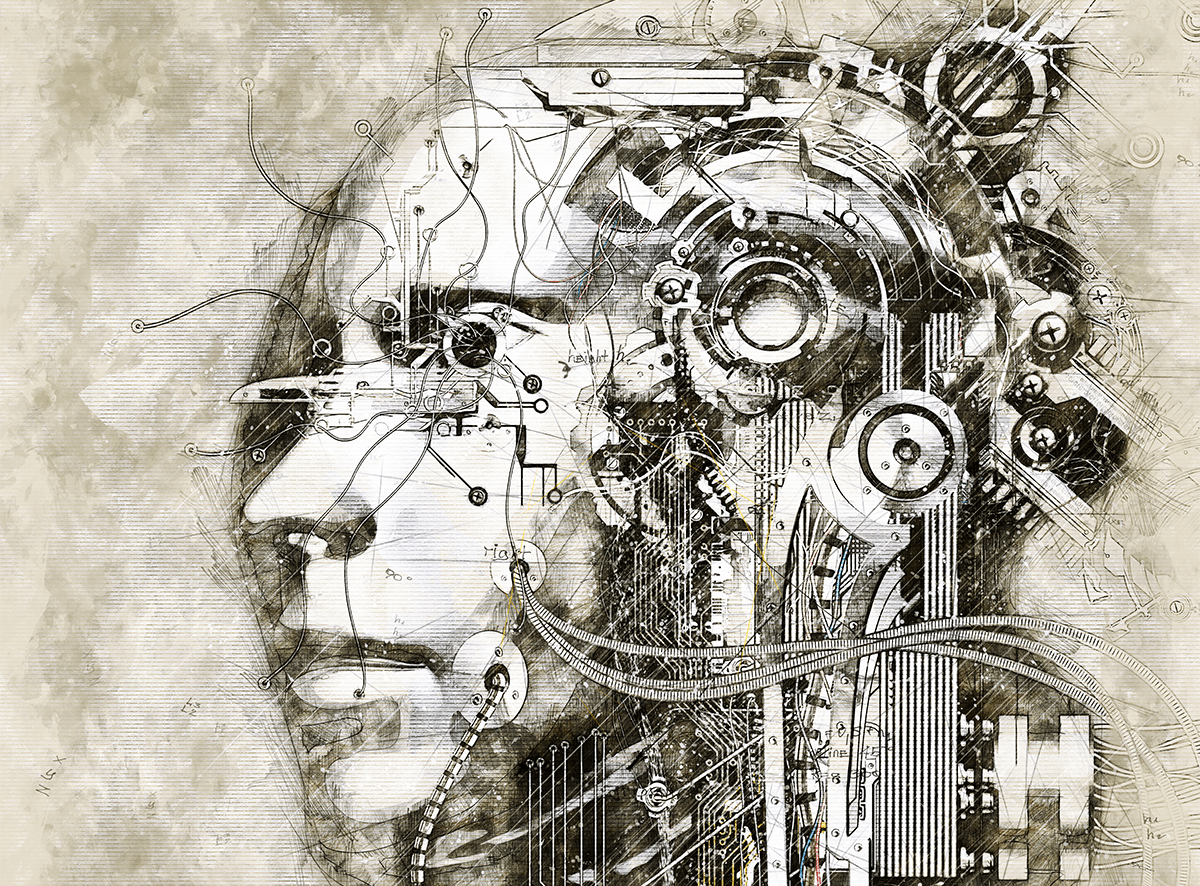
Studying consciousness may just be the exception to the rule. He is clearly interested in the quality of brains, and has formed a definite opinion on the quality of his own (“I have a very good brain.”) Also, consciousness has been described as a popularity contest, and Trump loves popularity contests.
The philosopher and cognitive scientist Daniel Dennett once observed that consciousness can be seen as “fame in the brain, cerebral celebrity, a way in which some contents [in the mind] come to be more influential and memorable than the competition.” In his Nautilus essay, “The Brain on Trial,” the neurologist Robert Burton praised Dennett’s “fame in the brain” metaphor. It “captures,” Burton wrote, “the neurophysiological reality that thoughts emerge from the unpredictable interaction of mindless neurons and synapses in what might be best described as a winner-take-all popularity contest.”
You can imagine the reality-TV star vibrating to this characterization. In winning the presidency Trump does seem to believe he’s won it all. And the outcome was, if not strictly unpredictable, largely unexpected. So, in a sense, consciousness is like Trump.
And if consciousness is like Trump, then, according to some thinkers, everything is like Trump. In her Nautilus essay, “Is Matter Conscious?” the Norwegian philosopher Hedda Hassel Mørch argues for the plausibility of panpsychism, the idea that matter itself is conscious.
Trump may therefore be highly motivated to tackle, after his presidency, the problems of consciousness, including what many philosophers and scientists have taken to calling the “hard problem”: No matter how much we know about what’s going on neurobiologically to make Trump’s brain very good, this knowledge doesn’t grant us an understanding of what it’s like to be Trump. Only Trump can know Trump. Or, put differently, he’s the only one that can do the job.
Unless, of course, Mørch pansychism opens up a backdoor method to understand Trump’s consciousness, dissolving the hard problem and replacing it with one of porous, uncontrolled borders.
Who knew this could all be so complicated?
Brian Gallagher is the editor of Facts So Romantic, the Nautilus blog. Follow him on Twitter @bsgallagher.