















 Facebook
 Twitter
 Pocket
 Reddit
 Email
Email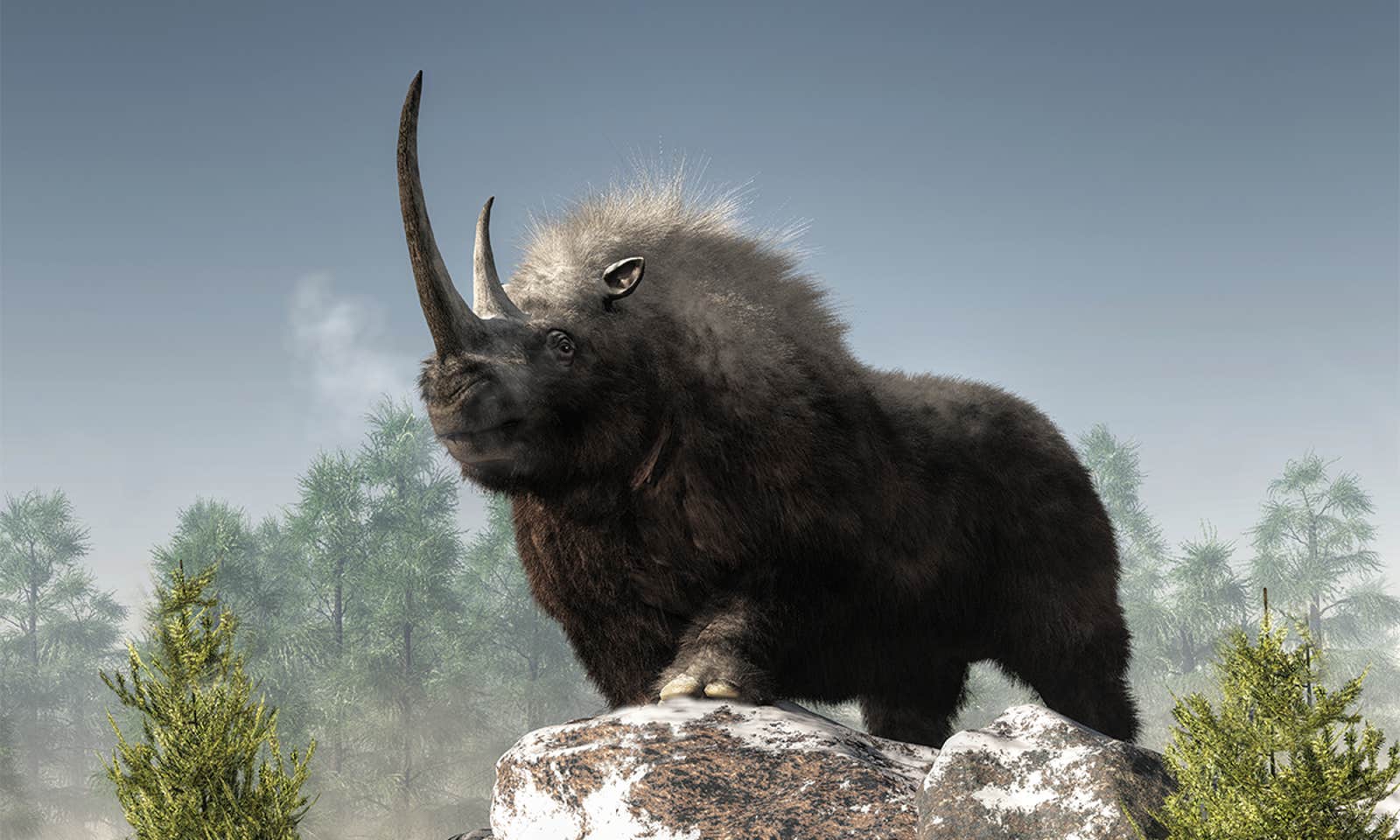


The stomach of a preserved wolf puppy from the Siberian permafrost concealed a surprise. Inside its stomach was a chunk of frozen meat. Because the wolf (Canis lupus) had been radiocarbon dated to 14,400 years ago, its last meal was also deemed 14,400 years old. And, based on its DNA, the meat was the flesh of an animal you might not expect to find in a wolf’s belly: a woolly rhinoceros.
In a study published today in Genome Biology and Evolution, a team of biologists from Sweden, Wales, Denmark, and Russia reports on one of the most recent woolly rhinoceroses known. The species (Coelodonta antiquitatis) went extinct about 14,000 years ago, but the causes of its decline have been unclear. By extracting a high-coverage genome from the muscle tissue (i.e., meat), the researchers got a read on woolly rhinoceros’ genomic diversity on the eve of their extinction.
“Sequencing the entire genome of an Ice Age animal found in the stomach of another animal has never been done before,” explained study author and Stockholm University paleo-geneticist Camilo Chacón-Duque in a statement.
Read more: “The Last of Their Kind”
You’d expect to find evidence of the species’ decline in its genome in the form of more harmful mutations from inbreeding, smaller population size, and genetic deterioration. But the sequencing revealed no such effects, suggesting that the woolly rhino populations, even as they closed in on extinction, weren’t suffering a rapid population decline.
In comparing the genome of the wolf-eaten rhinoceros to other woolly rhino genomes from earlier Pleistocene specimens—18,000 and 49,000 years ago, respectively—the data showed little change in genome diversity.
“Our analyses showed a surprisingly stable genetic pattern with no change in inbreeding levels through tens of thousands of years prior to the extinction of woolly rhinos,” said study author and Stockholm University paleo-geneticist Edana Lord.
The absence of a lead-up to its extinction suggests that the woolly rhinoceroses flamed out rapidly. Their populations remained genetically healthy until the end of the last Ice Age, and then collapsed suddenly, perhaps leaving a record at the genomic level during their last few hundred years. The study authors hypothesize that their collapse was caused by the global warming that capped the Ice Age during its final stages.
Let that be a lesson to us. 
Enjoying Nautilus? Subscribe to our free newsletter.
Lead image: Daniel Eskridge / Shutterstock