















 Facebook
 Twitter
 Pocket
 Reddit
 Email
Email


They may not know it, but the animals in Taï National Park, Côte d’Ivoire are under constant surveillance. For decades, researchers from the Helmholtz Institute for One Health (HIOH) and the Taï Chimpanzee Project have monitored the wildlife there, watching them with video cameras and keeping a wary eye out for any signs of illness.
Their vigilance was rewarded in early 2023, when a group of sooty mangabeys (small, omnivorous monkeys) they were monitoring came down with the deadly mpox virus, which can spill over and spread among humans. A third of the mangabeys had come down with mpox, and four infants had died, but the outbreak offered the researchers an opportunity to gain vital information about how the virus spreads.
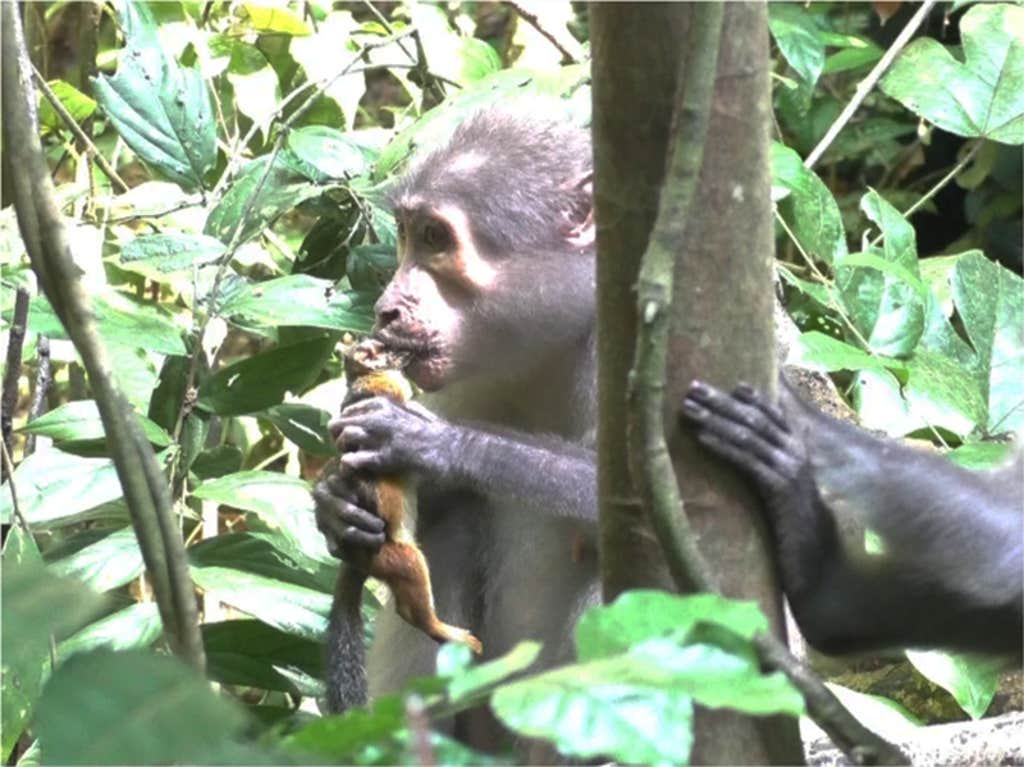
Sequencing the genome of mpox viruses taken from the infected mangabeys revealed the circulating strain was nearly identical to one isolated from a small rodent found dead three months earlier, a fire-footed rope squirrel.
The team then moved on to examining mangabey droppings they had collected in the months leading up to the outbreak (the surveillance in Taï National Park is truly thorough). In one sample collected eight weeks before the outbreak, they found the DNA of the virus, alongside DNA from a fire-footed rope squirrel.
Read more: “When Disease Comes for the Scientist”
While it wasn’t exactly a surprise—a mangabey was caught on camera chowing down on one of the rodents in 2014—it was a smoking gun of sorts, a rare case of direct detection of interspecies transmission. The team recently published their findings in Nature.
This and other research strongly indicates the fire-footed rope squirrel serves as a reservoir for the mpox virus, circulating without causing disease in the host species and occasionally spilling over into other, less fortunate species. It’s also a testament to the wealth of epidemiological knowledge we can gain through vigilant monitoring of wildlife and the importance of protected spaces.
“This discovery was only possible thanks to long-term ecological research, continuous health monitoring, and systematic sample collection in the Taï National Park,” study author Fabian Leendertz of both HIOH and the Taï Chimpanzee Project said in a statement. “We need to maintain and expand this kind of effort to better understand and hopefully reduce the risks posed by emerging infectious diseases, including mpox.” 
Enjoying Nautilus? Subscribe to our free newsletter.
Lead image: Oddfeel / Wikimedia Commons