














 Facebook
 Twitter
 Pocket
 Reddit
 Email
Email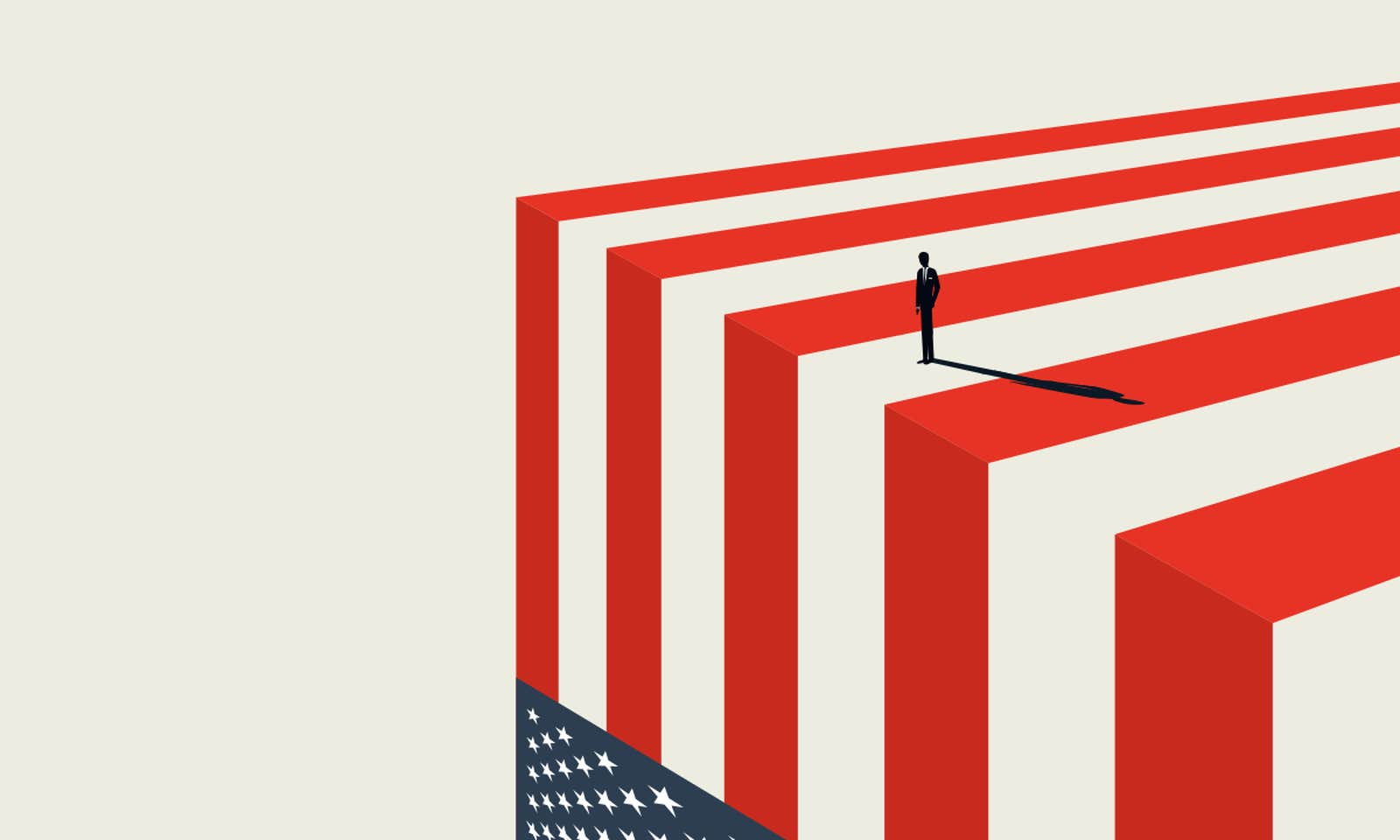


President Donald Trump may have just appeared before Congress to issue an address on the state of our union, but researchers from the University of Rochester have come out with their own, and it paints a pretty bleak picture.
Political scientist James Druckman and his team analyzed data from two long-term National Science Foundation-supported surveys, the General Social Survey and the American National Election Studies. Together, these polls record United States residents’ attitudes about a wide array of subjects, including economic satisfaction, health, happiness, political polarization, institutional confidence, and more. They published their findings in PNAS Nexus.
So how are we doing?
Individually, relatively fine. Researchers found that U.S. residents’ reports of economic well-being, health, and happiness have remained remarkably stable across the decades. However, our scores for happiness and economic satisfaction dipped slightly around 2020—most likely related to fallout from the COVID-19 pandemic—and haven’t inched back up.
Read more: “To Rescue Democracy, Go Outside”
At the same time, our attitudes about other aspects of our country tell a much different story. Confidence in Congress has declined precipitously since the mid-2000s. Satisfaction with democracy dropped significantly between 2008 and 2012 and never recovered. Meanwhile, affective polarization, the gulf between how much partisans like their own party and dislike the opposing party, has skyrocketed 30 points since the year 2000. And the sense that people have a say in what our government does has plummeted since reaching a peak in the 1990s.
What about other institutions beyond the government, though?
Unfortunately, confidence in education, medicine, organized religion, the press, and science have all declined over the decades while partisan divides have widened. Fifty years ago, Democrats and Republicans reported similar levels of confidence in most institutions, now Democrats report more confidence in education, science, the press, and medicine, while Republicans report more confidence in the military, organized religion, and the Supreme Court.
Taken together, researchers say, the data from these two surveys paints a picture “consistent with a declining democracy.” They don’t point the finger at any one cause, but the researchers mention changing demographics, a transformed media environment, and growing economic inequality as potential contributors to our grim national mood. “All of these trajectories are presumably self-reinforcing,” they write.
Altogether it’s pretty grim news. 
Enjoying Nautilus? Subscribe to our free newsletter.
Lead image: Jozef Micic / Shutterstock