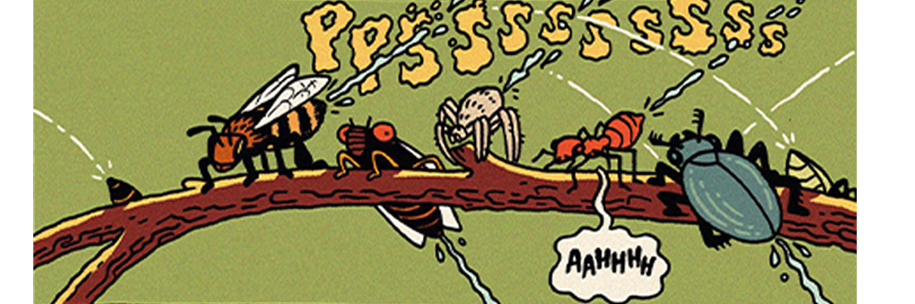
What goes in must come out! Consider the milimeter-sized sharpshooter insect. This tiny creature feeds on the sap found in the xylem of plants, a specialized tissue that transports fluid and nutrients from the soil up to the stems and leaves. The problem is that Xylem sap is 95 percent water, so the thirsty bugs must suck up to 300 times their natural body weight per day to obtain adequate nutrients.
To prevent all this fluid from building up in their bodies and going kabloom!, they must get rid of it, and quickly. So nature conspired to grant them the use of a catapult on their tiny rear ends that flings the pee in individual droplets. These droplets accelerate out of the sharpshooter’s rear at speeds that are 40 times faster than a cheetah sprinting across the African savannah.
Not long ago, the Bhamla Lab at Georgia Tech University, a bioengineering research group, decided to investigate the sharpshooter and its extraordinary pee catapult. Turns out it’s an excellent model for energy-efficient water ejectors for things like smartwatches when water gets trapped inside. Below, a comic from Jordan Collver and Rik Worth about the sharpshooter’s super pissing powers.