Einstein’s general theory of relativity comes with a lot of consequences that can best be described as “weird.” Now, for the first time, astronomers have directly observed one of those weird consequences—a whirlpool in the very fabric of spacetime caused by a rapidly spinning black hole.
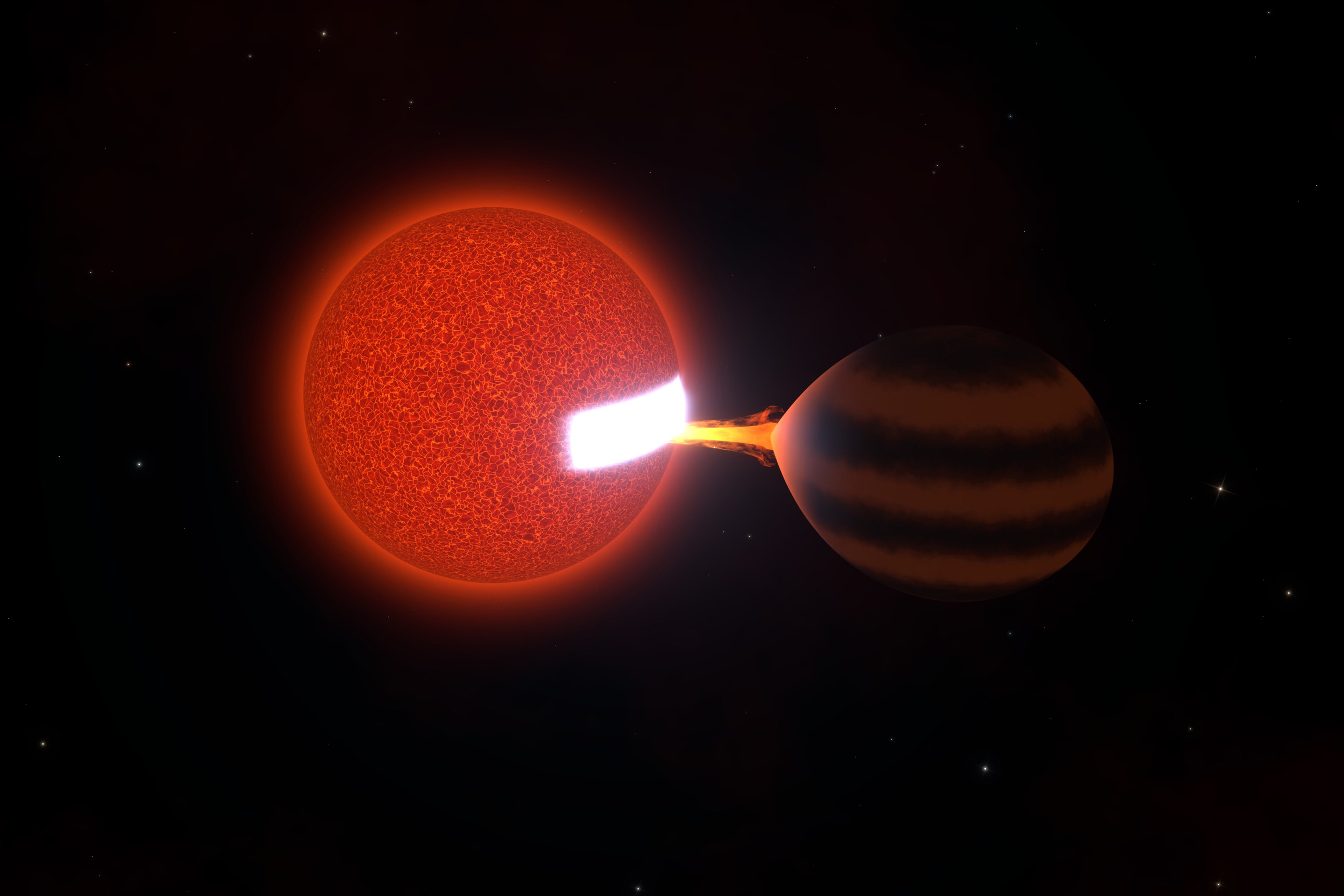
Every so often, an unlucky star wanders into the maw of a black hole where, just like everything else, it gets “spaghettified”—stretched and shredded by immense gravitational forces. Known as a “tidal disruption event” (TDE), this star-eating phenomenon is a messy affair, with leftover stellar material forming a disk and jets of matter erupting into space at a blistering pace.
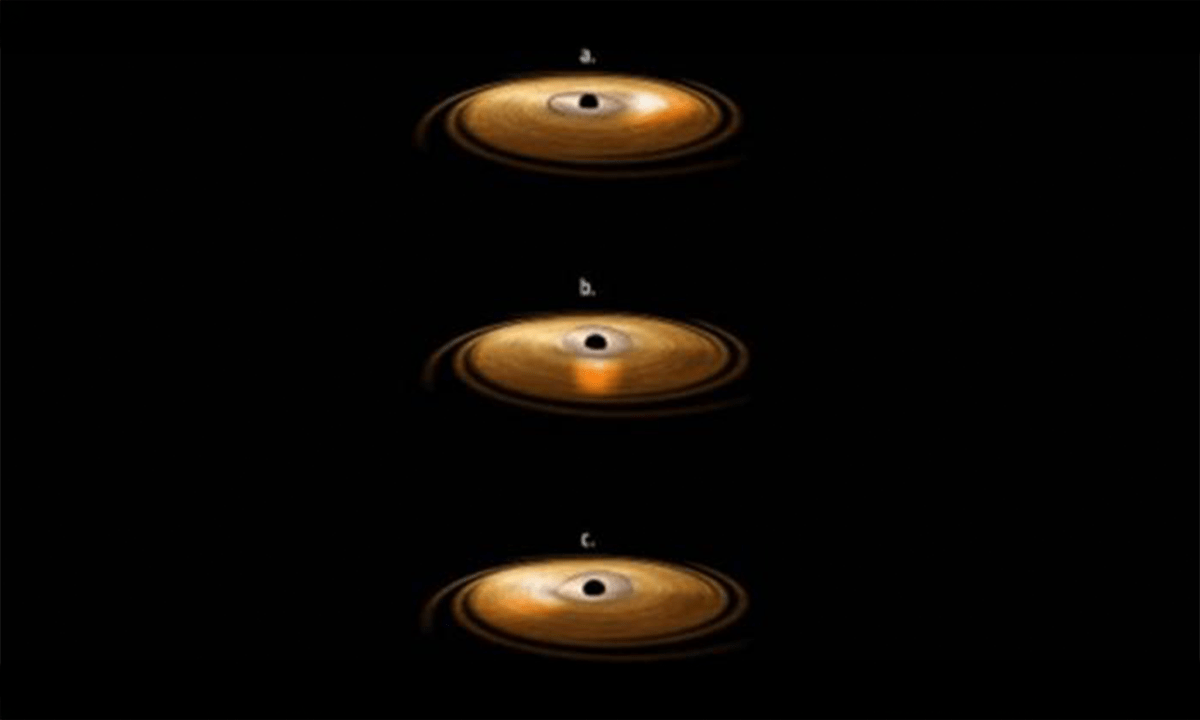
By measuring the radio waves and X-rays emanating from the disk and the jets of just such a tidal disruption event (called AT2020afhd), astronomers discovered they were wobbling, and wobbling in unison. Essentially, the massive black hole at the center of the TDE was spinning in such a way that it dragged spacetime with it, creating a vortex. They published their findings recently in Science Advances.
Read more: “Why It’s Hard for Black Holes to Get Together”
Called the Lense–Thirring precession after the two Austrian physicists who first mathematically described it over a century ago, it’s a phenomenon that’s been theoretical until now. “Our study shows the most compelling evidence yet of Lense-Thirring precession—a black hole dragging space time along with it in much the same way that a spinning top might drag the water around it in a whirlpool,” study author Cosimo Inserra from Cardiff University said in a statement.
“It’s a reminder to us, especially during the festive season as we gaze up at the night sky in wonder, that we have within our grasp the opportunity to identify ever more extraordinary objects in all the variations and flavors that nature has produced,” he continued.
In other words, there’s a lot of weird stuff out there in space, just waiting to be discovered. 
Enjoying Nautilus? Subscribe to our free newsletter.
Lead image: NASA