The Ancient Greek word for “foolish” is móros, which is both a tongue-in-cheek epithet and the unfortunate namesake for the northern gannet (Morus bassanus).
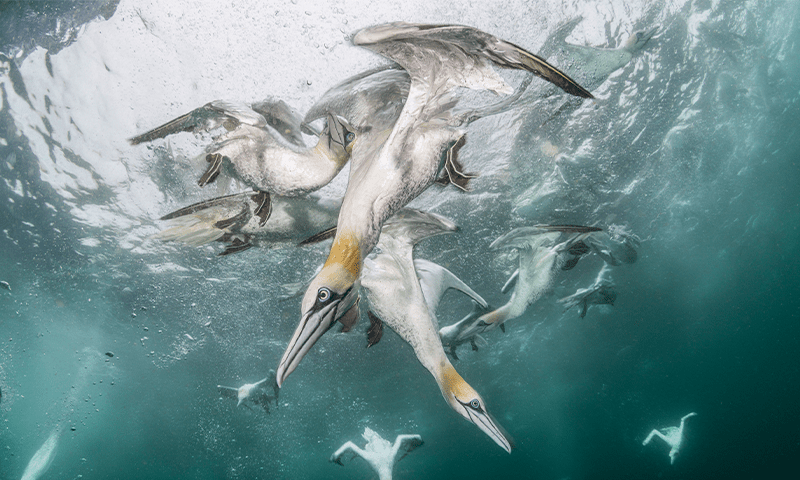
This Atlantic-dwelling gannet subspecies lives up to its name in more ways than one: Taxonomists apparently chose the genus name because of the gannet’s fearlessness when approached on their nesting grounds. Yet these birds are perhaps more famous for their dramatic hunting behavior, which sees flocks of gannets diving like vertical torpedoes from dozens of feet above the water’s surface.
Following a cluster of fishing vessels off the coast of Scotland’s Shetland Islands, photographer Franco Banfi tracked an active colony of northern gannets and their feeding route, diving into the dark water to visually capture the chaos, beauty, and unexpected harmony of the gannet’s daily fight for food and survival. The image was a winner in this year’s California Academy of Sciences’ BigPicture Photography Competition.
With their bills outstretched and wings folded tightly against their bodies, northern gannets can reach speeds up to 60 miles per hour and depths up to 70 feet as they jab into ocean waters to poach their prey. 
This image originally appeared on bioGraphic, an online magazine about nature and regeneration and the official media sponsor for the California Academy of Sciences’ BigPicture Natural World Photography Competition.