















 Facebook
 Twitter
 Pocket
 Reddit
 Email
Email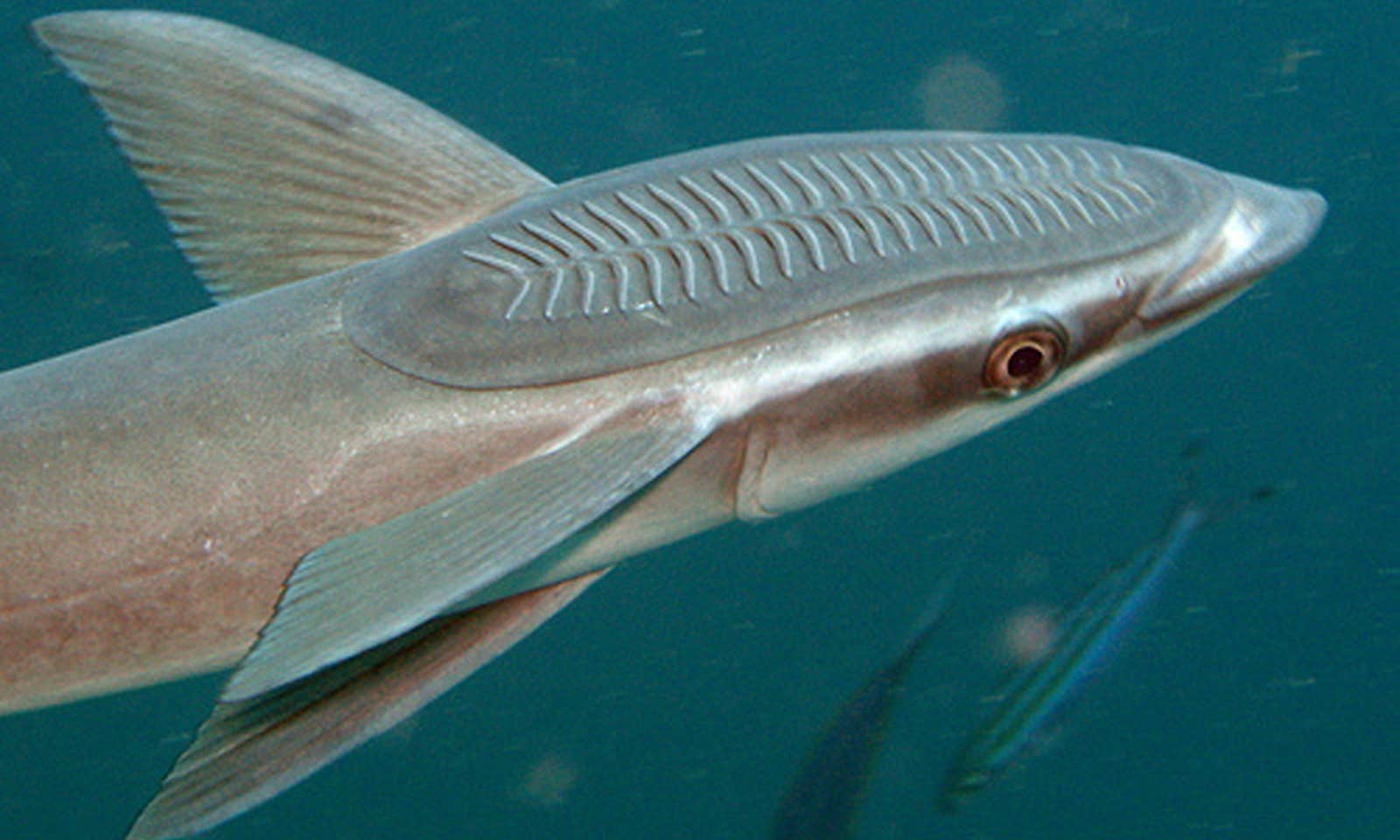


I’m a sucker for remoras. The streamlined fish are the ocean’s perfect hitchhiker, honed by millions of years of evolution to catch a ride with some of the sea’s biggest movers and shakers—sharks, whales, rays, even turtles. And now remoras can add another accomplishment to their already impressive resume: They were the inspiration for a space mission that could make autonomous tandem space missions in low Earth orbit.
Two private space companies recently revealed that they were conducting a test run of what’s called rendezvous and proximity operations (RPO) technology. Essentially, two spacecraft, made by Impulse Space, used software from another space company, Starfish Space, to come within about 4,000 feet of each other as they floated high above Earth. The collaboration, called “Remora” by the companies involved, demonstrated the accuracy of such RPO technology, which could be used to bring two spacecraft in lockstep orbit—remora-like—to autonomously service the multitude of satellites that encircle the Earth.
But back to the watery realm. Remoras likely evolved from more garden variety fish starting about 32 million years ago. Cobia, the closest living relatives of remoras, are free-living and don’t latch onto other marine organisms. But they do provide an interesting model of how remoras may have come about.
Read more: “How Fishing Could Change the Evolution of Fish”
Cobia look remarkably similar to remoras save for the one thing that makes the latter a champion marine hitchiker—a suction cup positioned on the tops of their heads. That structure most likely morphed through time from a dorsal fin on the remora’s ancestor, an insight definitively proven by researchers in 2012, after naturalists had been suggesting as much since the early 1800s.
That evolutionary innovation helps modern day remoras glom onto all sorts of their fellow oceanic travelers—sharks, whales, turtles, and more—while snapping up their scraps and sometimes picking off parasites. Interestingly, cobia also tend to tag along with larger marine swimmers, such as manta rays, marlins, and sharks. They just don’t employ a sucker to keep hold.
I for one am glad to see remora get their moment in the spaceflight spotlight in the shallows of the cosmic ocean. 
Enjoying Nautilus? Subscribe to our free newsletter.
Lead image: Richard ling / Wikimedia