















 Facebook
 Twitter
 Pocket
 Reddit
 Email
Email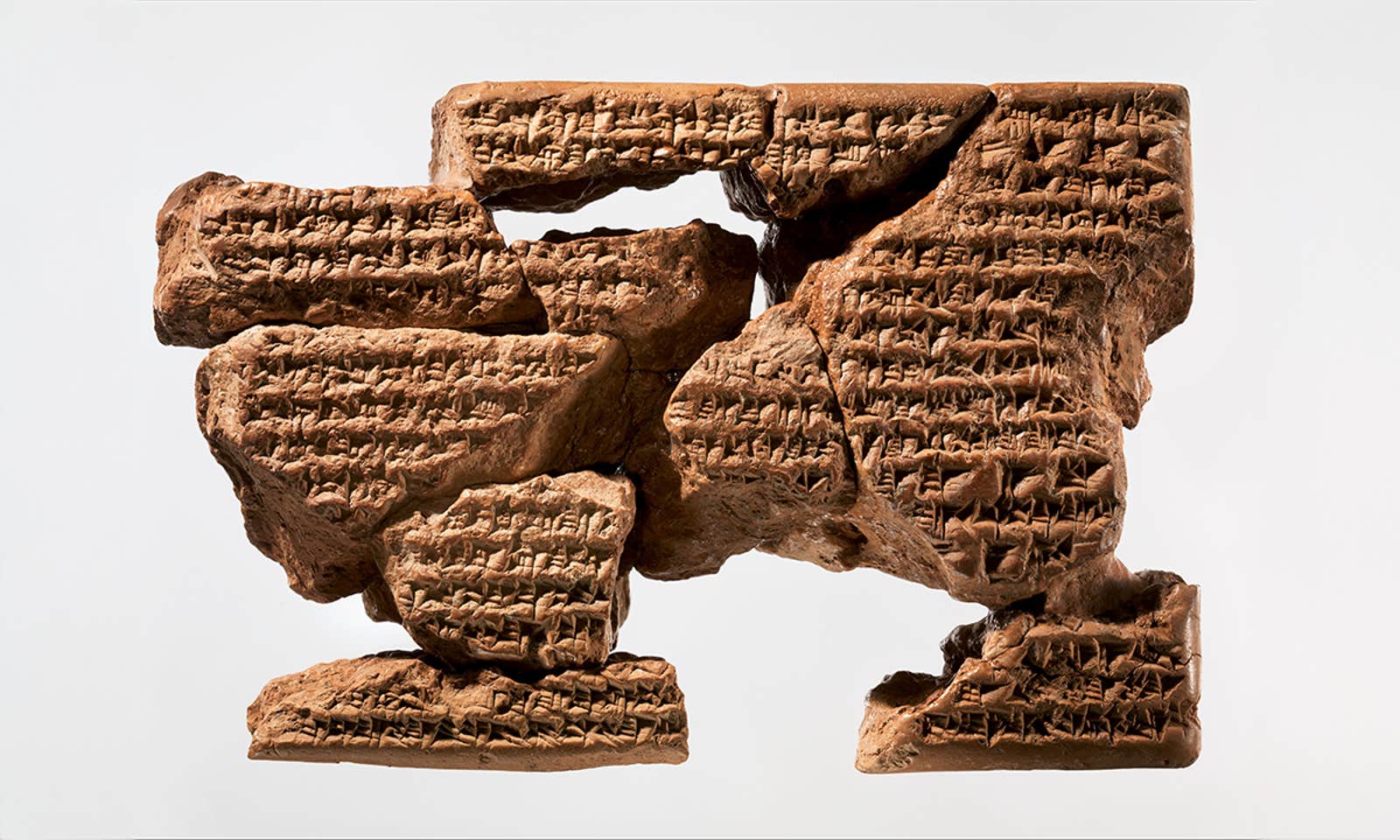


In some ways, people haven’t changed much over the past few millennia. Artifacts from around the world and across time have revealed that we’ve long cracked jokes. The Romans, for example, gave us the oldest joke book ever discovered.
We can also look to one of the world’s earliest known writing systems to find hints of ancient whimsy. Cuneiform, meaning “wedge-shaped,” was developed around 3000 B.C. It was likely created by the Sumerian people. They built one of the world’s first civilizations, which was located in what’s now Iraq. These texts were often inscribed on wet clay tablets with a pointed instrument, and the first iterations appear to have been penned by administrators for accounting purposes.
But these tablets weren’t strictly business—they also contained literature that lives on today, including the The Epic of Gilgamesh. And some chunks of Cuneiform-inscribed clay seem to bear traces of humor, even if it doesn’t make us chuckle today.
Take a 4,000-year-old tablet found in Iraq in the late 19th century, which appears to record the world’s oldest bar joke. Written in Sumerian, it translates to: “A dog walks into a bar and says, ‘I cannot see a thing. I’ll open this one.’” The phrase has gone viral on social media because nobody can quite decipher the joke, and it’s puzzled researchers for decades. But it might have something to do with a neglectful guard dog, Philip Jones, associate curator at the Penn Museum, told WBUR in 2022.
Read more: “A Scientist Walks Into a Bar …”
That tablet documents just one of hundreds of Sumerian proverbs unearthed by researchers. Another cuneiform wisecrack from roughly 1900 B.C., which is said to be the oldest written joke in history: “Something which has never occurred since time immemorial; a young woman did not fart in her husband’s lap.” Another head-scratcher, perhaps as confusing as this joke about a gardener’s sex appeal.
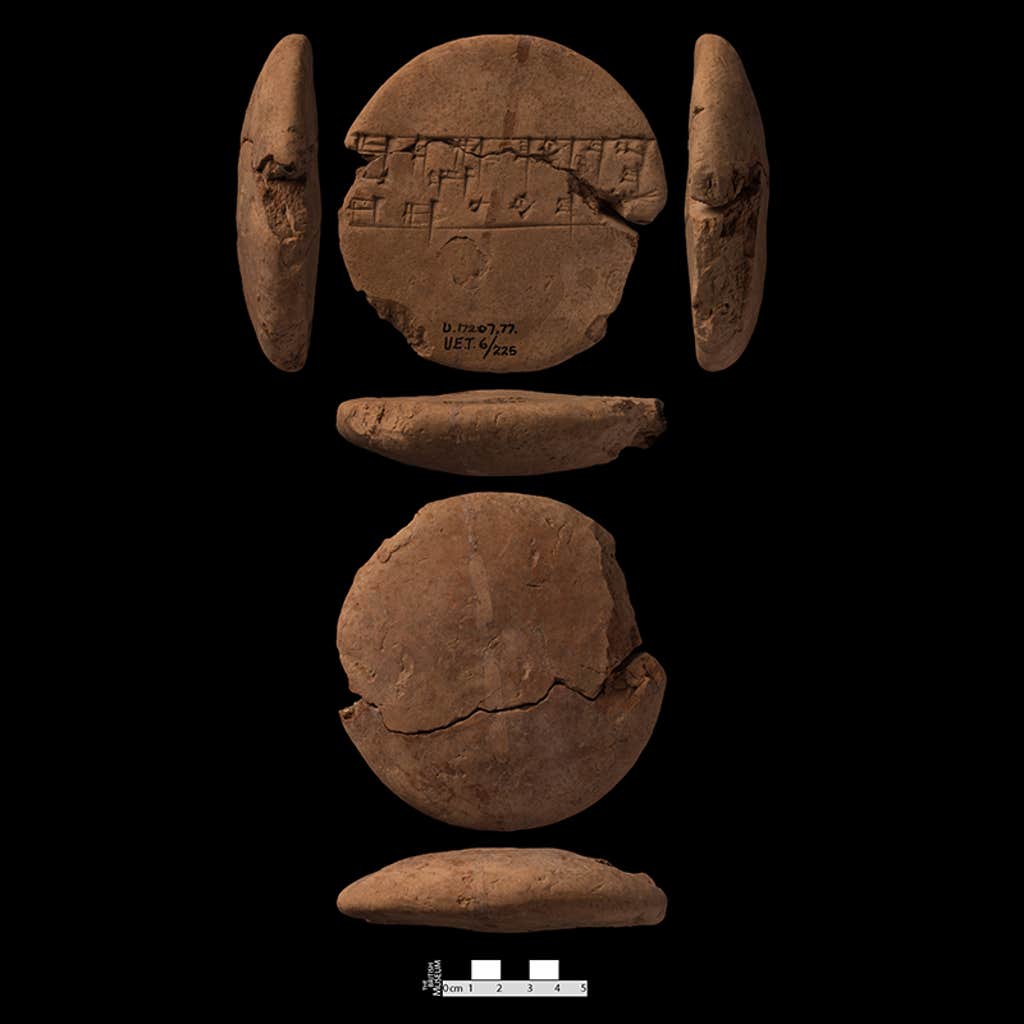
Some ancient quips, however, have stood the test of time. Sumerians poked fun at their pets, for example, a tendency we certainly can relate to. One tablet dated back to between 1900 and 1600 B.C. reads: “The dog understands: ‘Take it!’ It does not understand: ‘Put it down!’” That tablet came from the Ur, a Mesopotamian metropolis where evidence of plenty of other proverbs have also been uncovered.
Of course, it’s highly possible that future civilizations could come across today’s memes, particularly the absurdist content churned out by Gen Alpha, and respond with similar confusion from a lack of context—but that’s for future historians to figure out. 
Enjoying Nautilus? Subscribe to our free newsletter.
Lead image: Purchase, 1886