















 Facebook
 Twitter
 Pocket
 Reddit
 Email
Email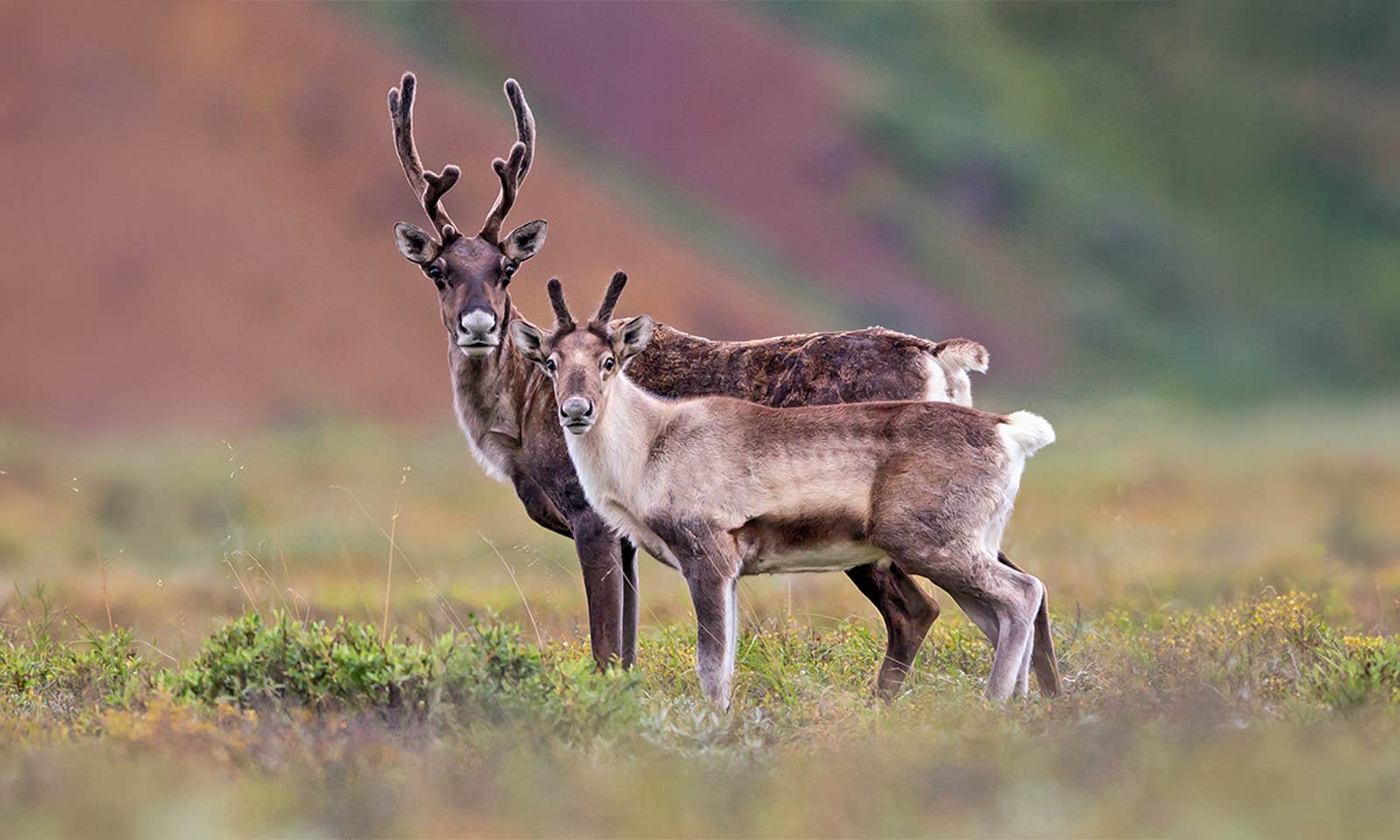


A hefty rack of antlers is a status symbol we expect from a mature male deer or elk. Because rival males lock antlers in a shoving contest over mates, the bigger the better. But female deer typically lack antlers—at most developing short, unbranched nubs—except for caribou, in which females sport modest racks. A recent study published in Ecology and Evolution uncovered a surprising behavior that may clarify why female caribou have such antlers.
Researchers analyzed caribou antlers and skeletal bones from caribou, moose, and muskox that had been collected from the Coastal Plain of the Arctic National Wildlife Refuge in Alaska. The area serves as an important calving ground for the “Porcupine Herd,” a group of caribou known for their long annual migrations. After female caribou walk up to 1,200 miles northward to calve, they shed their antlers, typically just a day or two after giving birth.
The study found that about 86 percent of the 1,567 shed antlers showed signs of gnawing, and that nearly all the gnawing—judging from the tooth marks—was by caribou. In contrast, only about 44 percent of skeletal bones had been gnawed, and mainly by carnivores such as foxes and wolves, with just 4 percent by rodents. Rodents leave parallel marks from their pair of enlarged front teeth, whereas carnivores leave distinct canine puncture holes.
Read more: “What the Deer Are Telling Us”
“We knew that animals gnawed on these antlers, but everyone assumed they were mostly rodents. Now we know it’s really caribou. My jaw dropped when our results started to become clear,” said study author and University of Cincinnati paleoecologist Joshua Miller in a press release.
Given the locales of the antlers on calving grounds, the researchers deduced that it was female caribou who chewed on them. While it was impossible to distinguish repeated gnawing by an individual mom from multiple moms’ toothmarks, the extent of gnawing implied that caribou routinely consumed shed antler material. The timing of antler gnawing with calving suggests that the females are using antlers—either their own or those shed by others—to supplement their diets with critical minerals.
During their pregnancy migrations, female caribou likely become depleted in key minerals, like calcium and phosphorus, yet must be prepared to nurse their young and fortify themselves for the winter to come. By shedding their antlers at the calving sites, females ensure a future supply of essential minerals.
“They’re engineering this habitat, seeding the landscape with these super-important minerals that can be quite hard for animals to get enough of,” explained the lead study author, doctoral graduate Madison Gaetano, adding that “caribou bring literally tons of phosphorus to their calving grounds every year.” 
Enjoying Nautilus? Subscribe to our free newsletter.
Lead image: David Turko / Shutterstock