














 Facebook
 Twitter
 Pocket
 Reddit
 Email
Email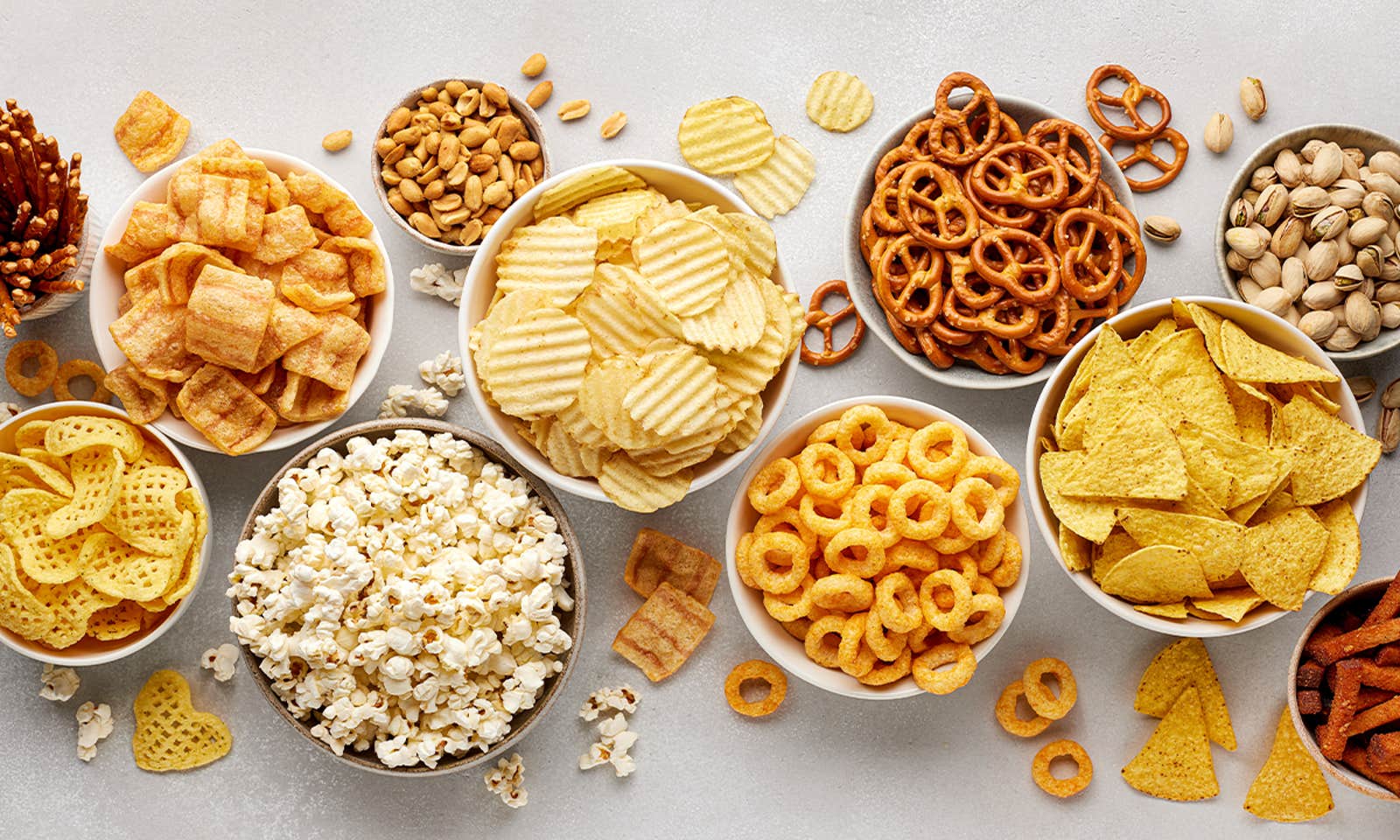


Trying to watch what you eat while watching anything on TV is like navigating a minefield. Every fast-food commercial—with the tempting images of sizzling beef patties, crunchy fried chicken, and sauce dripping in slow motion—threatens to weaken your resolve. Now, new research published in the journal Appetite shows how food cues like these can trick us into snacking—even when we’re full.
“Obesity has become a major worldwide health crisis,” study author Thomas Sambrook of the University of East Anglia said in a statement. “But rising obesity isn’t simply about willpower—it’s a sign that our food-rich environments and learned responses to mouth-watering cues are overpowering the body’s natural appetite controls.”
To study the effect of food cues on our brain, Sambrook and his team of psychologists hooked 76 volunteers up to an EEG machine and monitored their brain waves as they played a reward-based game. When participants got an answer correct, they were shown an image of a snack food; when they were wrong, they saw a picture of an empty plate. Halfway through, they were given a meal of one of the snacks, which they ate until they were completely stuffed.
Read more: “Junk Food Is Bad For Plants, Too”
Unfortunately their brains didn’t get the message. Even though the participants were full and they reported a considerably lower desire to eat the food, which their behavior confirmed, the regions of their brains associated with the delicious rewards kept lighting up when they were shown images of them.
“Even when people know they don’t want the food, even when their behavior shows they’ve stopped valuing the food—their brains continue to fire ‘reward!’ signals the moment the food appears,” Sambrook said. “It’s a recipe for overeating.”
According to the researchers, this suggests our response to food cues is habitual, occurring independent of our conscious minds. They also found no link between participants’ ability to make goal‑directed decisions and their brains lighting up when presented with images of food while sated. In other words, even people with robust self-control are still being betrayed by their brains. “It’s really no wonder that resisting a doughnut can feel impossible,” Sambrook said.
Still, there’s some comfort in knowing everyone’s in the same boat. Maybe not as much comfort as you get from a late-night snack, though. 
Enjoying Nautilus? Subscribe to our free newsletter.
Lead image: baibaz / Shutterstock