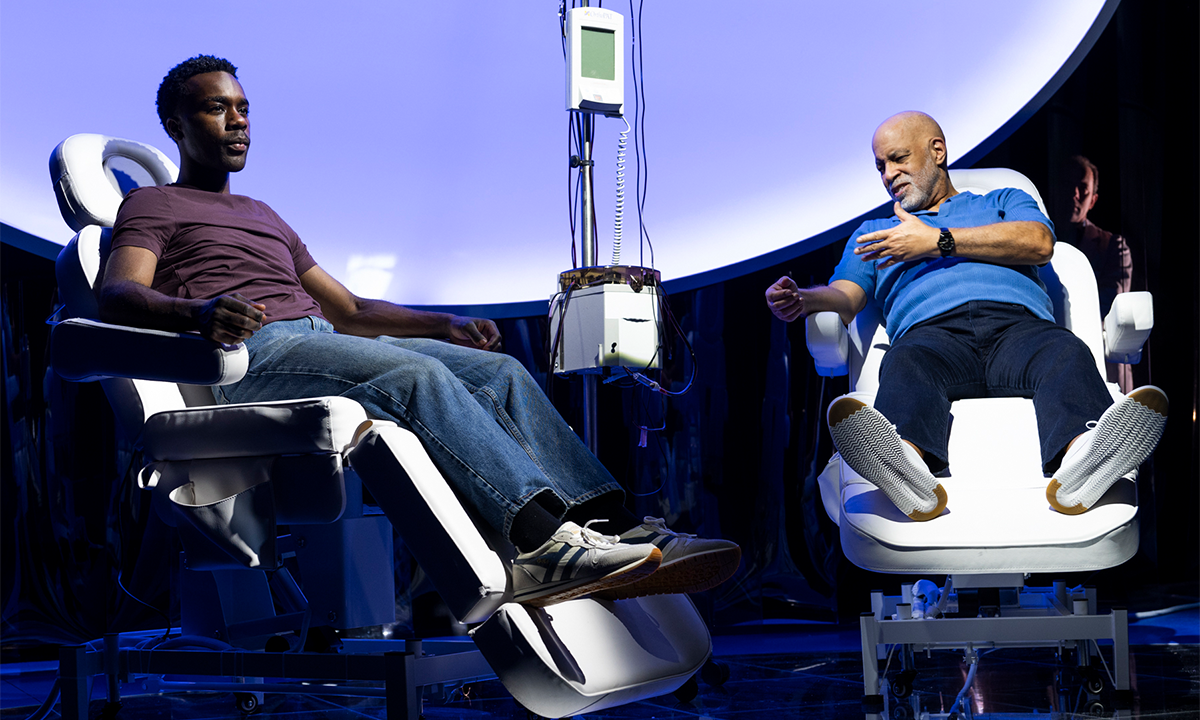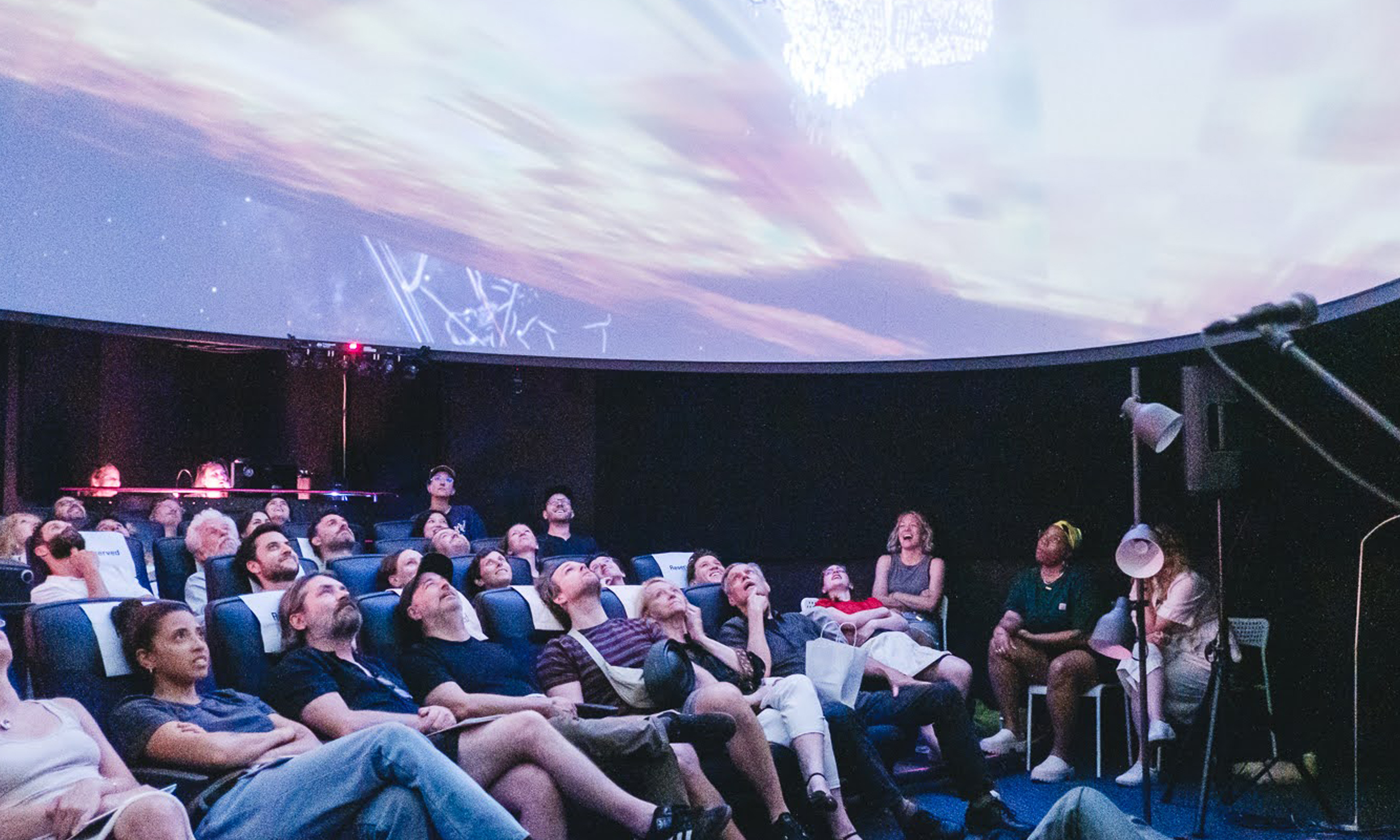
On a sweltering Tuesday in July, scores of music fans (including four lucky Nautilus contest winners) packed into a cool, dark planetarium for an evening of music under the stars with indie rock artist Cassandra Jenkins. Jenkins, whose album My Light, My Destroyer debuted earlier this month, crafted a tailor-made visual show to accompany her latest offering. For nearly 40 minutes the audience watched—necks craned toward the “sky”—as a series of cascading celestial events unfolded on the dome above, perfectly synchronized with her songs.

During a live Q&A with her friend and New Yorker contributor Gideon Jacobs after the show, Jenkins revealed what led her to create her own cosmic light show: curiosity, her mother’s guidance, and inspiration from an unlikely source—William Shatner.
Jenkins said she’s had a lifelong fascination with space thanks to her mother, a science teacher, who always reminded her to “look up at the stars.” With tracks like “Betelgeuse” and lyrics invoking astronomical phenomena the cosmic thread is there. Still, when she created the album, Jenkins wasn’t considering building a sprawling, visual extravaganza for a planetarium audience; at least she wasn’t until William Shatner rocketed into space aboard Jeff Bezos’ Blue Origin. When Jenkins found out about Shatner’s experience years later, it deepened her interest and gave her inspiration that helped her finish the track “Aurora, IL.”
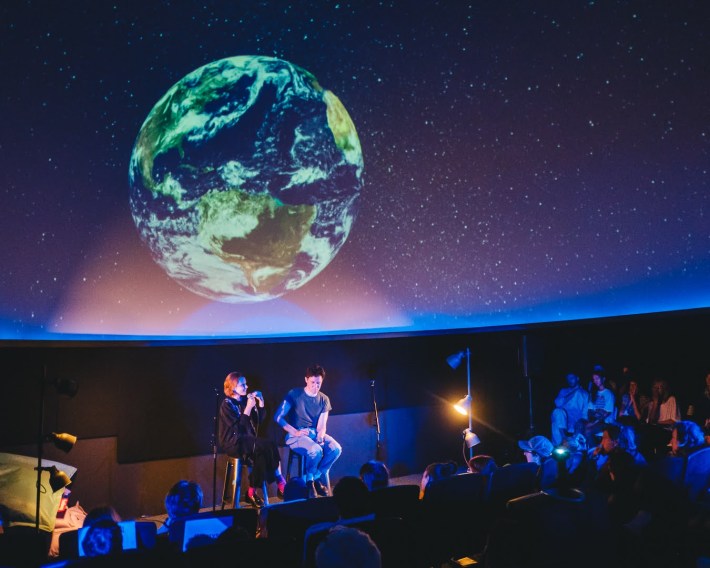
“I think Gideon, you sort of created a monster when you told me Jeff Bezos sent William Shatner to space and William Shatner experienced something called ‘The Overview Effect,’” Jenkins said. “The Overview Effect,” the two explained, is a phenomenon many astronauts experience when they first glimpse Earth from orbit. It’s a kind of cognitive shift that can become transformative, and Jenkins was curious to explore the idea. “That really set me on a path,” she said.
From there, Jenkins’ credits her friend Li Murphy (who works at the Lower East Side Girls’ Club Planetarium and gave an amusing tour of our own universe to kick off the event) for bringing her to the planetarium shows that led her to become “obsessed.”
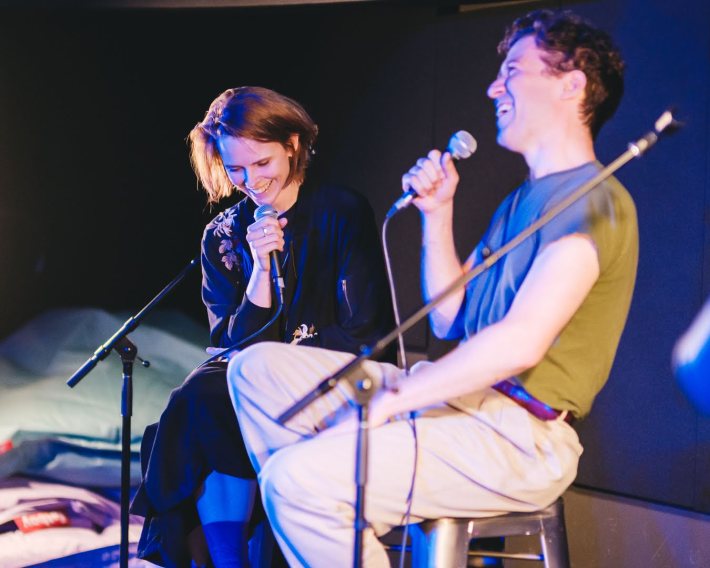
As the conversation wound down, Jenkins turned to a transformative cosmic event she experienced: the 2024 total eclipse of the sun. “An eclipse will turn scientists into poets and poets into scientists” Jenkins said, recalling a quote she heard that resonated with her. “I think that they really are one and the same and we’ve come to separate them more and more.”
You can stream Cassandra Jenkins’ My Light, My Destroyer on Spotify.
Words by Jake Currie.