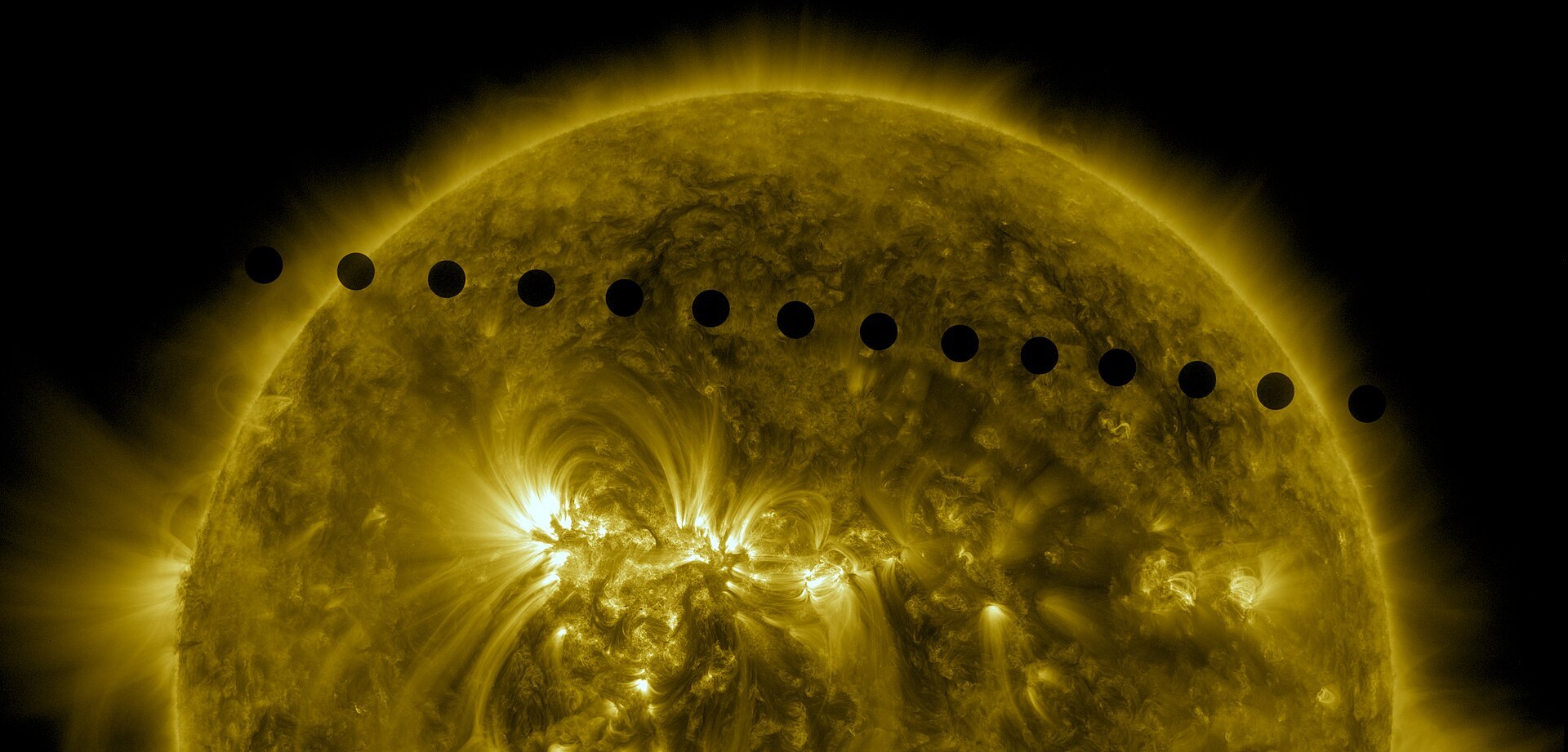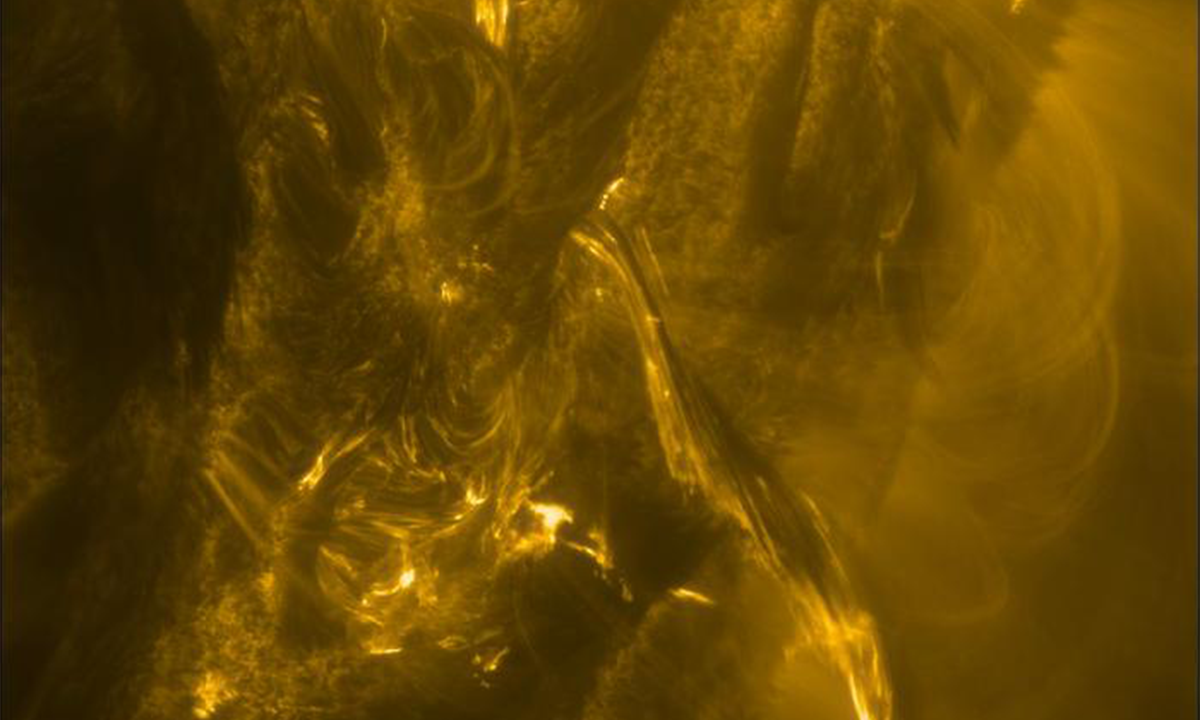
For all of its life-sustaining energy, the sun is pretty chaotic. Roiling plasma covers its surface along with fluidic snarls of magnetic fields that birth solar flares. These fiery outbursts occur when opposing magnetic field lines pinch together, detach, and reconnect to form new lines that rapidly heat up, erupting into space.
Even though scientists understand the broad, magnetic strokes of solar flare formation, they haven’t been able to study the birth of the phenomena in detail until now. Using a variety of imaging instruments onboard the European Space Agency’s Solar Orbiter, solar researchers were able to capture a bounty of high-resolution data about how solar flares form. They published their findings today in Astronomy & Astrophysics.
“We were really very lucky to witness the precursor events of this large flare in such beautiful detail,” study author Pradeep Chitta of the Max Planck Institute for Solar System Research said in a statement. “Such detailed high-cadence observations of a flare are not possible all the time because of the limited observational windows and because data like these take up so much memory space on the spacecraft’s onboard computer. We really were in the right place at the right time to catch the fine details of this flare.”
Read more: “Tiny Jets on the Sun Power the Colossal Solar Wind”
Solar flares, the scientists found, begin with small magnetic field reconnections, which rapidly destabilize other magnetic fields, snowballing into an avalanche of magnetic activity that crescendos into a dramatic eruption. “We were surprised by how the large flare is driven by a series of smaller reconnection events that spread rapidly in space and time,” Pradeep explained. In other words, a solar flare isn’t one single big event, but the culmination of a series of smaller events.
As the quickly reconnecting magnetic fields deposited their energy into solar material, researchers also witnessed blobs of plasma raining down from the sun’s atmosphere. “These streams of ‘raining plasma blobs’ are signatures of energy deposition, which get stronger and stronger as the flare progresses,” Pradeep said. “Even after the flare subsides, the rain continues for some time. It’s the first time we see this at this level of spatial and temporal detail in the solar corona.”
Scientists hope these new findings will help them predict solar flares with more accuracy, an important endeavor considering the chaos they can cause in electrical systems on Earth. 
Enjoying Nautilus? Subscribe to our free newsletter.
Lead image: ESA & NASA/Solar Orbiter/EUI Team