Millennia before the Black Death pandemic killed nearly half of Europe’s population, a different strain of the same plague bacterium, Yersinia pestis, tore across Eurasia. It infected people across the region and lingered for 2,000 years before disappearing.
While we know that the Black Death bacterium spread in part via fleas in the 14th century, it’s unclear how the earlier strain spread so widely and over an extended period of time during the Bronze Age, from about 2900 to 500 B.C. Previous research suggested that the older Y. pestis strain hadn’t yet evolved to efficiently travel via fleas. But the common carriers of that earlier, long-lasting pestilence remained mysterious for millennia.
Now, scientists think they have identified a critical piece in the puzzle of that Bronze Age plague.
An international team of researchers found Y. pestis DNA in the bones of a roughly 4,000-year-old domesticated sheep from Russia’s Southern Ural Mountains, a finding reported in Cell. The discovery offers an intriguing hint into origins of this elusive ancient pandemic.
Read more: “The Magic of Herding”
“Our plague sheep gave us a breakthrough,” said study co-author Taylor Hermes, an archeologist at the University of Arkansas, in a statement. “We now see it as a dynamic between people, livestock, and some still unidentified ‘natural reservoir’ for it.”
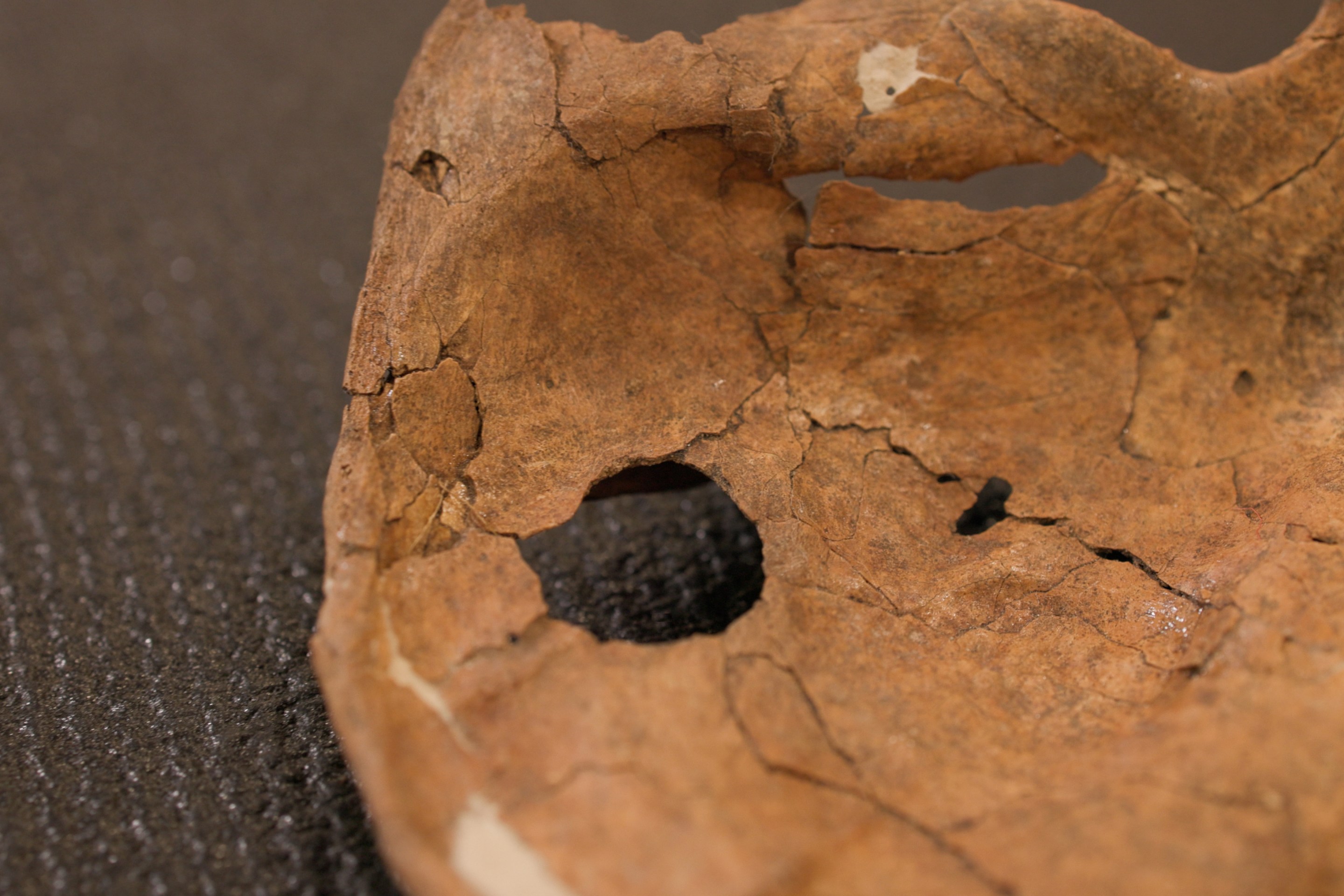
This was a rare discovery—it’s difficult to find well-preserved animal remains from the Bronze Age because the archeological record of such material from that period mostly consists of ancient meal leftovers that were cooked and discarded, which degrades any genetic material within them. That’s why few research teams have reported intact pathogen DNA from ancient animals.
Hermes encountered the sheep skeleton during an ongoing study of ancient livestock DNA, which tracks how people shepherded domesticated goats, cattle, and sheep from the Fertile Crescent across Eurasia—movements that sparked empires and sustained nomadic communities.
He and his colleagues found the bones when poring over livestock samples dug up from this area of the Southern Ural Mountains in the 1980s and ’90s. “It was alarm bells for my team,” Hermes said. “This was the first time we had recovered the genome from Yersinia pestis in a non-human sample.” The sheep was excavated from a settlement that’s associated with the Sintashta people, a Bronze Age culture known for its early mastery of horse riding and bronze weapons, along with the construction of impressive walled cities.
Ultimately, the Bronze Age plague probably resulted from increasingly close contact between people and animals as they herded and lived among livestock across grasslands teeming with wild creatures like birds, deer, and rodents, the latter of which serves as the primary reservoir for plague today. The Sintashta people also interacted with various nearby communities, which potentially facilitated the person-to-person transmission of disease. While sheep likely don’t spread plague among themselves, people might have caught the disease while handling or consuming them.
This finding matters today, according to Hermes, by highlighting the risks of human disturbance to the delicate balance of natural ecosystems. “It’s important to have a greater respect for the forces of nature,” he said. 
Enjoying Nautilus? Subscribe to our free newsletter.
Lead image: Pixabay