During this holiday season I will give thanks for many things: my family, my friends, my health. And whales.
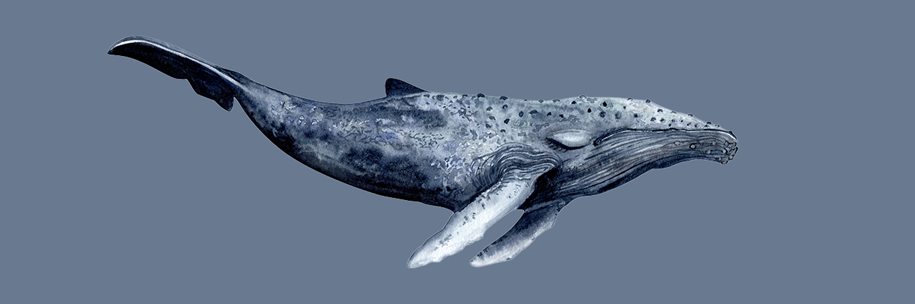
Now, that last part might raise a few eyebrows at the dinner table. Yet why should it? Each of those great ocean gardeners will capture about 33 tons of carbon over the course of their lives, and spread nutrients that give rise to countless more lives. One analysis calculated that the average whale’s ecological services are worth $2 million—a figure that might rub some people as coldly utilitarian, but is better understood as a nod to just how extraordinary whales are.
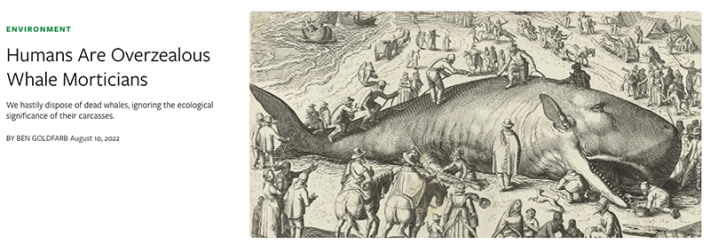
Truly they are keystone species—and not only in life, but in death as well. The washed-ashore carcasses of whales were once a common presence on Earth’s coastlines, a vital conduit of nutrients from ocean to land; their bodies are the reason that California condors, the largest birds in North America, are associated with the Pacific coast rather than the continental interior. And when whale bodies fall to the ocean floor, they form organic islands that sustain entire communities for decades.
Whales are not only ecological marvels, of course. They’re also extraordinarily intelligent animals, possessing complex brains, rich social lives, culture, and communication systems that may be akin to language. Much of what is important to our own lives is important to them as well: family, friends, and communion. For many people, that realization comes after listening to whales sing.
In light of their qualities and their importance: What next? A basic, essential task is to improve their conservation. Commercial whaling has ended but threats remain, foremost among them the terrible toll of ship collisions. Solving that problem is very much within our grasp.
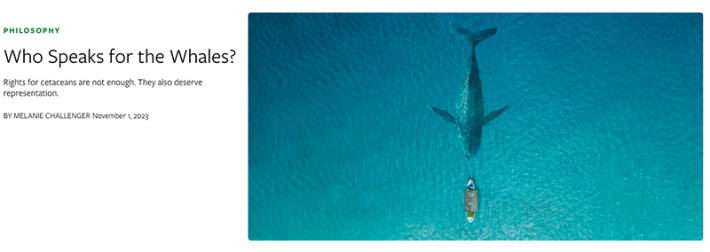
We can do more than that, though. Some people push consideration for whales even further, arguing that they deserve to be formally represented in political and institutional decision-making. It’s a wild idea, but the sort of thing that a richer appreciation of whales leads to—and it all begins with being thankful for them.



Lead image: PolinaVyun / Shutterstock