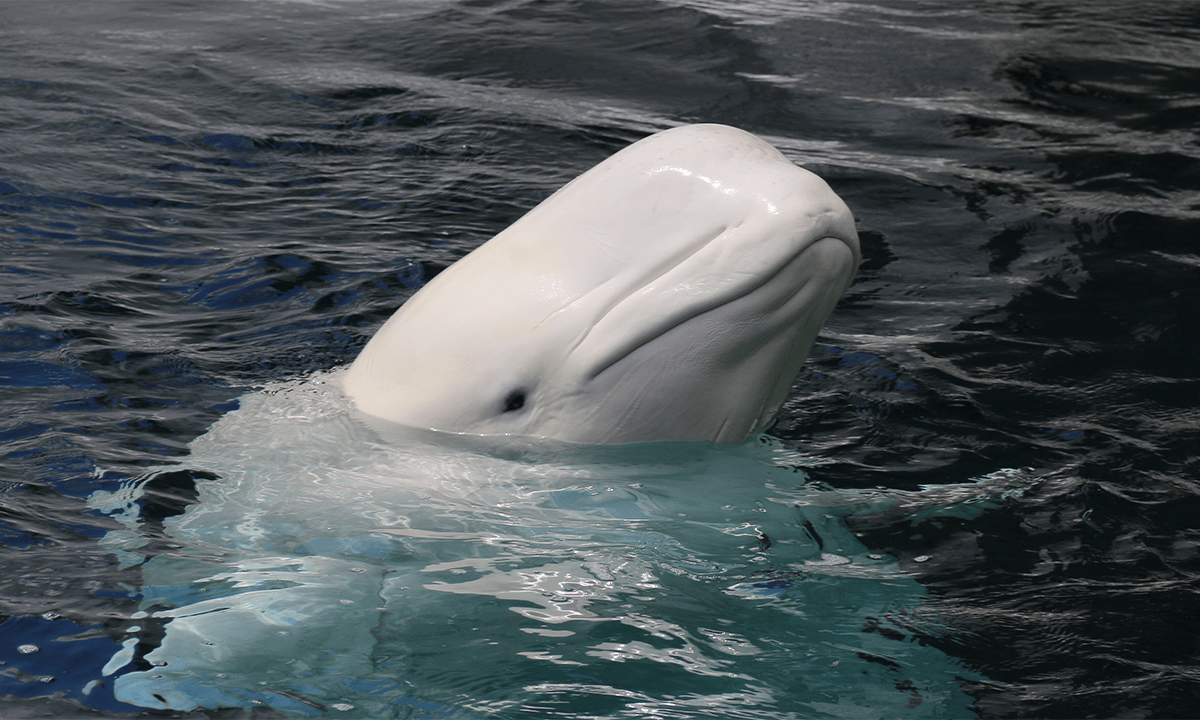
Belugas and other toothed whales such as dolphins are known to live in stable pods, typically ruled by an older matriarch. How the dynamics of reproduction play out in belugas (Delphinapterus leucas), however, has been difficult to ascertain. They inhabit high northern habitats that are often ice-bound, making for chilly, challenging behavior observations.
In a study published today in Frontiers in Marine Science, wildlife biologists from Florida Atlantic University and the Alaska Department of Fish and Game used genetic tools to uncover the mating habits of wild beluga whales. The team genetically profiled skin samples collected over 13 years from 623 beluga whales inhabiting Bristol Bay, Alaska, in collaboration with local Indigenous communities. In this remote population of about 2,000 whales, movements away from the pod, and therefore genetic exchange, are rare. And so, the genetic profiles should reveal within-population mating dynamics.
The study authors expected to find that males were competing heavily for mates and mating with multiple females, in a polygynous system. Beluga males provide little parental care, and the extreme sexual dimorphism—with males heavier and up to 25 percent longer than females—usually indicates a species with males vying for choosy females.
Read more: “Overthrowing the Patriarchy Through Ecstatic Sex”
The results showed that father belugas had significantly more calves, on average, than mothers, reflecting their lower investment per offspring. However, both males and females were polygamous, associating with multiple mates across distinct breeding seasons. Most of the calf siblings detected in the genetic data were half-siblings that shared only one parent, rather than the full siblings that you’d see if a whale pair reproduced more than once.
The researchers hypothesize that the long reproductive lives of belugas, whose lifespan may exceed 100 years, reduce the selective pressure for competition between the sexes thanks to the ample mating opportunities over time. “Rather than competing intensely in a single season, males appear to play the long game, spreading their reproductive efforts over many years. It appears to be a ‘take your time, there’s plenty of fish in the sea’ strategy,” explained study author Greg O-Corry-Crowe in a statement.
As for the females, their mate switching between breeding seasons could spread out their risks of poor choices. If they unwittingly mate with a low-quality male, they’ll still have other opportunities to produce healthy offspring with other males.
The population outcome of all this mate swapping was lower levels of inbreeding than expected, ensuring higher levels of genetic diversity. “Polygynandry across breeding seasons leads to long, loose-chain pedigrees that can lower inbreeding and maintain diversity, even in populations with small [size],” concluded the study authors in the paper.
The mating dynamics may be a strategic way to keep mixing it up in a small, isolated group. 
Enjoying Nautilus? Subscribe to our free newsletter.
Lead image: Matthias Brix / Shutterstock