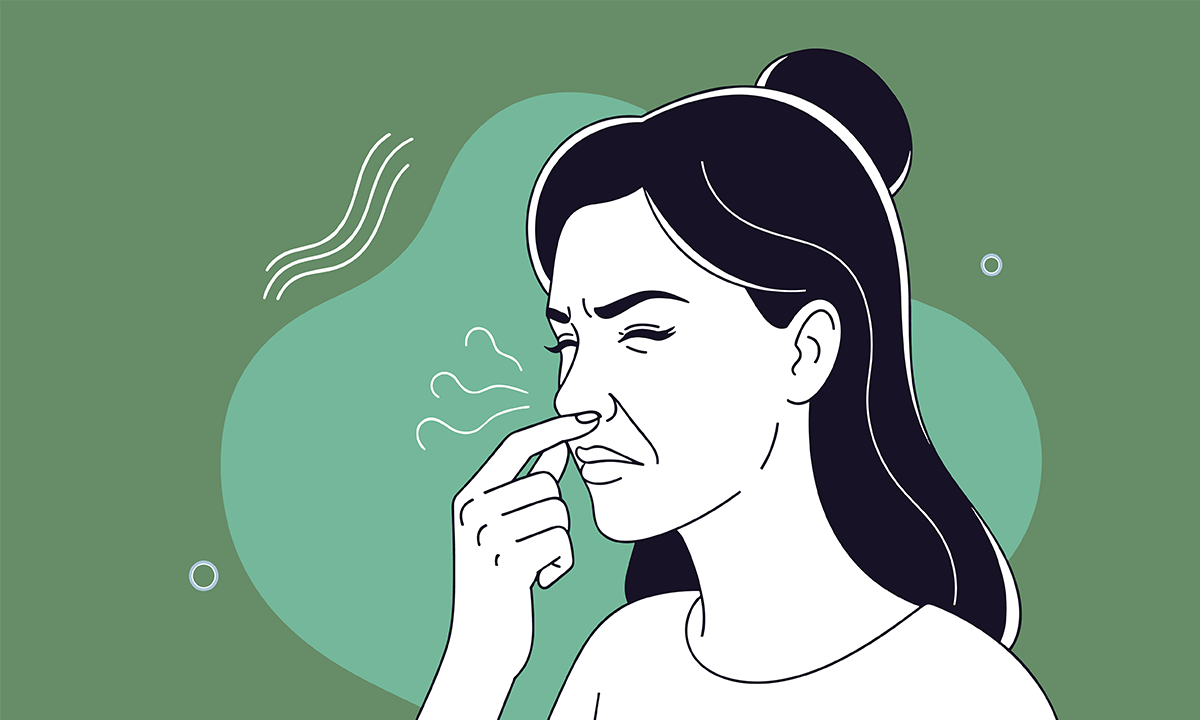
It’s hard to imagine that soiled diapers could have any side benefits for parents. But recent research suggests that exposure to all that poop trains parents to tune out disgust so they can soldier on.
Neuroscientists from the University of Bristol recently reported that repeated long-term exposure to their babies’ bodily waste actually reshapes parents’ brains: It suppresses their disgust responses not just in the moment, but over the longer term as well. They published their results in the Scandinavian Journal of Psychology.
The researchers say the findings could help design strategies to support workers in jobs where disgust is a daily part of the routine, such as working with human cadavers or raw meat. Not surprisingly, professions that require regular contact with body waste often have a hard time recruiting staff. The scientists chose to study how parents handle baby poop because people who become morticians or surgeons might have naturally low disgust thresholds before they join, which could skew the results of any experiments. Most parents don’t choose to parent based on how easily or not they feel the ick, the team reasoned.
Read more: “Why We Love to Be Grossed Out”
“Disgust is a basic human emotion that helps protect us from harm,” explained Edwin Dalmaijer, a cognitive neuroscientist in Bristol’s School of Psychological Science and one of the study’s lead authors, in a statement. “Most people recognize it as the strong ‘yuck’ feeling we get when we smell gone-off food, see something dirty, or think about bodily fluids. This reaction is not just about being picky, it evolved to keep us away from things that might make us sick.”
That feeling of disgust is often visceral and immediate, he pointed out. “When we feel disgust, our bodies often respond automatically, for example by feeling nauseous, or wanting to move away quickly. While this reaction is powerful in the short term, it has long been debated whether repeated exposure over months or years can truly reduce disgust,” said Dalmaijer. “Parenthood dramatically increases exposure to these substances, and people do not choose to become, or stop being, parents based on disgust. This makes it an ideal ‘natural experiment’ for studying how disgust changes over time.”
To track these changes in disgust in parents, the scientists analyzed both physical reactions and survey responses from 99 parents and 50 parents respectively, recording how much they looked away from images of soiled diapers—including the soiled diapers of newborns, breastfeeding babies, and weaned babies, whose poops look more adult-like—as well as how they replied to questions about parenting and diaper handling.
The findings were surprising: Parents of children who were being weaned off their mother’s milk or were already eating exclusively whole foods at the time of the experiment showed little avoidance of soiled diapers or bodily fluids and waste in general, such as vomit. Their disgust responses were also noticeably lower compared to adults without children. But parents whose youngest children were still exclusively breast feeding responded to bodily waste with levels of disgust that were similar to those of non-parents.
The researchers say the finding may be an adaptive response to help protect against disease in young infants. The feces of infants who are still exclusively milk-fed tend to have a more tolerable scent than those of kids who have started eating solid food. But when they’re still dependent on breast milk, babies are more vulnerable to infection and illness. Meanwhile, the later desensitization could help parents care for their young when they fall ill.
“Parenthood doesn’t just change daily routines,” said Dalmaijer, “it can fundamentally alter how humans experience disgust, with lasting effects that extend beyond childcare itself.”
The dirty diapers eventually disappear. But the softened gag reflex may not. 
Lead image: Noman Ahmed jia / Shutterstock